
“AP Floors” most often refers to a local flooring contractor, such as AP Hardwood Floors or AP Wood Floors, offering installation, refinishing, and repair services for residential and commercial clients. If you found a listing and want to move forward, your first step is simple: verify the contractor is licensed and insured, then request a free on-site estimate. Before that call, prepare three questions: Are your installers manufacturer-certified? What does your labor warranty cover? Will I receive a written, itemized quote?
Most local flooring contractors handle a wider scope than homeowners expect. Beyond laying new planks, a full-service AP flooring operation usually covers:
A few distinctions worth knowing before you call: site-finished hardwood takes longer but lets you choose the stain color on-site; factory-finished boards install faster but offer fewer custom options. For LVP, glue-down installations are more stable in high-traffic areas, while floating installations are faster and easier to replace. Each method carries different warranty terms, so confirm which method the contractor recommends for your specific subfloor and room conditions.
Credentials separate a reliable pro from a costly mistake. Start with the basics.

Licensing and insurance. Many states require flooring contractors to hold a general contractor’s license or a specialty trade license. You can look up license requirements by state through CareerOneStop. General liability insurance protects your home if damage occurs during the project. Ask for a certificate of insurance, not just a verbal confirmation.
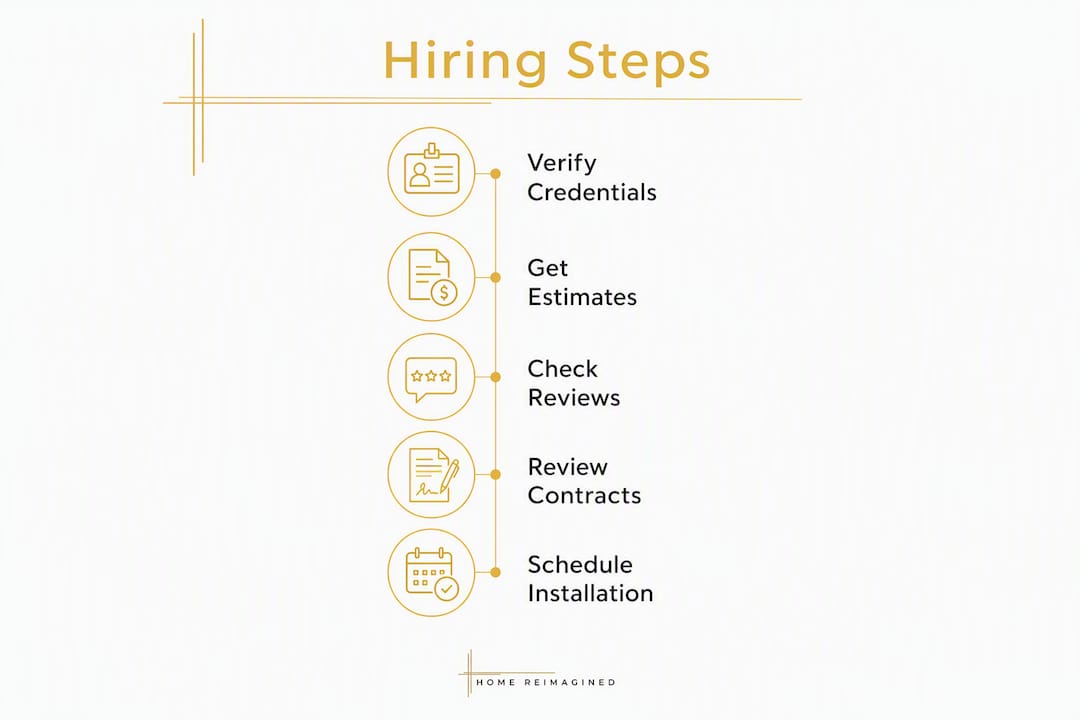
Manufacturer-certified installers. This one surprises many homeowners. Manufacturers may void product warranties if their installation specifications or certified installer requirements are ignored. If you are buying a premium hardwood or LVP product, ask the contractor directly: “Are you certified to install this brand?” Get the answer in writing.
Reviews, photos, and references. Online ratings give a starting point, but job-site photos of the exact material and install type you want are more useful. Ask the contractor for two or three local references from projects completed in the past year, then call them.
Pro Tip: When checking online reviews, filter for photos. A contractor with dozens of text reviews but no project photos is harder to evaluate than one with a smaller review count and a clear portfolio of finished floors.
Reputable flooring pros will also offer at least a one-year labor warranty, kept separate from the manufacturer’s material warranty. If a contractor bundles both into a vague “warranty” without distinguishing labor from materials, ask them to clarify in writing before you sign anything.
A trustworthy quote is itemized, not a single bottom-line number. Low bids often omit demolition, subfloor prep, underlayment, transition strips, or disposal, which means the final invoice can look very different from the original figure. A complete estimate should break out:
The main cost drivers are material choice, subfloor condition, room complexity (angles, stairs, multiple doorways), moisture mitigation requirements, and specialty finishes. Here is a practical reference for typical labor ranges and timelines:
| Material | Labor cost (install only) | Crew productivity | Typical room timeline |
|---|---|---|---|
| Laminate / LVP | $3 per sq ft | 400–800 sq ft/day | 1 day |
| Engineered hardwood | $4 per sq ft | 200–400 sq ft/day | 1–2 days |
| Solid hardwood | $6 per sq ft | 200–400 sq ft/day | several days including finish curing time |
| Tile and stone | $7 per sq ft | 200–400 sq ft/day | several days including grout curing time |
Labor ranges sourced from Vemra’s flooring installer guide. Materials are additional.
Free estimates are common but not binding. An on-site visit is required for a reliable written quote, and the final price can change if hidden subfloor damage is discovered after demolition begins.
Pro Tip: Ask every contractor how they handle change orders before work starts. A professional will have a written process: a documented scope change, a revised cost, and your signature before additional work proceeds. Verbal agreements mid-project are where budgets quietly expand.
Use this checklist on every call and estimate visit:
Decision criteria to confirm:
Questions to ask during the estimate:
These questions come directly from what experienced contractors expect buyers to ask and separate prepared homeowners from those who end up with surprise invoices.
Red flags to watch for: no local job references, a P.O. box as the only address, reluctance to sign a written contract, vague answers about warranty coverage, or pressure to pay the full amount before work begins.
When comparing three bids, focus on scope parity first. Two quotes at different prices may be covering entirely different scopes. The same logic applies when vetting any home service pro, including choosing gutter contractors in your region, where itemized scope comparison matters just as much.
A standalone AP floors contractor handles installation. A full-service showroom like The Kitchen, Bathroom & Flooring Store handles everything from product selection through certified installation under a single contract, which removes the handoff risk that causes most project delays and budget surprises.
When subfloor repairs, transitions, and trim are all written into one contract, there is no gap between “what the installer did” and “what someone else was supposed to handle.” One scope, one point of contact, one warranty conversation.
The practical difference shows up in two places. First, bundled services mean subfloor repairs, moisture mitigation, and trim work are priced and managed together, not discovered mid-project and billed separately. Second, the showroom model lets you select your material, confirm the install method, and review design options with a consultant before a single board is ordered, which reduces change orders significantly.
The Kitchen, Bathroom & Flooring Store serves homeowners and property managers in Jacksonville, Saint Johns, and Duval counties, offering hardwood, LVP, laminate, carpet, tile, and stone with certified installation and special financing options for homeowners working within a budget.
Hiring the right flooring contractor comes down to verifying credentials, comparing itemized scopes, and choosing a partner who handles the full project, not just the installation.
| Point | Details |
|---|---|
| Verify credentials first | Confirm state license, general liability insurance, and manufacturer installer certification before signing anything. |
| Demand an itemized quote | A complete estimate lists subfloor prep, waste factor, disposal, transitions, and labor separately, not as one lump sum. |
| Ask about warranties in writing | A reputable contractor separates a labor warranty (at least one year) from the manufacturer’s material warranty. |
| Compare scope, not just price | Two bids at different prices often cover different scopes; align what’s included before comparing totals. |
| The Kitchen, Bathroom & Flooring Store | Offers full-service flooring in Jacksonville with certified installation, design consultation, and financing under one contract. |
The three mistakes that show up most consistently are skipping moisture testing, accepting a vague quote, and rushing acclimation for hardwood. Moisture testing is not optional in Florida’s climate. Hardwood that skips a proper acclimation period, typically 3–5 days in the installation environment, can buckle or gap within months. Subfloor preparation is the most common cause of installation failure, and a contractor willing to pause the project and document hidden damage before proceeding is demonstrating exactly the professionalism you want.
Insist on a written change-order process. When a crew pulls up old tile and finds soft subfloor underneath, you need a documented scope change and a revised price in writing before work continues. That single habit prevents most of the disputes we hear about after the fact.
Skip the guesswork of coordinating a separate supplier, installer, and project manager. The Kitchen, Bathroom & Flooring Store gives Jacksonville-area homeowners a single point of contact for the entire project: product selection in our showroom, certified installation by our own crew, and project management from first measurement to final trim.
We carry hardwood, engineered hardwood, LVP, laminate, carpet, tile, and stone, with design consultants on hand to help you match material to room, budget, and lifestyle. Our flooring services include subfloor prep, moisture mitigation, transitions, and trim, all written into one contract with no subcontractor handoffs. Financing is available through monthly payment plans, so a full-room or whole-home project fits your budget without delay.
Ready to see your options in person? Visit our Jacksonville showroom or request a free on-site estimate today.
Before you book any flooring contractor, use these authoritative sources to confirm their credentials and understand your rights:
Practical verification steps before you sign: