
For most people managing allergies or asthma, well-installed, low-VOC hard-surface flooring paired with a HEPA-based cleaning routine is the single most effective change you can make at home. The main caveats: off-gassing during installation, moisture buildup under certain materials, and a narrow set of cases where certified textile flooring is acceptable. The EPA’s indoor air guidance and the Asthma & Allergy Friendly® Certification Program both back this approach.
TL;DR:
- Choose low-VOC, certified flooring materials and ask about adhesive VOC ratings to reduce indoor air pollution during installation.
- Seal grout lines and use moisture-resistant tiles or stone in bathrooms and kitchens to prevent mold growth and moisture buildup.
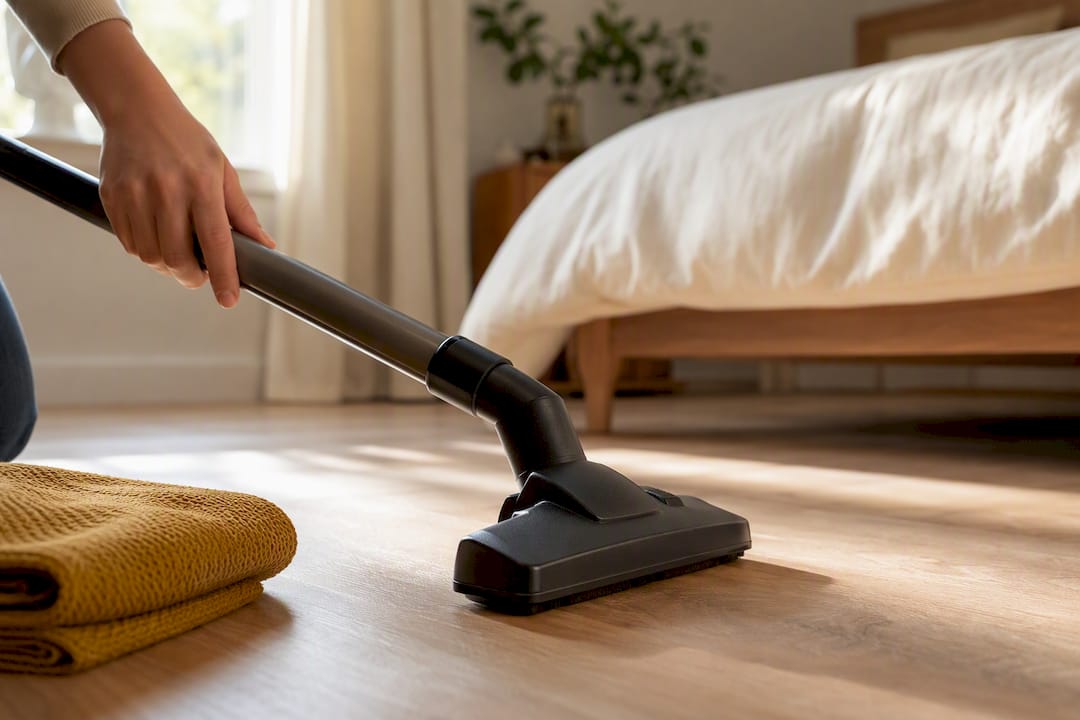
- Use HEPA filters and damp-mop hard floors weekly to effectively remove allergens and minimize recirculation of dust particles.
- Limit carpets to low-traffic, less-used rooms and opt for washable rugs with low-pile fibers and certified textile flooring when necessary.
- Schedule professional deep cleaning and ventilation after installation to lower VOC emissions and ensure safer indoor air quality.
Not every room needs the same material, even when the goal is the same: fewer allergens, easier cleaning, better air quality. Here’s how the major hard-surface options stack up, and where each one belongs in your home.
Placement follows function: bathrooms and entries get tile or stone for moisture control, kitchens get vinyl or tile for spill resistance, and bedrooms and living rooms can lean on hardwood, LVP, or cork depending on how much softness the household wants. If you’re weighing these trade-offs room by room, Bayfair Custom Homes’ guide to matching flooring with how a room is actually used covers the same logic from a different angle.
Carpet fibers hold onto dust, pet dander, and pollen instead of letting them settle where a vacuum or mop can reach them. Reviews of the science on carpets and indoor air quality describe carpets acting as reservoirs that release particles back into the air when walked on. A 2024 cohort study found homes with carpet over tatami flooring had 11% to 14% higher childhood asthma incidence than homes with hard floors, after adjusting for other factors.
That doesn’t mean carpet is banned from every allergy-conscious home. There are real reasons people still want it: warmth, sound dampening, comfort for kids playing on the floor. If that’s you, a few conditions matter:
Pro Tip: If you’re set on carpet in one room, put it somewhere with less daily traffic, like a formal living room, rather than a bedroom where you spend eight hours a night breathing whatever the fibers are holding.
Padding and backing choices matter too. Dense, moisture-resistant padding limits what accumulates underneath, where it’s much harder to clean.
New flooring doesn’t just sit there quietly. Adhesives, finishes, and some flooring materials release volatile organic compounds, and installer-applied products, not the flooring itself, are often the biggest contributor to that emission load, according to research on installation materials.
The EPA notes that VOC emissions from flooring materials typically peak within the first 24 hours after installation, though some testing protocols track emissions out to 336 hours to capture the longer tail. Practically, that means the first three days after installation carry the highest exposure risk.
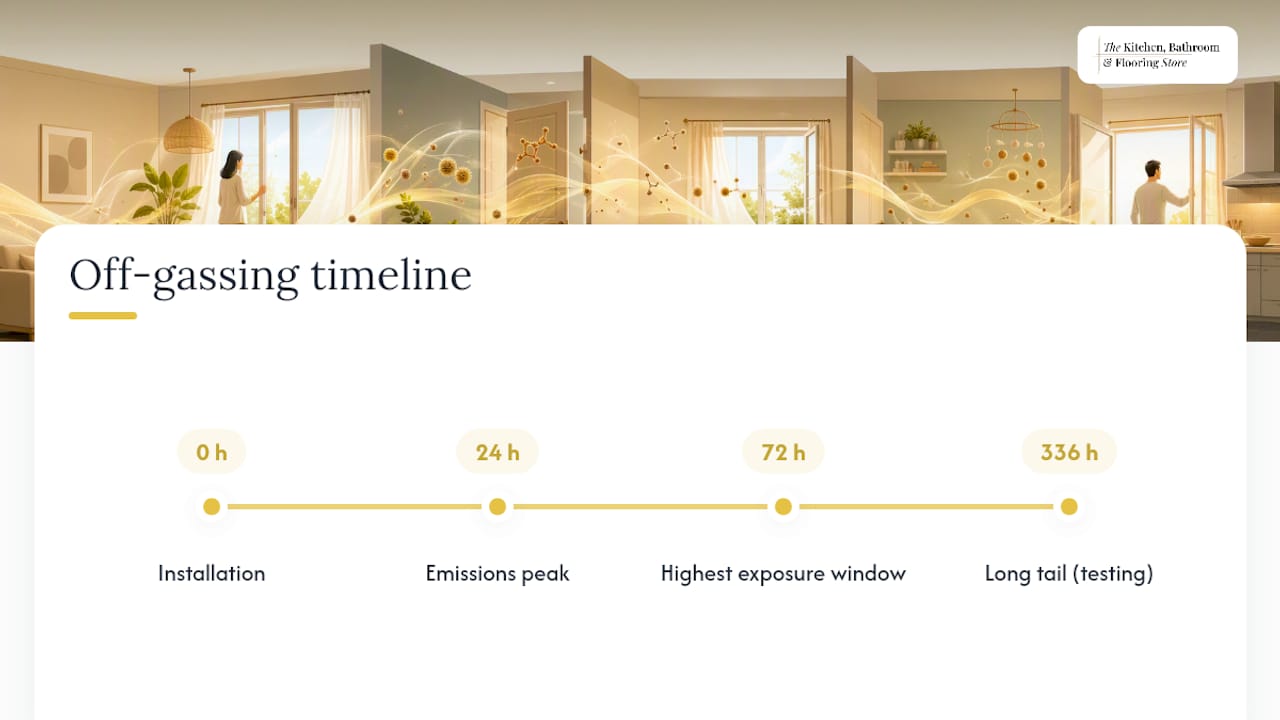
To cut that exposure: choose FloorScore or GREENGUARD Gold certified products, ask your installer specifically about adhesive VOC ratings, ventilate the space with open windows or exhaust fans, and delay full occupancy for at least 72 hours when the schedule allows it. Real-world ventilation tends to bring measured VOC levels down faster than lab chamber testing suggests, since airflow and material interaction both help clear the air.
Flooring choice only does half the work. Maintenance closes the gap, and it looks different depending on what’s underfoot.
Pro Tip: Skip the microfiber dust mop for hard floors if allergies are a real concern. A damp mop head actually picks up fine dust; a dry one often just pushes it around.
Cleaning products matter as much as tools. Ammonia and bleach-based cleaners can irritate airways in sensitive people, so a fragrance-free, low-VOC floor cleaner is worth the switch. Multicomponent approaches, meaning flooring changes combined with consistent HEPA cleaning and pest control where relevant, show more consistent improvement in clinical outcomes than any single fix on its own.
Three certification marks are worth learning to recognize at the showroom: Asthma & Allergy Friendly®, which tests both VOC emissions and how well allergens clean off the surface; FloorScore, run by the Resilient Floor Covering Institute, which focuses on VOC emissions specifically; and GREENGUARD Gold, which sets stricter chemical emission limits aimed at schools and sensitive populations.
Before signing off on a purchase or installation, confirm:
Cohort and review studies consistently associate soft flooring with higher allergen loads and modestly elevated asthma risk, but single interventions, like swapping carpet for hardwood alone, often show mixed results in clinical trials. The stronger pattern in the evidence is that multicomponent strategies, combining a material change with HEPA vacuuming, pest control, or mattress encasements, produce more reliable improvement than any one fix in isolation. The practical takeaway: treat flooring as one piece of a larger allergen-control plan, not a standalone cure.
We hear the same tension in almost every consultation: someone wants the softness of carpet underfoot but knows their child’s asthma flares up when dust builds up in fibers. Our heuristic is simple. Start with room function first: wet rooms and high-traffic areas get hard surfaces, period. Comfort-driven rooms can flex toward carpet only if low-VOC adhesive and a real maintenance plan come with it. Overseeing both the sourcing and the install under one roof is what keeps that plan from falling apart.
— Anna
Comparing certifications, adhesive ratings, and ventilation timelines is a lot to manage on top of picking colors and layouts. One provider can handle both sides at once: sourcing low-VOC flooring and adhesives, then managing the installation schedule, including airing-out time, so you’re not left guessing whether it’s safe to move back into a room.

That one-roof setup matters most in the rooms where allergy sufferers spend the most time. For bathrooms, where moisture and mold risk run highest, our bathroom remodeling packages build sealed, low-allergen surfaces into the plan from day one. For a full home refresh, browse our flooring selection or ask about tile and stone options for wet-prone areas. Schedule a design consultation and we’ll walk through certifications, adhesive choices, and a realistic timeline before any material gets ordered.
This article is general information, not a substitute for advice from a qualified doctor. Consult a qualified healthcare professional about your own circumstances before acting on anything here.