
For most families, luxury vinyl plank (LVP), porcelain or ceramic tile, and engineered hardwood offer the best balance of safety, durability, and easy cleaning — with cork, laminate, and washable rugs rounding out the list for specific rooms and budgets. Here is a quick shortlist of the top child-friendly flooring material options and when each one makes the most sense:
According to the Consumer Reports Flooring Buying Guide, LVP and high-quality ceramic or porcelain tile are among the most practical options for families balancing durability, moisture resistance, and easy cleaning.
Tile is the undisputed champion for moisture resistance. Bathrooms, mudrooms, laundry rooms, and kitchens with heavy spill traffic are where tile and stone flooring earns its place in a family home. Nothing else matches its combination of durability and zero water absorption.
Porcelain vs. ceramic: Porcelain is fired at higher temperatures than ceramic, which makes it denser, harder, and more resistant to moisture and heavy wear. For outdoor-adjacent zones like mudrooms or covered patios, porcelain is the stronger choice. Ceramic is slightly softer, easier to cut during installation, and typically costs less — a reasonable option for lower-traffic bathrooms.
Pros for families:
Cons to plan around:
The EPA’s Indoor AirPlus construction specifications specifically recommend installing water-resistant hard-surface flooring in kitchens, bathrooms, entryways, and laundry areas — tile fits that guidance perfectly.
For grout, use epoxy grout or apply a penetrating sealer to standard grout after installation. Sealed grout resists staining and moisture penetration, which matters when juice spills and muddy boots are common. Add thin, washable rugs in play corners to soften the surface without permanently trapping allergens.
Hardwood floors are warm, beautiful, and refinishable, but they require honest room-by-room placement in a family home. Put them in the right rooms and they last generations. Put them in the wrong ones and you will be replacing them within a few years.
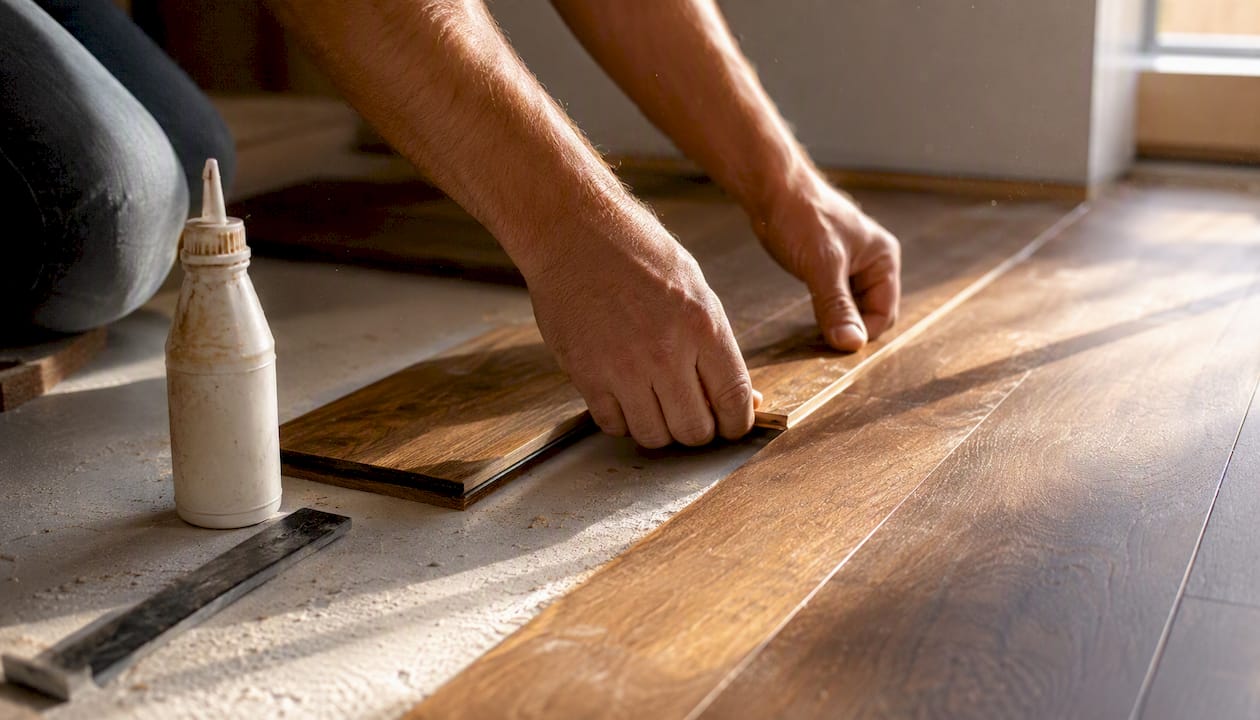
Engineered vs. solid hardwood is the first decision. Solid hardwood is exactly what it sounds like — milled from a single piece of wood. It can be sanded and refinished multiple times, but it expands and contracts with humidity changes, making it a poor choice for basements, bathrooms, or any room with moisture swings. Engineered hardwood has a real wood veneer bonded to a plywood or HDF core, which makes it more dimensionally stable and suitable for above-grade and on-grade installations. For most family homes, engineered hardwood is the more practical choice.
| Feature | Solid Hardwood | Engineered Hardwood |
|---|---|---|
| Moisture tolerance | Low — avoid wet rooms | Moderate — better for kitchens and basements |
| Refinishing | Multiple times (3–5+) | 1–3 times depending on veneer thickness |
| Installation options | Nail/staple down only | Float, glue, or nail/staple |
| Typical cost (materials) | $5–$15/sq ft | $4–$12/sq ft |
| Best rooms | Bedrooms, living rooms | Living rooms, bedrooms, above-grade kitchens |
For a busy household, finish selection matters as much as species. Choose a low-sheen, durable urethane finish or a hardwax oil finish — both hide minor scratches better than high-gloss coatings and are easier to spot-repair. Harder species like hickory, white oak, and Brazilian cherry resist denting better than softer options like pine or cherry.
Daily protection is straightforward: felt pads under furniture legs, entry mats at every exterior door, and area rugs in the highest-traffic paths. Refinishing timelines depend on traffic and finish type, but most families refinish every 7–15 years.
Avoid hardwood entirely in mudrooms, bathrooms, and laundry rooms. Those rooms belong to tile or LVP.
Laminate gives you the look of hardwood at a fraction of the cost, and its scratch resistance is genuinely impressive. The surface layer is a photographic image sealed under a hard melamine wear layer, which means it resists scuffs from toys, furniture, and pet nails better than many solid wood options. For families watching their budget, it is a practical starting point.
The AC rating system tells you how durable a laminate’s wear layer is. AC3 is the minimum for residential family use; AC4 handles heavier traffic. Anything rated AC1 or AC2 is designed for light residential use and will show wear quickly in a busy household.
What to check before buying:
Avoid laminate in bathrooms, mudrooms, and laundry rooms unless the product is specifically rated waterproof. Even then, tile or LVP is a more reliable long-term choice in those spaces.
Laminate typically costs $1–$5 per square foot for materials, with installation running $2–$4 per square foot. It is one of the most affordable ways to get a durable, good-looking floor in living rooms, bedrooms, and dry play areas.
Cork and rubber are the two best choices when cushioning and noise reduction are the priority. Both absorb impact better than any hard surface, which reduces injury risk when kids fall — and in a playroom, that matters more than scratch resistance.
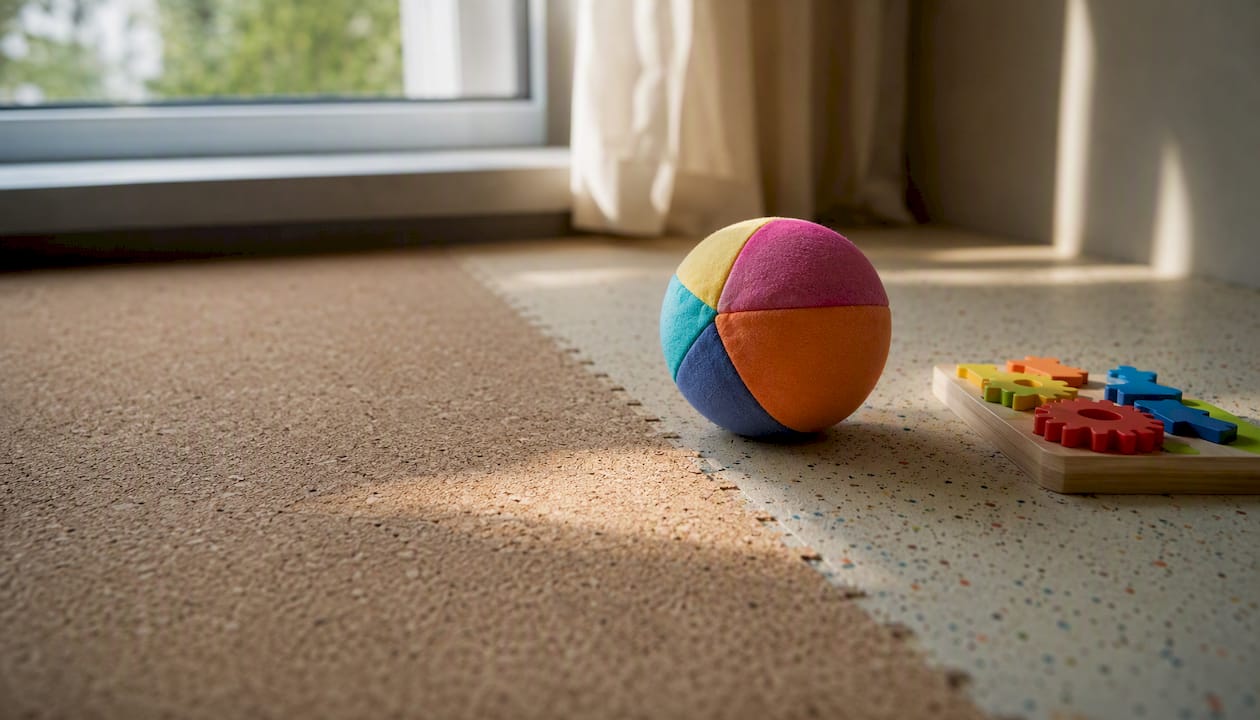
Cork is a natural, renewable material harvested from the bark of cork oak trees. It has a slight give underfoot, decent thermal insulation, and natural antimicrobial properties. The catch is moisture: unsealed cork absorbs water and can warp or grow mold. For playrooms and nurseries, cork works well as long as it is properly sealed and kept away from wet rooms. Public-interest health guidance from Toxic-Free Future lists cork among the safer flooring alternatives for families concerned about chemical exposure.
Rubber flooring — typically interlocking tiles or rolls — is more water-tolerant than cork and extremely durable. It is the standard in home gyms and commercial play areas for good reason. The main concern is off-gassing: low-quality rubber tiles can emit VOCs, so look for products with FloorScore or GREENGUARD Gold certification. Recycled rubber tiles vary widely in quality; virgin rubber or certified recycled options are safer bets for indoor use around children.
Comparing the two for family use:
Neither material is ideal for bathrooms or laundry rooms unless specifically rated for wet environments. For playrooms, home gyms, and nursery areas, both are excellent choices that hard flooring simply cannot match for safety.
The EPA recommends hard-surface floors over wall-to-wall carpeting in homes where indoor air quality is a concern, because carpets trap allergens and can be a VOC source. The practical solution for families who want softness underfoot is removable rugs and washable play mats layered over hard flooring — you get the comfort without the permanent allergen reservoir.
Do:
Don’t:
Play mat choices: Interlocking foam tiles are convenient and cushioning, but certification matters. Washable textile play mats are easier to clean thoroughly and carry lower chemical risk when made from natural fibers. For infants and toddlers who spend time on the floor, a certified foam mat or a washable cotton rug over a hard floor is the safest combination.
The best approach is matching room needs to material strengths. A room with high spill risk, pet traffic, and frequent mopping needs something different from a quiet bedroom. Start with three questions: How much moisture does this room see? How much physical activity happens here? What is the cleaning routine I can realistically maintain?
Room-by-room decision matrix:
| Room | Top Pick | Alternative | Key Reason |
|---|---|---|---|
| Kitchen | LVP or porcelain tile | Laminate (waterproof-rated) | Spill and moisture resistance |
| Bathroom | Porcelain tile | LVP | Maximum moisture resistance |
| Mudroom | Porcelain tile | LVP (SPC core) | Dirt, water, and heavy traffic |
| Playroom | LVP (WPC core) or rubber/cork | Laminate (AC4) | Cushion, durability, easy cleanup |
| Nursery | Cork or LVP (certified) | Washable rug over LVP | Softness, low chemical emissions |
| Living room | Engineered hardwood or LVP | Laminate | Warmth, aesthetics, durability |
| Bedroom | Engineered hardwood or LVP | Laminate | Comfort, warmth, low traffic |
The EPA’s Indoor AirPlus guidance recommends that hard-surface flooring and underlayments meet maximum VOC emission levels under CDPH Standard Method V1.2-2017, with FloorScore, GREENGUARD Gold, and SCS Indoor Advantage Gold listed as acceptable third-party certifications.
Questions to ask your supplier or installer before signing:
Red flags to watch for: A supplier who cannot produce a product datasheet, a warranty that excludes pet or child damage without explanation, or a product with no third-party emission certification. These are signals to keep shopping. For more guidance on vetting installers, the residential flooring contractor hiring guide covers the right questions to ask before any project starts.
Modern, certified low-VOC and phthalate-free vinyl products have addressed most of the chemical concerns that older vinyl raised — but “certified” is the operative word. Verification via third-party labels is what separates a safe product from a marketing claim.
The concern with some vinyl flooring centers on phthalates, a class of plasticizers used to make PVC flexible. A peer-reviewed biomonitoring study published in Environmental Health Perspectives found that rooms with vinyl or linoleum flooring had significantly higher indoor air concentrations of the phthalate BBzP and higher urinary phthalate metabolite concentrations in children compared with wood or carpeted rooms. That research is the reason “phthalate-free” labeling on vinyl products matters, particularly for nurseries and playrooms where children spend time on or near the floor.
What this means for your purchase: The risk is not from vinyl flooring as a category — it is from uncertified products that still use phthalate-based plasticizers. Certified phthalate-free LVP, verified by a third party, removes that exposure pathway. Always ask for the product datasheet, not just the marketing brochure.
The GREENGUARD Gold certification program sets stricter chemical emission limits than standard GREENGUARD, specifically accounting for the higher vulnerability of children and people with chemical sensitivities. FloorScore, administered by SCS Global Services, tests hard-surface flooring and adhesives against California’s CDPH Standard Method. Both are reliable trust signals when shopping for safe flooring options for children.
For composite wood cores in laminate and engineered hardwood, TSCA Title VI compliance limits formaldehyde emissions from composite wood panels. Ask for this certification specifically when buying laminate or engineered hardwood products.
Practical mitigation steps:
For families who want to go further, healthy home building practices offer a broader framework for reducing chemical exposures across the whole home, not just the floors.
Prompt cleanup, routine gentle cleaning, and periodic deeper maintenance extend floor life and reduce allergen exposure. The good news: most child-friendly floors are designed to be low-maintenance. The key is acting fast when accidents happen and using the right tools consistently.
Spill and accident response:
Daily and weekly cleaning:
What to avoid:
For tile and grout, reseal grout lines once a year in high-traffic areas. For hardwood, watch for dull patches or surface scratches that go through the finish — those are the cues that a screen-and-recoat is due, which is far less disruptive than a full sand-and-refinish.
Here is a fast-reference guide for mapping materials to rooms, including alternatives for families with specific needs like asthma, pets, or a tighter budget.
Choosing flooring that works with your home’s natural light and existing decor also affects how wear and scuffs read over time. Medium-tone, lightly textured finishes hide daily dust and minor scratches far better than very light or very dark, high-gloss options. For guidance on matching new floors to your existing interior, the flooring and home decor matching guide walks through the key decisions.
The safest, most durable child-friendly floors combine third-party certification (FloorScore or GREENGUARD Gold), room-matched material selection, and prompt daily maintenance to protect both the surface and your family’s indoor air quality.
| Point | Details |
|---|---|
| Certifications over marketing claims | Always ask for FloorScore, GREENGUARD Gold, or Indoor Advantage Gold documentation — not just product brochures. |
| Match material to room moisture level | Use tile or LVP in kitchens, bathrooms, and mudrooms; save hardwood and laminate for dry living areas and bedrooms. |
| Ventilate after every new installation | Off-gassing peaks in the first days after installation — open windows and run fans for several days minimum. |
| HEPA vacuuming reduces allergen load | Vacuum high-traffic rooms at least twice a week with a HEPA-filter vacuum to control dust, dander, and fine particles. |
| The Kitchen, Bathroom & Flooring Store | Provides certified product selection, design consultation, and full-service installation for families in Jacksonville and surrounding areas. |
Most flooring mistakes in family homes are not about the material itself — they are about placement and preparation. The single most common issue we see is the wrong product in the wrong room: laminate in a mudroom, solid hardwood near a back door, or standard LVP without a proper underlayment in a room where kids spend hours on the floor.
Two upgrades that consistently make a difference: entry mats at every exterior door and proper transition thresholds between rooms. Entry mats catch the grit and moisture that scratch and stain floors before they ever reach the main surface. Transition thresholds, when installed flush and correctly, eliminate the trip hazards that show up when flooring heights differ between rooms — a real safety issue in homes with toddlers.
On the scheduling side, plan your flooring installation before painting and after any major subfloor repairs. Acclimating materials in the room for 24–48 hours before installation reduces expansion gaps and callbacks. And if you are replacing flooring in phases, start with the highest-traffic and highest-moisture rooms first — those are where the wrong choice costs the most.
Choosing certified, family-safe flooring is straightforward when you have the right products in front of you and someone who can verify the documentation before anything gets installed.
At The Kitchen, Bathroom & Flooring Store, we carry LVP, laminate, hardwood, tile, and stone flooring with certification documentation available for review in our showroom. Our team checks for FloorScore, GREENGUARD Gold, and phthalate-free labeling so you are not doing that research alone. We handle everything from free in-home measurement to full installation — no need to coordinate separate contractors. Financing options are available to fit a range of budgets, and our design team can help you match materials to each room’s specific demands.
We serve homeowners in Jacksonville, Saint Johns, and Duval counties. If you are ready to plan a flooring project, visit our flooring showroom or contact us to schedule a consultation. For families replacing bathroom floors specifically, our bathroom remodeling packages include waterproofing and tile installation as a complete service.
These are the primary sources behind the guidance in this article. When you are shopping, ask suppliers to show you the same certifications these organizations describe.
When shopping, ask to see the product datasheet and certification logos before committing. A supplier who can produce that documentation quickly is one worth working with.
Most articles about safe flooring for kids spend a lot of time on material comparisons and not enough time on the single decision that matters most: certification verification at the point of purchase. You can choose the “right” material category and still end up with a product that off-gasses at levels you would not want around a toddler, simply because you trusted a marketing claim instead of a third-party label.
The phthalate research is real, and it is specific to uncertified vinyl. But the answer is not to avoid vinyl entirely — it is to buy certified products and ventilate properly. The families who get this right are not the ones who memorized every flooring category. They are the ones who walked into a showroom, asked for the FloorScore or GREENGUARD Gold documentation, and did not leave without it.
The other thing worth saying plainly: no single floor works everywhere. The families who are happiest with their floors five years later are the ones who used LVP in the kitchen and mudroom, engineered hardwood or LVP in the living areas, tile in the bathrooms, and a washable rug in the playroom corner. That combination costs more upfront than picking one material for the whole house, but it performs far better because each room’s actual demands are met.