
Most heated bathroom floors run $600 to $4,600 installed, with the average project landing near $1,600 to $1,800, or roughly $8 to $20 per square foot depending on system type. For a single bathroom retrofit, an electric mat or cable system is almost always the smarter pick over hydronic. Operating costs stay modest too, usually just a few dollars a month, and we’ll walk through exactly how to calculate yours below.
TL;DR:
- Electric systems are generally more suitable for retrofitting bathrooms due to lower upfront costs and easier installation compared to hydronic systems.
- Installation costs vary from $600 to $4,600, with labor, electrical upgrades, and subfloor repair often exceeding the cost of the heating element itself.
- Running costs are low, averaging a few dollars per month, with electricity consumption around 12 to 15 watts per square foot, depending on size and usage.
- A full-service remodel can significantly reduce overall costs by bundling flooring, electrical, and permits into one contract, rather than hiring separate trades.
- Warranties typically last 15 to 25 years for electric systems and 50-plus years for hydronic tubing, but proper installation and panel capacity are crucial to avoid unexpected expenses.
If you want a number to anchor your budget before you talk to anyone, here it is: national data puts the typical installed range for heated bathroom floors at $600 to $4,600, averaging around $1,800. That figure covers the heating element, labor, a thermostat, and basic retiling over the new system. It does not automatically cover a full tile upgrade, a panel change, or major subfloor repair, all of which we’ll break down in later sections.
Per square foot, expect to pay $8 to $20 installed for most electric setups, though some trade guides push that range as high as $25 per square foot when you factor in premium tile or complex layouts. A small powder room with a simple layout sits at the low end. A master bath with a curved shower pan, a heated toe-kick, or natural stone tile climbs toward the top.
Here’s how that scales across common bathroom footprints:
A few things push a project toward the high end of any row:
The system you choose affects your budget more than almost any other decision in this project. Electric mat systems, prewired rolls of resistance wire on a mesh backing, typically run a moderate price range installed for a single bathroom. They’re the fastest option for a retrofit because installers can cut and shape the mat around fixtures without splicing wire on-site.
Electric cable systems, loose cable you clip into a grid pattern, cost slightly less on average at $900 to $3,000 installed. They take a bit longer to lay out but give you more flexibility around odd-shaped rooms or built-in benches.
Hydronic systems, which circulate hot water through PEX tubing under the floor, cost considerably more upfront, often $2,000 to $5,000 or higher. That’s because you need a boiler or water heater tie-in, plus a plumber in addition to your flooring installer.
Electric floor heating draws roughly 12 to 15 watts per square foot, which is the number you’ll use later to estimate your actual electric bill.
Here’s how the three stack up on the factors that matter beyond the sticker price:
For one bathroom, electric is the practical default unless you’re already renovating a home with hydronic heat running through it.
A 60 square foot bathroom might only need 40 to 45 square feet of actual heating mat, which is the number that should drive your per-square-foot math, not the room’s full dimensions.
Retrofit timing matters just as much as square footage. New construction or a full gut renovation lets an installer lay the heating element straight onto a fresh subfloor with the tile going down right after, which keeps labor costs tight. Retrofitting into an existing bathroom usually adds:
If you’re already planning a broader bathroom remodel, adding a heated floor to that scope of work costs meaningfully less per square foot than doing it as a standalone project later. You’re already paying for demo, tile, and labor mobilization. Layering the heating element onto that existing job spreads fixed costs across a bigger contract instead of paying them twice. Our guide on bathroom remodel phasing walks through how to sequence that kind of combined project.
The heating element is rarely the biggest line item on your invoice. Labor, electrical work, and prep are usually what separate a $900 project from a $3,000 one.
Pro Tip: Confirm whether your electrical panel has an open slot for a dedicated circuit before you buy a system. A panel that’s already full turns a simple install into an electrician job that can add $1,000 or more before a single tile goes down.
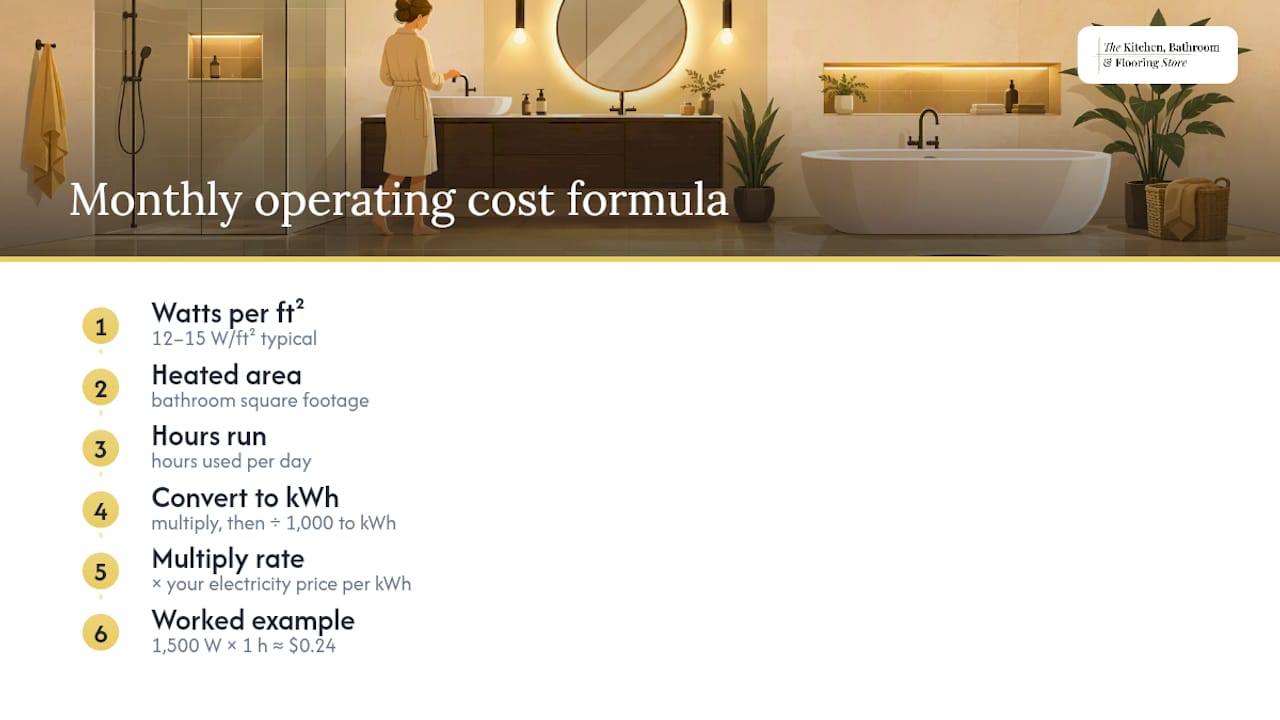
Here’s the math that actually matters once the floor is in: watts per square foot × heated square footage × hours run ÷ 1,000 × your electricity rate per kWh. Electric systems draw roughly 12 to 15 watts per square foot, so a 1,500-watt system used for one hour costs around $0.24 at typical electricity rates.
Run that formula against real bathroom sizes and the numbers stay small. Here’s what that looks like:
Those are upper-bound estimates assuming continuous run time during use. In practice, thermostat scheduling and programmable presets cut actual run time significantly, since the floor only needs to hit temperature before you wake up or step out of the shower, not stay hot all day. Subfloor insulation underlayment also shortens the cycle length because less heat bleeds down into the substrate.
Hydronic systems don’t fit this formula at all. Their operating cost depends on your boiler’s fuel type and efficiency rating, which makes them cheaper to run in homes already heating water for other purposes, but harder to estimate as a standalone bathroom expense.
Electric systems are built for the long haul. Manufacturers typically rate cable and mat systems for 20 to 35 years, and hydronic PEX tubing can outlast the house it’s in, often 50-plus years. The catch with hydronic is the equipment around the tubing. Boilers and pumps generally need service or replacement every 15 to 25 years, even though the tubing itself keeps going.
Warranties vary by manufacturer, so verify three things before you sign a contract:
Most repair calls trace back to a damaged wire from a later renovation, not a defective system, so a written warranty and documented installation testing protect you far more than an extra year of coverage on paper.
Bathrooms are small, which is exactly why heated floors deliver an outsized return here compared to other rooms. You feel the benefit immediately, stepping out of a shower onto a warm floor instead of cold tile, and that instant comfort creates a perceived value that outpaces the raw dollar cost in a way a heated living room floor rarely matches.
That said, heated floors aren’t automatic for every budget. If your remodel is already tight, treat it as optional rather than essential. If you’re doing a full gut renovation and the incremental cost is a few hundred dollars on top of new tile you’re installing anyway, it’s usually worth it.
Ask yourself these questions before deciding:
Pro Tip: Watch for red flags before signing any contract: insufficient subfloor insulation, no confirmed dedicated circuit, or an installer who won’t put the warranty in writing. Any one of those turns a comfort upgrade into a costly callback.
Adding a heated floor rarely happens in isolation. It touches your electrical panel, your subfloor, your tile, and your permits, which is exactly why coordinating separate contractors gets expensive and messy fast. A full-service remodeling package folds all of that under one contract instead of three separate invoices.
That typically includes:
For homeowners who don’t want to become their own general contractor, that coordination alone is often worth more than any per-square-foot savings from hiring separately. Our breakdown of bathroom remodel services in the region covers what that process typically looks like from consult to install.
Measure your actual heated area first, not your total bathroom square footage. Fixtures and cabinetry eat more floor space than most homeowners expect. Second, check your electrical panel for an open breaker slot; this single detail swings your budget more than almost any other line item. Third, get a bundled quote that includes the heated floor alongside your broader remodel instead of pricing it separately.
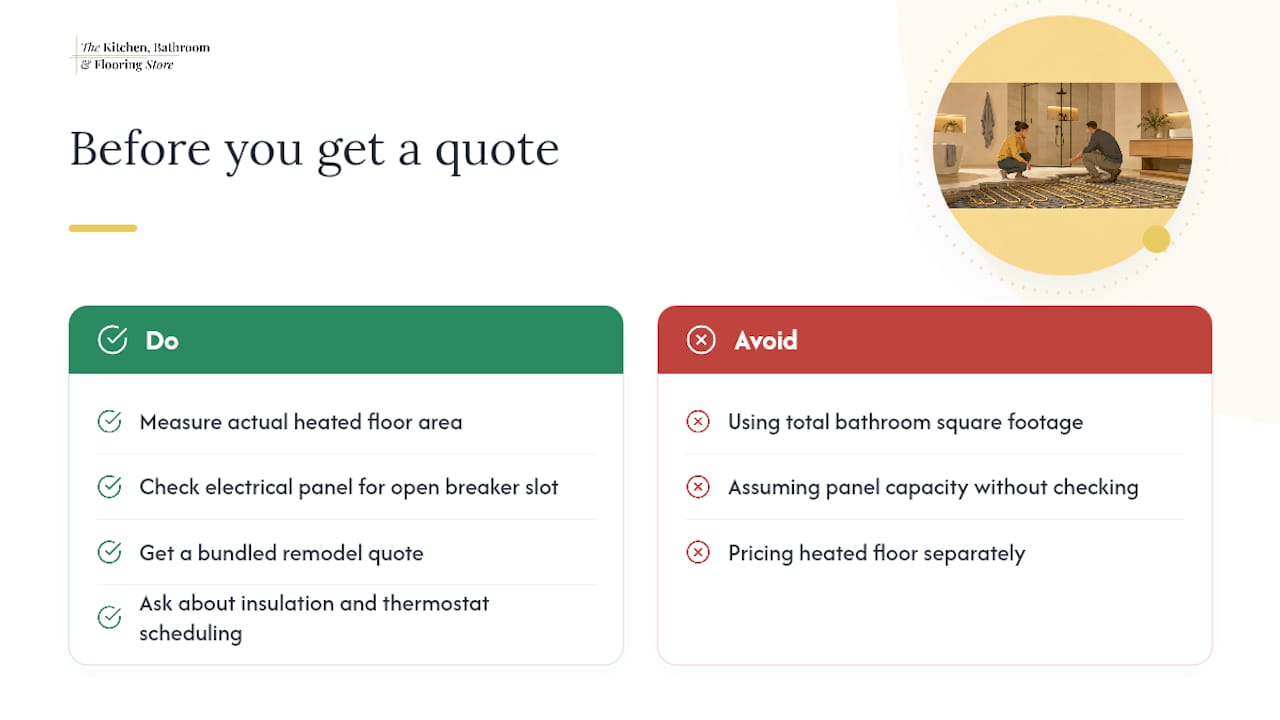
Pro Tip: Ask specifically about insulation underlayment and thermostat scheduling options during your consult. Both directly shape your long-term energy bill.
If you’re weighing this against a full bathroom overhaul anyway, it’s worth having that conversation with a design team before you commit to either project alone.
— Anna
Pricing a heated floor as a one-off project means juggling a flooring installer, an electrician, and possibly a plumber, each with their own invoice and their own schedule. The Kitchen, Bathroom & Flooring Store folds all of that into a single contract, so your heated floor, tile, and any electrical panel work get planned and priced together instead of separately.
A consult with our design team starts with measuring your actual heated area and checking your panel capacity, the two factors that swing your budget most. From there, you get one estimate covering design, product selection, professional installation, and warranty coverage, plus financing options if you’d rather spread the cost over monthly payments. If tile selection is still an open question, our guide to how fixtures shape your remodel budget is worth a look beforehand.
Ready to see real numbers for your bathroom? Get a quote on our bathroom remodeling package and find out what a bundled install actually costs before you commit to anything.
The cost ranges and lifespan figures above come from HomeAdvisor’s national cost data, HomeGuide’s per-square-foot breakdown, and HVAC Database’s electric-versus-hydronic comparison. To run your own operating-cost estimate, use WarmlyYours’ calculator with your heated square footage, expected hours of daily use, and your local electricity rate in cents per kWh.