
Tile is the single most consequential material choice in a bathroom remodel. It determines water performance, safety underfoot, how the room feels every morning, and what a future buyer sees when they walk in. The role of tile in modern bathrooms goes well beyond covering a surface — it is the primary engineering and aesthetic decision rolled into one.
Here is what tile actually does in a modern bathroom:
Pro Tip: When you are weighing a beautiful tile against a practical one, let the zone decide. Wet areas demand performance specs first. Save the decorative risk for dry zones and accent walls where the stakes are lower.
The material you choose shapes everything downstream: maintenance, longevity, how the tile responds to light, and whether it holds up in a steam-filled shower. Each type has a clear best use.
Porcelain is the go-to material for shower walls, wet floors, and any surface that sees daily water exposure. It is vitrified during firing, which means water absorption stays below 0.5% — a critical threshold for wet zones. It is harder than ceramic, resists chips and scratches, and comes in virtually every format, including convincing stone and marble effects. Most large-format and textured tile trends are delivered in porcelain.
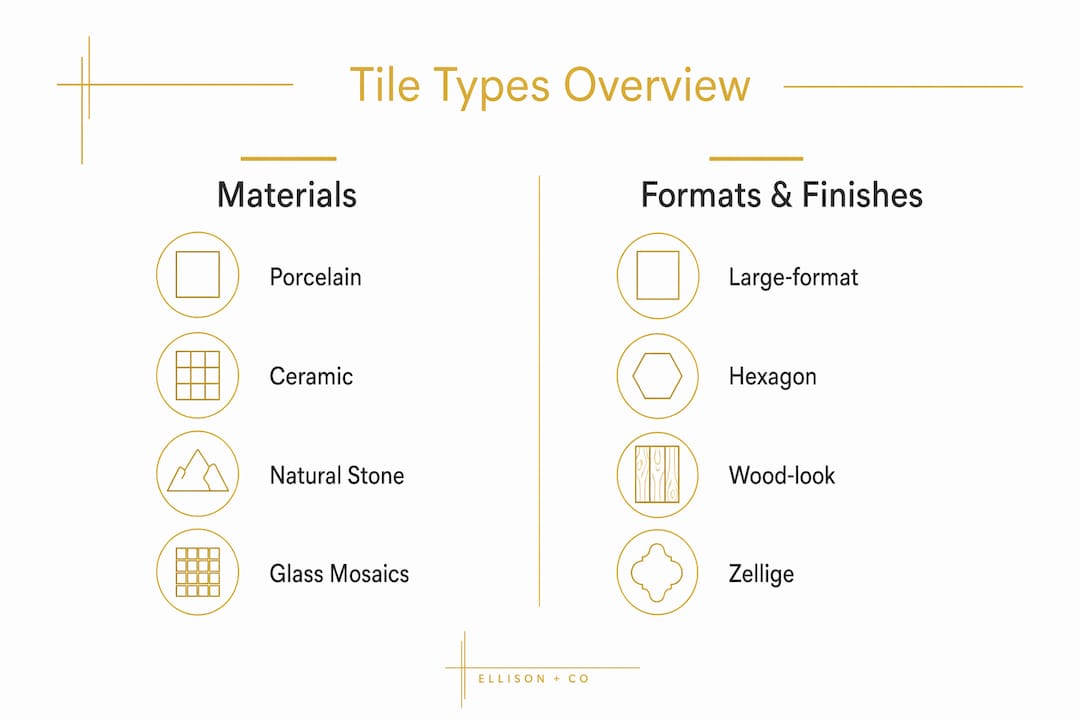
Ceramic costs less and cuts more easily than porcelain, making it practical for complex shapes and dry-zone walls. For shower floors or continuously wet areas, porcelain is the stronger specification. Ceramic works well on vanity backsplashes and lower-traffic wall areas where budget matters.
Marble, travertine, limestone, and slate bring a finish that no manufactured tile fully replicates. They are porous, though, and require sealing before and after grouting, specific adhesives, and movement joints at perimeter changes. When installed correctly, a natural stone bathroom is a different class of finish. When installed incorrectly, staining and cracking are permanent.
Zellige is a handmade Moroccan clay tile with irregular surface texture and glaze variation. Its character comes from imperfection — no two tiles are identical. The variable thickness means each tile needs individual bed adjustment during laying, which takes more time and skill than standard tile. Design leaders in 2026 are choosing zellige and similar artisanal tiles specifically because they create a space that feels personal rather than catalog-perfect.
Glass mosaic tiles work well as shower accents, niche liners, and feature areas. They reflect light in a way ceramic and porcelain do not, adding depth to smaller spaces. The trade-off is grout maintenance: more grout lines mean more surface to clean and seal.
Wood-look planks in porcelain give you the warmth of timber with none of the moisture risk. They work on bathroom floors and even shower walls for a spa-inspired look. Pair them with a matte finish to keep slip resistance where it needs to be.
Tiles at 24x48 inches and above reduce grout lines dramatically, creating a cleaner, more expansive look. They make smaller bathrooms feel larger and are increasingly standard in modern wet rooms. The installation demands are higher — more on that in the cost and timeline section.
Hexagon tiles, whether large-scale on a floor or small-scale as a mosaic, add geometric interest without heavy pattern. On shower floors, small-format mosaics (supplied on mesh sheets) help accommodate drainage slopes. In 2026, herringbone mosaic brick on shower floors is particularly popular.
Finish notes to keep in mind:
Pro Tip: Before you commit to a tile, take a sample home and look at it under your bathroom’s actual lighting at different times of day. Showroom lighting is almost always brighter and more flattering than what you have at home. Batch variation matters too — request samples from the specific batch you plan to order.
For a deeper look at how texture interacts with tile choice, the role of texture in bathroom design is worth reading before you finalize a material.
Not every surface in a bathroom faces the same conditions. A three-zone approach is the clearest way to think about tile selection: wet zone, transition zone, and dry zone.
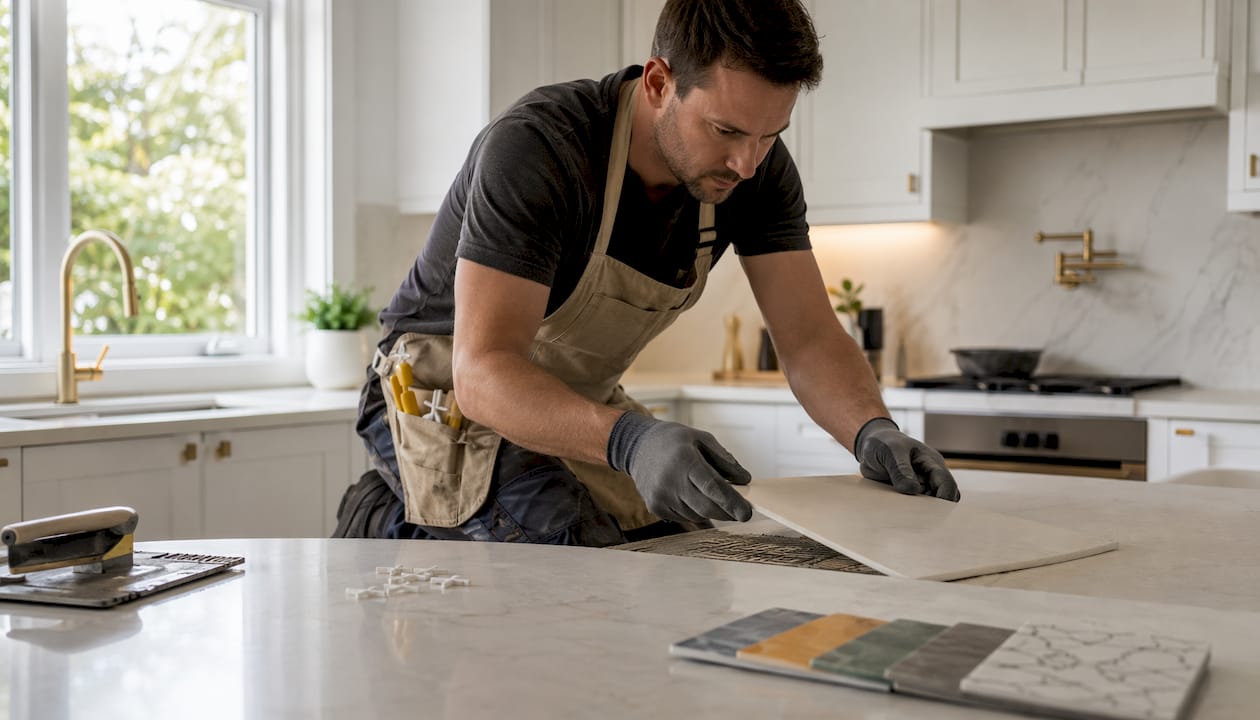
Wet zone includes the shower floor, shower walls, and tub surround. These surfaces are continuously exposed to water, steam, and cleaning products. Tile here needs to be non-porous, slip-resistant, and compatible with a proper waterproofing membrane behind it.
Transition zone covers the main bathroom floor outside the shower. It sees water from splashing and wet feet but is not continuously submerged. Slip resistance still matters here, though the porosity threshold is less strict than in the shower.
Dry zone includes vanity walls, upper walls, and decorative accents. This is where you have more freedom with finishes, materials, and formats because moisture exposure is minimal.
These are the numbers to ask for when evaluating any tile for a wet or transition zone:
Grout is not waterproof. Water eventually gets behind tiles if there is no membrane, causing structural damage that is expensive to fix. The correct sequence is: prepare the substrate, apply a tanking membrane (minimum two coats with tape at joints and plane changes), allow to cure, then tile. For shower and tub installations, this step is non-negotiable.
At changes of plane — where the floor meets the wall, or where the shower tray meets the wall — use sanitary silicone, not grout. Grout is rigid and will crack at moving joints. Silicone moves with the joint and keeps water out.
Pro Tip: For shower floors and continuously wet areas, epoxy grout outperforms cement grout in every practical measure: it cures to a non-porous finish, resists staining and mold, and holds its color. It costs more and requires skill to install correctly, but the maintenance savings over five years make it worth it. Use cement grout in drier zones where the cost difference matters more.
The dominant shift in 2026 bathroom design is away from stark white-and-gray palettes toward warm, organic colorways and materials that feel personal. According to Houzz and NKBA trend data, more than 60% of U.S. homeowners now prefer warm or neutral-warm palettes when renovating primary bathrooms, particularly when the goal is long-term living rather than immediate resale.
Terracotta, sage, sand, deep forest, and warm greige are the palette leaders this year. Artisanal textures — zellige, fluted ceramic, handmade-look surfaces — are replacing the clinical precision of polished white tile. Designer Pierce Jordan describes what is coming back: “Artisanal textures will also lead the design whether through tile, plaster, lighting, or plumbing fixtures.” The clinical catalog look is out; spaces that feel considered and personal are in.
Selective maximalism is also gaining ground. Designers are encouraging bold uses of tile — wrapping showers from floor to ceiling, mixing tile sizes, and using feature walls as a focal point — while cautioning that the shower floor and transitions still need to prioritize slip resistance over drama.
Floor continuity is one of the most effective ways to make a bathroom feel larger. Running the same tile from the main floor into the shower enclosure, with consistent directional orientation, removes visual breaks and creates a seamless envelope. Curbless thresholds with linear drains support this approach.
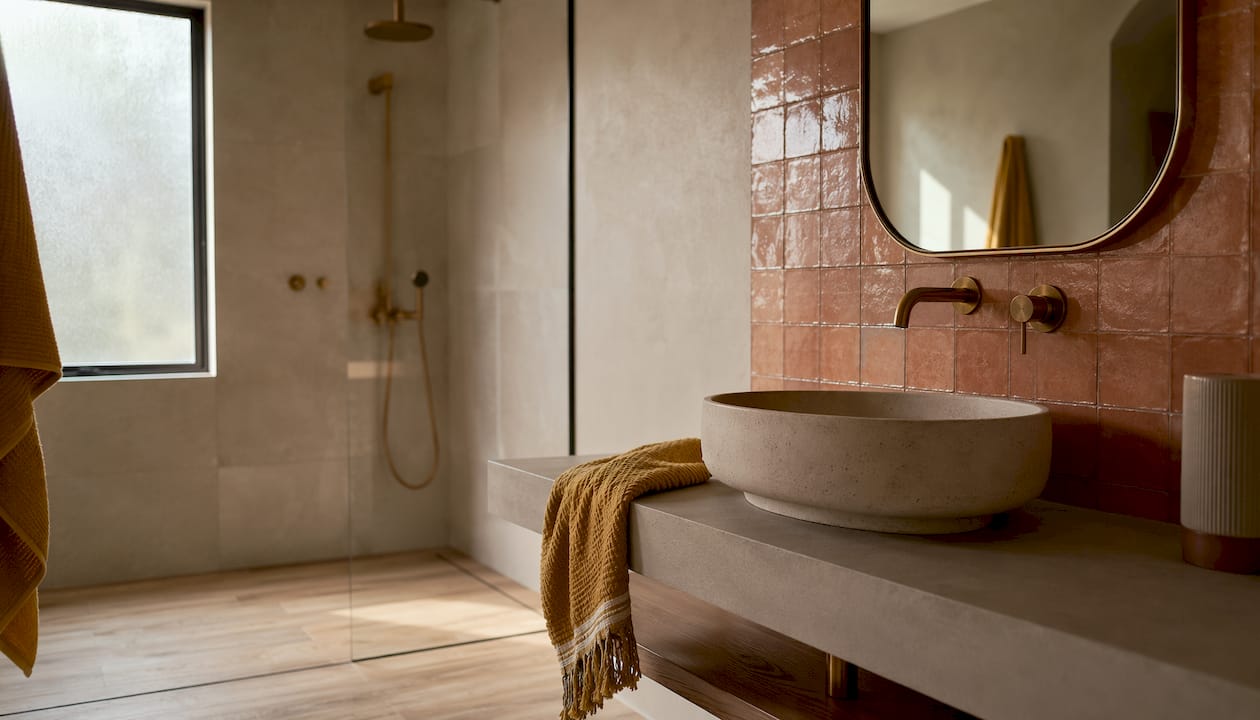
Feature walls work best behind the vanity or on the primary shower wall. A single surface in zellige, a bold mosaic, or a large-format stone-effect tile draws the eye without overwhelming the room. Keep the surrounding surfaces quieter — matte porcelain in a complementary neutral — so the feature reads as intentional rather than busy.
Mixed-size compositions pair large-format wall tile with a smaller-format floor tile. A 24x48 matte porcelain wall with a herringbone mosaic shower floor is a combination that appears frequently in current high-end remodels because it balances the clean-line aesthetic with the grip and drainage benefits of smaller formats on the floor.
For color selection guidance that holds up over time, the bathroom color scheme guide walks through how palette choices interact with tile finishes and natural light.
Balancing personal sanctuary vs. resale appeal:
Pro Tip: Texture creates depth more effectively than color contrast. A matte fluted wall tile next to a smooth matte floor in the same color family reads as layered and intentional. Heavy contrast between dark and light surfaces can make a small bathroom feel choppy rather than dramatic. When in doubt, vary texture before you vary color.
Tile costs vary significantly by material class, format, and installation complexity. The table below gives realistic ranges for a standard U.S. bathroom remodel.
| Tile type | Material cost (per sq ft) | Labor cost (per sq ft) | Notes |
|---|---|---|---|
| Glazed ceramic | $1–$5 | $5–$10 | Best for dry-zone walls; not recommended for shower floors |
| Standard porcelain | $3–$10 | $6–$12 | Versatile; suitable for all zones |
| Large-format porcelain (24x48+) | $5–$15 | $10–$20 | Requires flat substrate; leveling adds cost |
| Natural stone (marble, travertine) | $10–$20 | $12–$20 | Sealing required; adhesive spec is critical |
| Zellige / artisanal tile | $15–$20 | $15–$20 | Variable thickness; slower installation |
| Glass mosaic | $10–$20 | $10–$15 | More grout lines; higher long-term maintenance |
For a standard full bathroom remodel (roughly 50–80 sq ft of tile), total material and labor costs typically run $2,500–$8,000 for mid-range porcelain and up to $15,000 or more for natural stone or artisanal tile with complex layouts. Texture choices and quality installation are investments that increase both daily enjoyment and perceived resale value.
Pro Tip: Budget a contingency of 10–15% specifically for substrate leveling and waterproofing repairs. These are the costs most homeowners do not anticipate, and they are the ones that determine whether the tile lasts 20 years or starts failing in five. Skipping proper prep to save money upfront is the most common and most expensive mistake in bathroom tile projects.
Tile is not just a surface finish. It is a structural and aesthetic commitment that is difficult and expensive to reverse. That permanence is what makes the selection decision so important — and what separates a bathroom that holds its value from one that becomes a liability.
Tile choices are labor-intensive and expensive to correct after installation. The material, texture, and grout system you choose on day one will define the bathroom’s performance and appearance for the next 15–20 years. Getting the wet-zone specs right is not optional — it is the foundation everything else sits on. Investing in appropriate porcelain for the shower and epoxy grout for the joints pays for itself in avoided repairs and sustained resale appeal.
That principle plays out in practical terms. A homeowner who chooses a textured matte porcelain for the shower floor (DCOF above 0.42, water absorption below 0.5%) and pairs it with epoxy grout avoids the mold, staining, and re-grouting cycles that come with cement grout in a wet environment. The upfront cost difference between epoxy and cement grout is modest. The maintenance difference over a decade is not.
The design side follows the same logic. Warm-tone, spa-inspired bathrooms age more gracefully than trend-driven high-contrast schemes. Stone develops character. Warm neutrals do not date the way stark white-and-black does. Homeowners who plan to stay five years or more consistently report higher satisfaction with warm, textured palettes than with the clinical schemes that photograph well but feel cold in daily use.
Pro Tip: When a designer or installer pushes back on your tile choice for a wet zone, listen carefully. The pushback is almost always about a performance spec — slip resistance, porosity, or substrate compatibility — not personal preference. A professional who flags a concern about your shower floor tile is protecting you from a future repair bill.
A clear selection process prevents the most common mistakes. Work through these criteria in order before you commit to any tile.
For bathroom tile installation in Jacksonville, FL, The Kitchen, Bathroom & Flooring Store’s team can walk you through these specs in person.
For glass and specialty tile options, unique glass tile designs from Unique Companies show what is possible with decorative and reflective mosaic formats in a modern bathroom context.
Tile is both a performance material and the primary aesthetic decision in any bathroom remodel — getting the zone-based specs right determines whether the result lasts or becomes a costly repair.
| Point | Details |
|---|---|
| Wet-zone specs come first | Porcelain below 0.5% water absorption and DCOF of 0.42 or higher are the minimums for shower floors. |
| Warm palettes outlast trends | Many U.S. homeowners prefer warm or neutral-warm palettes for primary bathrooms, and they age more gracefully than high-contrast schemes. |
| Substrate prep is non-negotiable | Budget 10–15% contingency for leveling and waterproofing — skipping it is the most common cause of early tile failure. |
| Epoxy grout in wet zones | Epoxy outperforms cement grout in showers: non-porous, mold-resistant, and color-stable without annual resealing. |
| The Kitchen, Bathroom & Flooring Store | Offers design guidance, tile selection, waterproofing, and professional installation as a single-contractor remodel service in Jacksonville, FL. |
The most common tile mistake we see is not a bad tile choice. It is a good tile installed on a bad substrate.
A homeowner selects a beautiful large-format porcelain — the right material, the right finish, the right DCOF. The installer skips the leveling step to stay on schedule. Six months later, two tiles crack along a high spot in the floor. Replacing them means matching the batch (which may no longer be available), removing adjacent tiles, re-leveling the substrate, and re-grouting. What would have cost $200 in leveling compound at the start costs $1,500 to fix after the fact.
The same pattern shows up with waterproofing. A shower that was tiled directly onto drywall without a membrane looks fine for two or three years. Then the grout starts to fail at the base, water gets behind the tile, and the wall structure begins to deteriorate. By the time it is visible, the repair involves demo, mold remediation, new substrate, new waterproofing, and new tile. The original installation saved a few hundred dollars. The repair costs several thousand.
Tile selection matters enormously. But the installation decisions — substrate prep, waterproofing, adhesive spec, grout choice — are what determine whether that tile is still performing in 15 years or causing problems in three. At The Kitchen, Bathroom & Flooring Store, we treat those steps as non-negotiable parts of every project, not optional add-ons.
Choosing the right tile is only half the project. Getting it installed correctly — with proper substrate prep, waterproofing, and the right grout system for each zone — is what makes the difference between a bathroom that holds up and one that needs repairs in a few years.
The Kitchen, Bathroom & Flooring Store handles the full scope: personalized design guidance, an in-store tile selection across porcelain, natural stone, mosaic, and artisanal formats, professional installation with waterproofing and substrate prep included, and project management from start to finish. No coordinating separate contractors. No gaps in accountability. One team, one timeline.
Our bathroom remodeling packages are built for homeowners who want a cohesive result without the stress of managing multiple trades. If you are ready to see tile options in person or get an estimate for your project, visit our showroom or request a consultation online. You can also browse our tile and stone selection to get a sense of what is available before you come in.