
Texture in bathroom design is defined as the deliberate use of surface variation, both tactile and visual, to add depth, character, and sensory richness to a space. The role of texture in bathroom design goes far beyond decoration. It shapes how a room feels underfoot, how light behaves across walls, and how comfortable the space feels to use every day. Unlike color or pattern alone, texture works on two levels at once: what you see and what you touch. When you get both right, a bathroom stops feeling like a utility room and starts feeling like a retreat.
Texture creates visual interest by giving flat surfaces a sense of movement and dimension. A smooth, painted wall reflects light evenly and reads as a single plane. A fluted or rippled tile breaks that light into shifting shadows and highlights, turning a wall into an architectural feature. That effect, known in design as chiaroscuro, is the same principle that makes sculpture more compelling than a flat drawing.
In 2026, bathrooms emphasize tangible surfaces that encourage sensory engagement as much as visual appeal. This shift means texture has effectively replaced color as the primary design tool in many contemporary bathrooms. A neutral palette with three different surface finishes reads as far more sophisticated than a colorful room with uniformly smooth walls.

The table below shows common texture types and their visual effects in bathroom spaces.
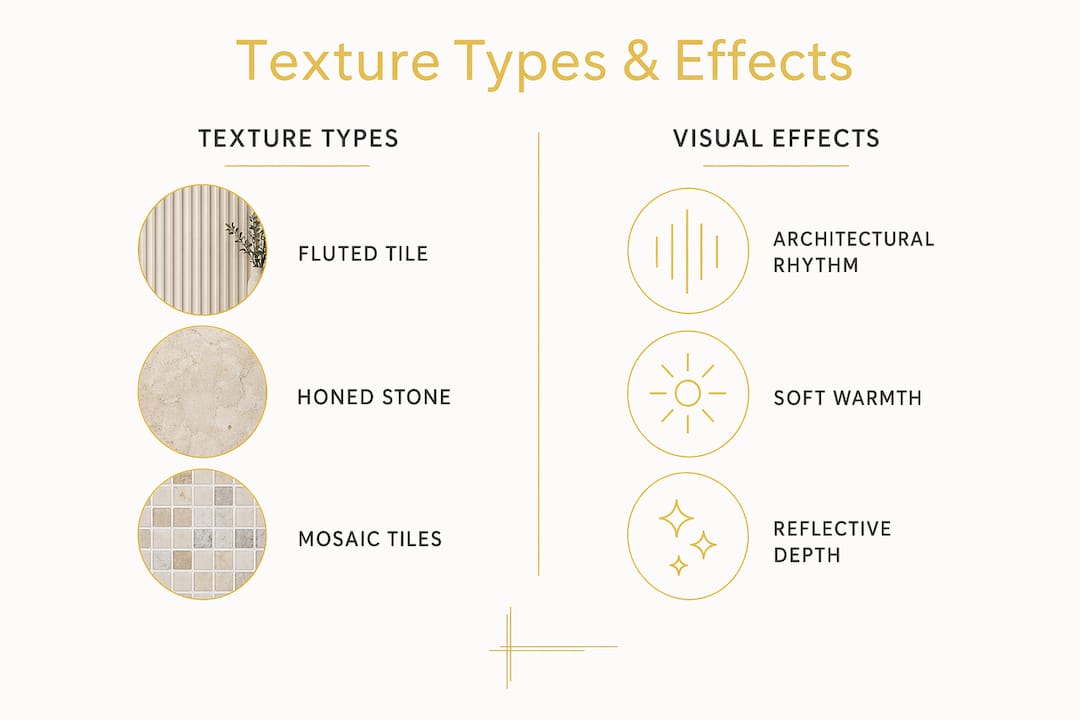
| Texture type | Visual effect | Best application |
|---|---|---|
| Fluted tile | Architectural rhythm, vertical emphasis | Feature wall, vanity surround |
| Wood-effect porcelain | Warmth, organic depth | Floor, lower wall panels |
| Honed stone | Soft light diffusion, understated richness | Countertop, shower wall |
| Mosaic tile | Pattern density, visual texture through grout lines | Shower floor, niche accent |
| Rippled plaster | Sculptural movement, handcrafted feel | Ceiling or single accent wall |
Pro Tip: Pair one high-texture surface with two low-texture surfaces in the same space. This ratio keeps the room feeling layered without becoming visually busy.
Tactile variation does more than look good. It changes how a bathroom feels to use, and that matters especially in wet environments where safety and comfort overlap.
The most practical example is the shower floor. A DCOF rating of at least 0.42 is the industry standard for slip resistance in wet areas. Textured porcelain and mosaic tiles meet this threshold naturally because their surface finish and grout lines create mechanical grip. Polished stone, by contrast, often falls below that rating when wet, regardless of how beautiful it looks dry.
Beyond safety, tactile richness creates emotional comfort. A bathroom lined entirely in smooth, cold surfaces can feel clinical. Introducing a ribbed vanity front or carved stone accent gives your hands something to engage with and your eye a place to rest. That sensory layering is what separates a bathroom that photographs well from one that actually feels good to be in.
Maintenance is the trade-off you need to plan for:
Pro Tip: When choosing a highly textured surface for shower walls, run your hand across a sample tile with a damp cloth. If cleaning it feels tedious on a 6-inch sample, it will feel exhausting across an entire shower.
The biggest mistake homeowners make with texture is using too much of it without a clear hierarchy. Every surface competing for attention creates visual noise, not visual interest.
The most effective approach is to select one “hero” texture element and let everything else support it. Establishing one focal texture around which the rest of the design resolves prevents clutter and keeps the room feeling intentional. A fluted stone feature wall works beautifully when paired with a smooth floor and simple white fixtures. The same fluted stone paired with a patterned floor and a textured ceiling becomes overwhelming.
Reflective surfaces like mirrors and glossy tiles balance heavy tactile visuals by bouncing light around the room. This interplay opens up the space and prevents it from feeling cramped. In a small bathroom, one textured wall combined with a large mirror and a high-gloss floor tile is a reliable formula that consistently works.
Color plays a supporting role here. A tonal palette that keeps all textures within the same color family avoids harsh contrasts that overwhelm small spaces. Think warm stone, warm plaster, and warm timber tones together rather than mixing cool gray tile with warm terracotta plaster.
Common pitfalls to avoid when layering textural elements:
Pro Tip: Before committing to a textured wall tile, order a sample and live with it in your bathroom for a week. Light changes throughout the day, and a texture that looks subtle in a showroom can feel intense under your bathroom’s specific lighting conditions.
Material selection defines the quality of texture in a bathroom renovation. The right material delivers both the visual effect you want and the durability the space demands.
Honed and leathered stone finishes diffuse light more subtly than polished surfaces and highlight natural stone variations with a quiet richness. These finishes suit bathrooms where the goal is warmth and timelessness rather than drama. Leathered granite, for example, has a slightly pebbly surface that feels substantial underhand and reads beautifully in matte-finish bathrooms.
Popular textured materials in 2026 include:
Neutral and minimalist bathroom designs rely heavily on these textured materials to create warmth and character. Without texture, a white or gray bathroom reads as clinical. With the right textured surface, the same palette feels considered and calm. You can explore how these materials fit into broader custom bathroom design styles to find the approach that suits your renovation goals.
The practical trade-offs are worth knowing before you buy. Honed stone costs more than textured porcelain and demands more maintenance. Porcelain costs less, requires almost no upkeep, and now replicates natural materials convincingly enough that the visual difference is minimal in most residential settings. For wet zones specifically, textured porcelain with a confirmed DCOF rating above 0.42 is the most reliable choice for both safety and longevity.
Texture is the single most effective tool for adding depth, safety, and character to a bathroom renovation when applied with a clear hierarchy and a tonal palette.
| Point | Details |
|---|---|
| Texture serves dual roles | It creates visual depth and provides tactile safety, especially in wet zones. |
| One hero element works best | Select one focal texture and support it with simpler surrounding surfaces. |
| Tonal palettes unify texture | Keeping textures within the same color family prevents visual clutter in small bathrooms. |
| Safety ratings matter | Choose floor tiles with a DCOF rating of at least 0.42 for wet areas. |
| Maintenance varies by material | Natural stone needs annual resealing; textured porcelain requires almost no upkeep. |
Most homeowners I work with come in thinking texture is a finishing touch. They pick their tile, choose their fixtures, and then wonder whether to add a textured accent wall at the end. That sequence gets it backwards.
Texture is a structural decision, not a decorative one. It determines how light moves through your bathroom, how safe your floor is when wet, and how the room feels at 7 AM when you are half awake and not thinking about design at all. Getting the texture right from the start changes everything downstream, including which fixtures look appropriate, which colors work, and how much maintenance you sign up for.
The misconception I see most often is that more texture equals more luxury. It does not. A single leathered stone wall in an otherwise calm room feels genuinely luxurious. Five competing textures in the same room feels like a showroom floor. Restraint is the skill. Knowing what to leave smooth is just as important as knowing what to make tactile.
My honest advice: pair your texture choices with your color scheme decisions from the very beginning of your renovation plan. The two are inseparable, and treating them separately is the fastest route to a bathroom that looks assembled rather than designed.
— Anna
Planning a bathroom renovation with texture at its center takes more than a mood board. You need access to real materials, professional guidance on what works in wet zones, and installation you can trust.
The Kitchen, Bathroom & Flooring Store handles every step of that process in Jacksonville, FL. Our bathroom remodeling packages include design consultations where we help you select textured surfaces that match your aesthetic goals and your maintenance reality. From honed stone countertops to textured porcelain shower floors, our team brings the materials and the expertise together. We also offer a full range of tile and stone options so you can see and feel your choices before committing. No guesswork, no second contractor, just one team from concept to completion.
Texture adds visual depth, tactile comfort, and functional safety to bathroom spaces. It works on two levels at once: what you see and what you feel underfoot or against your hand.
Choose tiles with a DCOF rating of at least 0.42 for floors and shower bases. Textured porcelain and mosaic tiles naturally meet this standard and require minimal maintenance compared to natural stone.
Yes, when used correctly. Pair one textured feature surface with reflective elements like mirrors or glossy tiles to bounce light and open up the space. Avoid mixing multiple competing textures in a small room.
Experts recommend sealing natural stone before installation and performing a full reseal at least once a year in wet bathroom areas to protect the surface and maintain moisture resistance.
Textured porcelain is the lowest-maintenance option. It resists moisture without sealing, holds its finish over time, and now replicates natural stone convincingly enough for most residential applications.