
Butcher block is a smart pick for homeowners who love natural warmth, don’t mind a little upkeep, and want a surface they can repair instead of replace. It’s the wrong pick if you want zero maintenance near a sink. Installed cost runs $40 to $200 per square foot, and with regular oiling, it can last 20 to 50 years or more. Professional installers can help you install it right the first time.
TL;DR:
- Water exposure is the main risk for butcher block, causing warping or stains near sinks and leaks that can be difficult to fix once set.
- Regular oiling is essential, with weekly oiling in the first month, monthly through the first year, and bi-annual to tri-annual maintenance afterward to prevent damage.
- The typical lifespan ranges from 20 to 50 years with proper care, but high-end hardwoods can last up to 70 years, especially with refinishing.
- Repairing scratches or burns on butcher block is simple and inexpensive, involving sanding and re-oiling, unlike stone that often requires professional repairs.
- Placement is best for islands or dry prep zones, while sink areas demand extra sealing, sealing, and more frequent inspections to mitigate water damage risks.
The warmth argument isn’t just decorative talk. Wood softens a kitchen’s visual temperature in a way stone can’t, and it works across farmhouse, modern, and transitional styles without looking out of place. That warmth develops character over time, too. A well-loved butcher block island picks up a patina of small marks and color shifts that homeowners often grow attached to, rather than trying to hide.
The bigger functional win is repairability. When the surface gets a burn mark or a deep scratch, you sand it down and reapply oil. No slab replacement, no stone fabricator visit. HomeGuide’s research on butcher block confirms this refinishing process is one of the clearest advantages wood holds over stone, which typically needs professional repair for chips or cracks.
Quick advantages at a glance:
Pro Tip: Ask your fabricator about FSC-certified maple or walnut if sustainability matters to you. It costs little extra and gives you a talking point buyers appreciate later.
Water is butcher block’s biggest enemy. Standing water around a sink, dishwasher steam, or a slow faucet leak can swell the wood, cause warping, or leave dark stains that soak into the grain. Moisture exposure is consistently cited as the primary cause of early failure in wood countertops, and it’s rarely a quick fix once staining sets in.
Heat is the second problem. A hot pan set directly on the surface can scorch or discolor it permanently, so trivets aren’t optional, they’re mandatory.
If you want a surface you can ignore for a decade, butcher block will disappoint you.
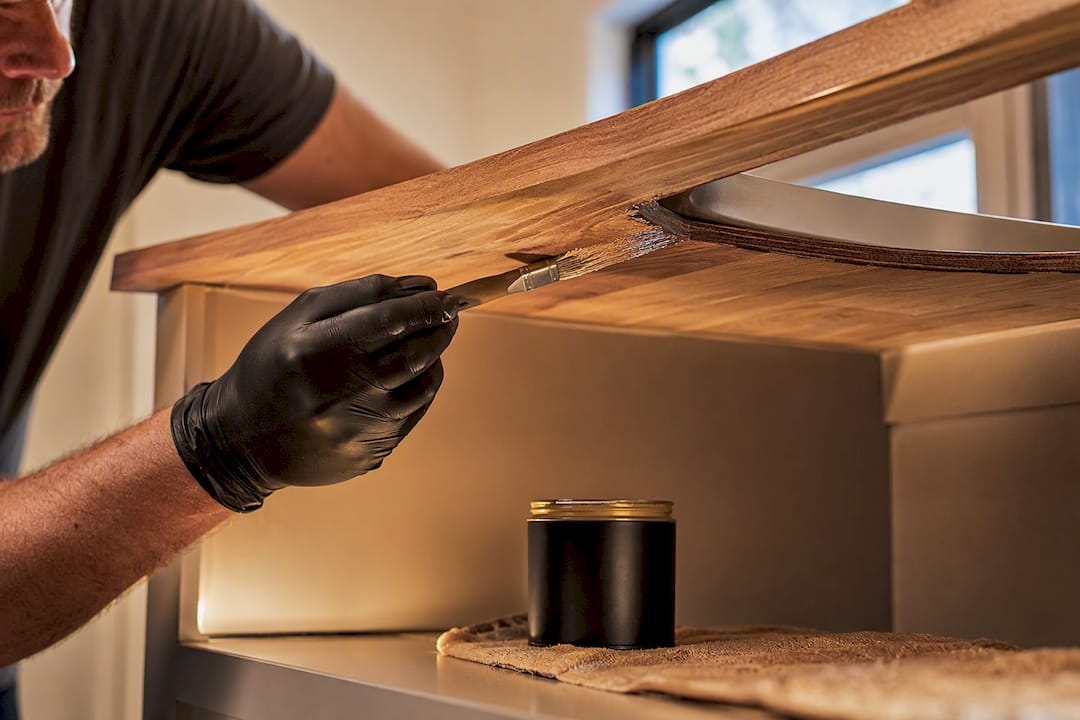
Daily care is simple: mild soap, warm water, and a dry towel. Skip the harsh chemicals. The oiling schedule is where most homeowners fall behind, and it’s also where most failures start.
Finish choice matters more than most homeowners realize. Mineral oil is food-safe and easy to reapply but offers the least water resistance. Hard-wax oils and products like Waterlox hold up better against moisture, while polyurethane forms a hard shell that looks great until it fails, and then it’s much harder to repair.
Pro Tip: Seal the underside and every cutout edge at installation, not just the top. Inspect the area around your faucet base and sink rim once a year, since that’s where hidden moisture damage starts.
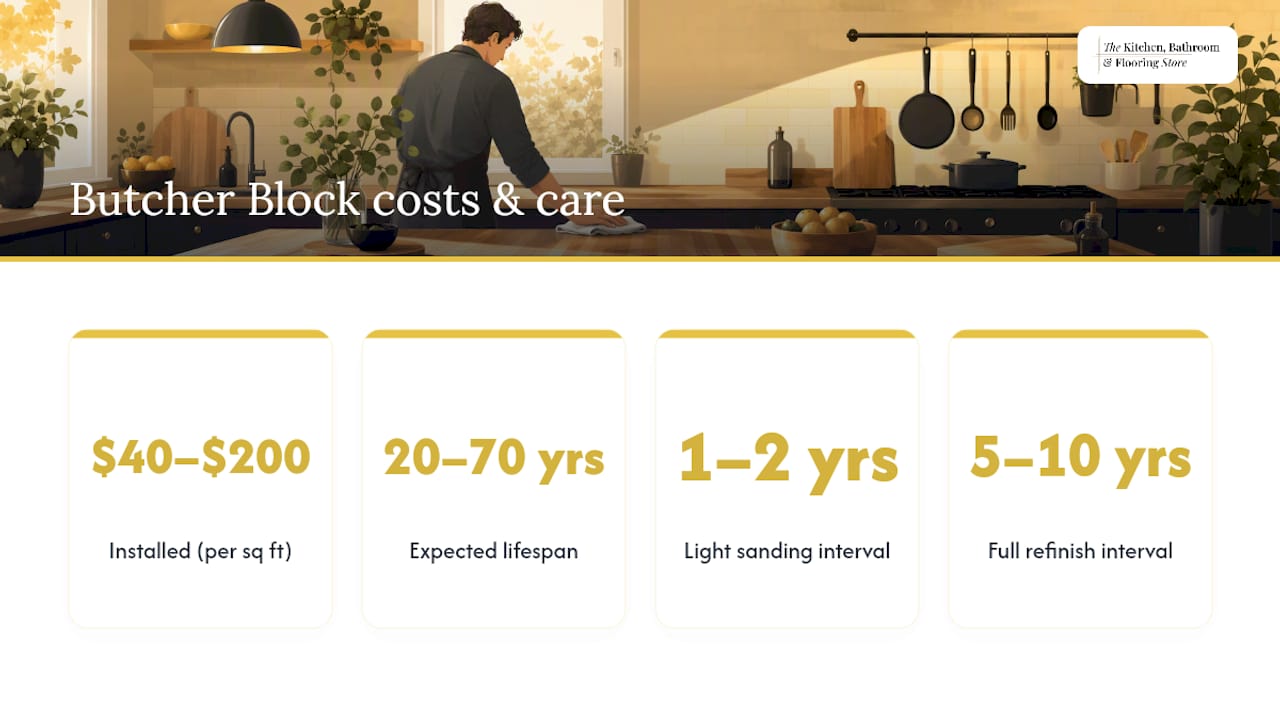
Installed butcher block runs $40 to $200 per square foot, with price climbing toward the high end for end-grain construction, premium species like walnut, or custom-fabricated islands. Edge-grain maple in a standard thickness sits closer to the lower end.
Lifespan follows the same range logic. Expect 20 years on the low end for basic care, stretching to 40 or even 70 years for well-maintained hardwood builds with consistent oiling. Refinishing keeps that clock running: light sanding every 1 to 2 years, a full refinish every 5 to 10 years, typically a fraction of what a stone replacement would cost.
For a 40 square foot kitchen, a mid-range edge-grain maple install might land near $3,200 to $4,800. An island-only project in premium walnut could push higher per square foot but cost less in total since the footprint is smaller.
Hard maple is the workhorse choice for busy kitchens. Its Janka hardness rating gives it real resistance to dents compared to softer woods, which is why it shows up in most commercial butcher blocks. Walnut brings a richer, darker color but is noticeably softer, so it shows wear faster. White oak has an open, textured grain that hides small scratches well. Teak carries natural oils that resist moisture better than most species, and bamboo offers an eco-friendly alternative with decent hardness.
Thickness affects lifespan directly. A standard 1.5 inch counter supports several refinishing cycles before it gets too thin; anything under 1 inch limits how many times you can sand it down.
Islands and baking stations are the ideal home for butcher block. They stay dry, see less steam exposure, and are easy to access for regular oiling.
Sink runs are the riskier placement. If you insist on wood there, protective measures matter: a tougher sink-area finish like Waterlox, fully sealed cutouts, and more frequent inspection.
Many designers frame this island-plus-stone layout as the smartest way to get warmth without gambling on wood near water.
Wood wins on repairability. Stone and quartz win on permanence, heat resistance, and stain resistance. Testing consistently ranks butcher block lower than quartz or granite for scratch and heat performance, but wood pulls ahead the moment something needs fixing rather than replacing.
If warmth and the ability to fix your own mistakes matter more to you than walk-away durability, butcher block is the better call.
Most countertop comparisons treat durability as a single score, as if a material either holds up or it doesn’t. That framing misses what actually matters over 20 years of kitchen life: not whether a surface gets damaged, but what happens after it does.
Stone that chips near a sink usually means a service call. Butcher block that scars usually means an afternoon with sandpaper and oil. That difference in who controls the fix, and what it costs, is the real argument for wood, not the warmth alone.
Professional services often walk homeowners through where butcher block earns its keep, typically islands and dry prep zones, and where to steer clients toward stone instead, usually sink runs and heavy-splash areas. That combination helps keep callbacks low and satisfaction high across remodels.
— Anna
Picking the right species, grain, and finish is only half the job — see how to makeover my house for guidance on coordinating your choices for a successful remodel. Getting the sink cutouts sealed, the cabinets reinforced, and the finish matched to how you actually cook is where most DIY installs go wrong. Some remodeling services handle design consultation, product selection, measurement, and professional installation under one roof, so you’re not coordinating separate contractors for a single countertop.
If butcher block fits your kitchen the way we described above, here’s how to move forward:
We also offer financing plans that break the project into manageable payments. Start with our bathroom remodeling packages page to see how we structure full remodels, or reach out directly to talk through your kitchen countertop project.
The biggest downside is water sensitivity. Standing water, dishwasher steam, or leaks near a sink can warp the wood or leave dark stains, and the surface also scratches and dents faster than stone.
There’s no widely established “rule of 7” in butcher block care. The more reliable guidance is the oiling schedule: weekly for the first month, monthly through year one, then every 1 to 3 months depending on climate and use afterward.
Yes. Design outlets continue to feature butcher block as part of the warm, natural-material trend, often paired with stone perimeters rather than used throughout an entire kitchen.
With regular oiling and care, butcher block typically lasts 20 to 50 years, and well-maintained hardwood builds can reach 40 to 70 years.
Yes. Our design consultations walk you through where butcher block fits your kitchen, typically islands and dry prep zones, and where stone makes more sense, such as sink-heavy perimeters.