
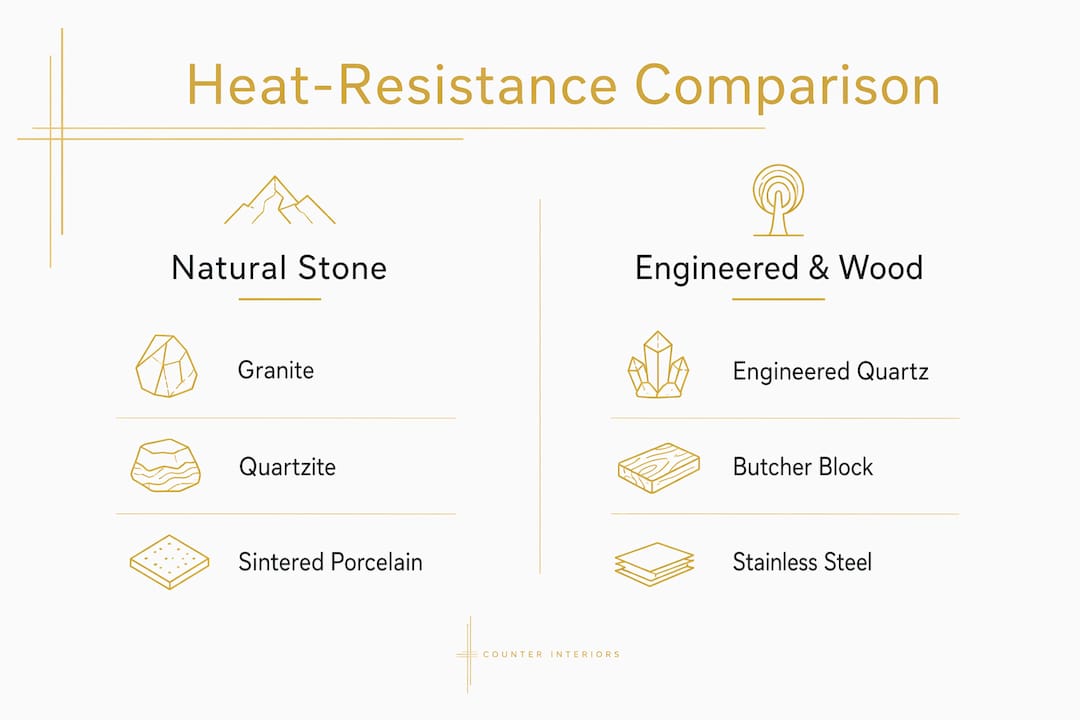
Natural stones like granite and quartzite, sintered/porcelain materials (including Dekton and Neolith-class slabs), and stainless steel are the most heat-resistant countertop options for residential kitchens. If you cook heavily or frequently move hot pans from the stove to the counter, these are the materials worth prioritizing. Engineered quartz is the one popular surface that deserves real caution: most manufacturers warn that sustained contact above typical cooking temperatures can scorch, discolor, or crack the resin binder that holds the material together. Sintered stone and stainless steel, by contrast, tolerate temperatures far beyond anything a residential kitchen produces.
Not every countertop handles heat the same way, and the differences matter more than most product listings let on. Here is a clear breakdown of each major material.
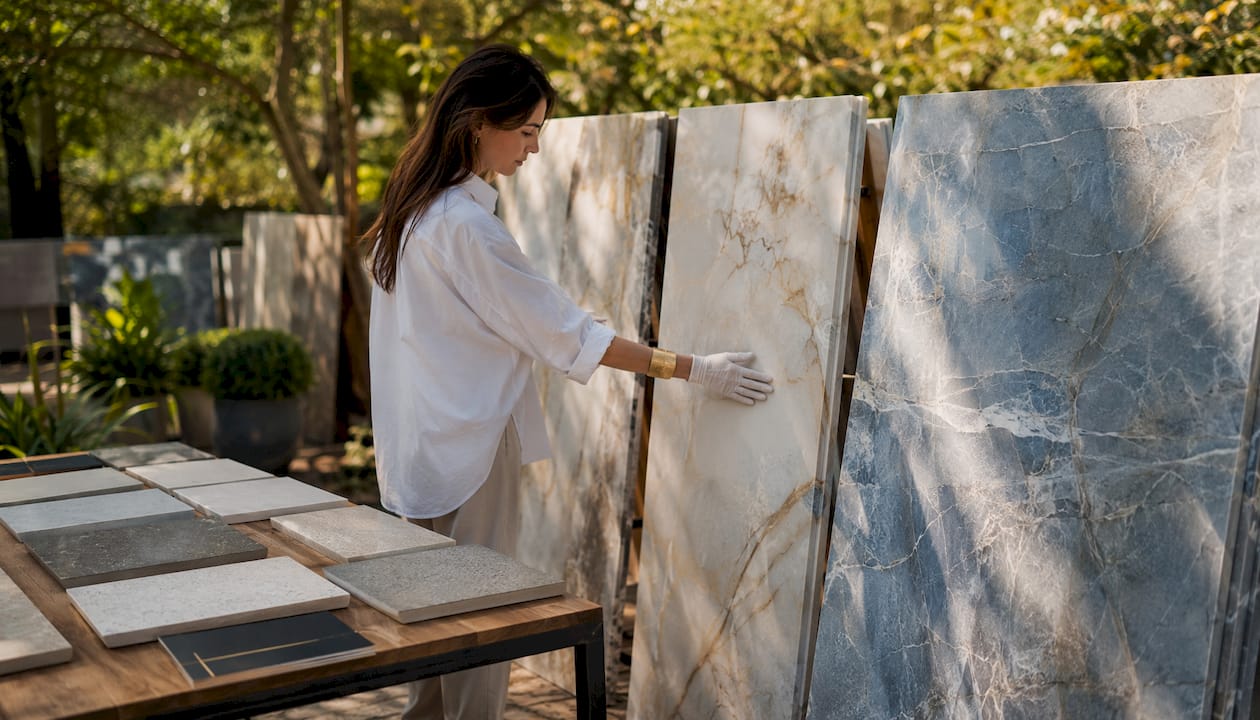
Granite handles very high temperatures—often cited up to 1,200°F or higher—without damage, making it suitable for active cooks. You can briefly set a hot pan directly on it without scorching or discoloration. It does require periodic sealing (typically once a year) to prevent staining, and it can chip at edges under heavy impact.
Quartzite is a natural metamorphic stone known for strong heat tolerance. It is frequently confused with engineered quartz, but the two materials behave very differently under heat. Quartzite contains no resin; it is solid natural stone formed under geological pressure. It does need sealing and can be pricier than granite.
The quartz vs. quartzite confusion is one of the most common and costly mistakes homeowners make. Engineered quartz contains roughly 10% polymer resin; quartzite is 100% natural stone. Always confirm which material you are actually purchasing before signing off on a fabrication order.
Engineered quartz is primarily composed of crushed stone bound by polymer resin. The resin is what fails under high heat, not the mineral quartz itself. Manufacturer guidelines vary, but most brands recommend against sustained heat above moderate cooking temperatures and advise checking your specific brand’s care instructions. Placing a cast-iron skillet fresh from a 450°F oven directly on quartz is a real warranty risk.
Sintered stone is manufactured by exposing raw minerals to extreme heat and pressure, producing a non-porous, resin-free slab that is fire-rated and tolerates temperatures up to 1,700°F or even higher according to some sources. It resists UV fading, making it one of the few countertop materials equally suited to outdoor kitchens and indoor rangetop surrounds. Thin panels require proper substrate support during installation.
Stainless steel is the countertop of professional kitchens for a reason: it is completely impervious to heat and liquids. For residential use, it is effectively heat-proof. It shows scratches and fingerprints easily, and the industrial look does not suit every design style, but for a dedicated cooking zone or island inset near a range, nothing performs more reliably.
Soapstone has a long history in laboratory countertops and wood-burning stoves, and that heritage reflects its genuine heat tolerance. It handles repeated heating and cooling cycles without cracking, with heat tolerance often cited around 450°F. It is naturally non-porous and does not need sealing. The surface is softer than granite and will scratch, but scratches can be sanded out.
Concrete countertops can handle high temperatures in practical kitchen use, with durability often cited up to around 1,000°F in real-world contexts. The bigger concern is sealing: concrete is porous and must be sealed properly and resealed periodically to prevent staining. Hairline cracks can develop over time, particularly near cutouts.
Marble handles heat from hot pans without damage, but it is more porous than granite and etches easily from acidic liquids like lemon juice, vinegar, or wine. For a kitchen where heat is the primary concern, marble performs adequately. For a kitchen where cooking also involves acidic foods and spills, the etching risk often outweighs the heat benefit.
Porcelain slabs (distinct from sintered stone but often grouped with it) tolerate temperatures over 1,000°F and resist UV fading, which makes them a strong candidate for both indoor and outdoor use. Thin-profile panels are popular for a sleek modern look, but they require careful installation with proper substrate support to avoid cracking under thermal stress.
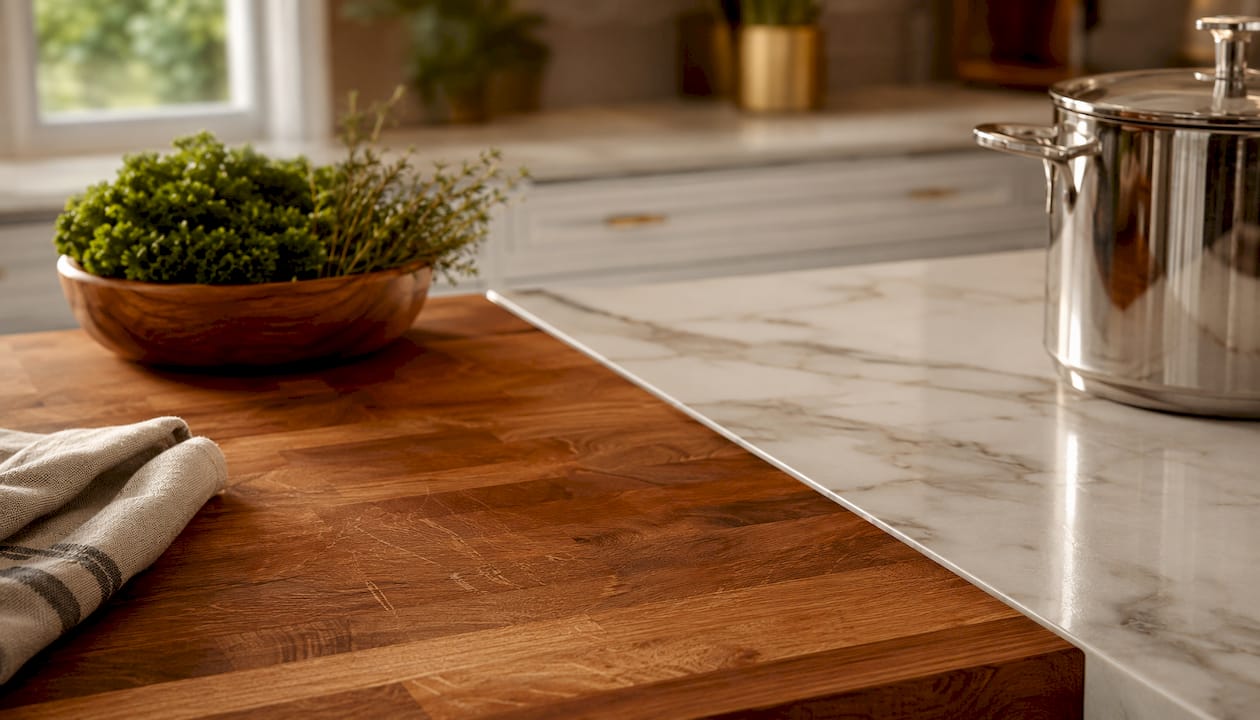
Butcher block is warm, affordable, and beautiful, but it scorches at around 350°F and should never have hot pans placed directly on it. It also requires regular oiling to prevent drying and cracking. For a kitchen remodel focused on heat resistance, wood works best as an accent surface away from the range, such as an island prep area or a coffee station.
Pro Tip: Consider a dedicated “hot zone” inset near your cooktop. A small section of sintered stone, granite, or stainless steel set into an otherwise quartz or butcher-block kitchen gives you a heat-safe landing spot without redesigning the entire countertop layout. This is one of the most practical upgrades we recommend for active home cooks.
| Material | Max safe temp (approx.) | Hot pan safe? | Thermal shock risk | Scratch & stain resistance | Maintenance | Typical installed cost (per sq ft) | Outdoor/rangetop suitable? | Installation complexity |
|---|---|---|---|---|---|---|---|---|
| Granite | 1,200°F+ | Yes (brief) | Low | High scratch; seal for stains | Annual sealing | $40–$100 | Yes (indoor rangetop) | Moderate |
| Quartzite | 800–1,000°F | Yes | Low | High; seal for stains | Seal every 1–2 yrs | $60–$120 | Yes | Moderate |
| Engineered quartz | ~300°F sustained | No — use trivets | Moderate | Excellent (no sealing) | None required | $50–$120 | Not recommended | Moderate |
| Sintered porcelain* | 1,700°F+ | Yes | Very low | Excellent | None required | $65–$150 | Yes (indoor & outdoor) | High (thin slabs) |
| Stainless steel | Effectively unlimited | Yes | Very low | Scratches; stain-proof | Wipe clean | $75–$150 | Yes | High (custom fab) |
| Soapstone | ~450°F | Yes (moderate heat) | Low | Soft; scratches buff out | Mineral oil; no seal | $70–$120 | Limited | Moderate |
| Concrete | ~1,000°F | Yes (sealed) | Moderate (near cutouts) | Moderate; seal required | Reseal 1–3 yrs | $65–$135 | Limited | High |
| Marble | 900°F+ | Yes (heat only) | Low | Etches from acids | Annual sealing | $60–$150 | Limited | Moderate |
| Porcelain slabs | 1,000°F+ | Yes | Low–moderate | Excellent | None required | $55–$130 | Yes | High (thin slabs) |
| Butcher block | ~350°F | No | Moderate | Scratches easily | Monthly oiling | $30–$80 | No | Low–moderate |
*Sintered porcelain brands include Dekton and Neolith-class materials; verify specific product specs with your fabricator.
Picking the right surface comes down to four honest questions about how you actually cook and what you are willing to maintain.
Step 1: Assess your cooking intensity. Do you cook daily with cast iron, pull sheet pans straight from a 450°F oven, or run a gas range at high heat for long periods? If yes, eliminate engineered quartz and butcher block from the heat-zone shortlist immediately. Granite, quartzite, or sintered porcelain belong near your range.
Step 2: Map where heat actually lands. The area within 18 inches of your cooktop or range takes the most thermal stress. The island prep area and perimeter counters see far less. You do not need to spec the same material everywhere. A kitchen space plan that designates a heat zone near the range and a separate prep zone lets you mix materials strategically.
Step 3: Set a realistic budget. Natural stones and sintered materials carry higher installed costs than engineered quartz or laminate. A budget remodel checklist helps you allocate spend where it matters most: put the premium heat-resistant material at the range, and use a more affordable option elsewhere.
Step 4: Decide how much maintenance you will actually do. Granite and quartzite need annual sealing. Concrete needs resealing every one to three years. Engineered quartz and sintered porcelain need almost nothing. Be honest here: a beautiful granite countertop that never gets sealed will stain.
Combining materials is a well-established professional recommendation. A quartz perimeter with a granite or sintered inset at the range gives you the low-maintenance benefits of quartz across most of the kitchen while protecting the one area that actually sees high heat. The cost premium for a small inset is modest compared to replacing a scorched quartz section.
| Layout zone | Recommended material | Why |
|---|---|---|
| Rangetop surround (within 18 in.) | Granite, quartzite, sintered porcelain, or stainless | Handles direct heat and thermal cycling |
| Perimeter prep counters | Engineered quartz or porcelain slab | Low maintenance, stain-resistant, wide color range |
| Island / baking station | Quartzite, marble, or butcher block | Aesthetic appeal; lower heat exposure |
| Outdoor kitchen | Sintered porcelain or stainless steel | UV-stable, weather-resistant, heat-proof |
Two distinct failure modes cause most countertop heat damage, and understanding them helps you protect any surface you choose.
The first is resin failure. Engineered quartz is a composite material containing crushed stone and polymer resin. The mineral quartz itself is highly heat-tolerant; the resin is not. When sustained heat above approximately 300°F reaches the surface, the resin softens, yellows, or scorches. The damage is usually permanent and often voids the manufacturer warranty. This is why a cast-iron skillet straight from the oven is a real risk on quartz, even though the surface feels hard and durable.
The second failure mode is thermal shock. This happens when a large, rapid temperature differential causes uneven expansion across a slab. The most vulnerable spots are thin areas, edges, and zones near cutouts for sinks or cooktops. A cold slab hit with a very hot pan near a thin edge can crack. Thermal shock is rarer than resin scorching but more structurally serious, and it can affect natural stones too if conditions are extreme enough.
Natural stones like granite and quartzite resist both failure modes because they contain no resin and are geologically formed under heat. Sintered stone goes further: its manufacturing process exposes raw minerals to extreme heat and pressure, producing a slab that is fire-rated and resin-free from the start.
Statistic callout: Engineered quartz manufacturers typically rate their products for brief contact up to typical warm pan temperatures, with most advising against sustained heat beyond that. Some brands set the threshold lower — always check your specific product’s care guide before installation.
Pro Tip: Ask your installer to use thicker edge profiles (at least 1.5 inches) near cooktop cutouts, regardless of the countertop material. Thicker edges distribute thermal stress more evenly and reduce the risk of cracking at the most vulnerable point in the slab. Proper stone countertop protection starts at the fabrication stage, not after installation.
Granite, quartzite, sintered porcelain, and stainless steel are the most reliable heat-resistant countertop options for active kitchens, while engineered quartz requires trivets and careful placement near any heat source.
| Point | Details |
|---|---|
| Best materials for heavy cooking | Granite, quartzite, sintered porcelain, and stainless steel tolerate the highest temperatures without resin failure. |
| Engineered quartz limit | Most manufacturers cap safe sustained heat at approximately 300°F; exceeding this can scorch the resin and void the warranty. |
| Always use trivets | Even heat-resistant surfaces benefit from trivets and hot pads, which prevent thermal shock and preserve finish and warranty. |
| Mix-and-match heat zones | Combining quartz on prep areas with a sintered or granite inset near the range is a practical, cost-effective layout strategy. |
| The Kitchen, Bathroom & Flooring Store | Our showroom in Jacksonville helps you select, source, and install the right countertop material for your cooking habits and budget. |
The single most common error we see in the showroom is homeowners arriving with a quartz sample in hand, convinced they have chosen a heat-resistant surface, when what they actually want is quartzite. The names sound nearly identical. The performance difference is significant. One contains resin; the other is solid natural stone. Clearing up that confusion before fabrication saves a lot of money and frustration.
The second mistake is treating heat resistance as a binary: either a material is safe for hot pans or it is not. The reality is more nuanced. Even granite, which handles temperatures over 900°F, can crack near a thin cutout edge if hit with a sudden temperature swing. Understanding quartz vs. granite heat performance is a starting point, but the installation details matter just as much as the material choice.
What we consistently recommend: plan your kitchen layout with heat zones in mind before you finalize any material selection. Decide where hot pans will actually land, where your range sits relative to the countertop edge, and whether you want one uniform surface or a strategic mix. Then choose materials that match those zones. A single-contractor remodel approach makes this coordination far easier because your designer, fabricator, and installer are working from the same plan.
One more thing worth saying plainly: trivets are not a sign that your countertop failed. They are a professional best practice for every material, including stainless steel and sintered stone. The habit costs nothing and protects your investment for decades.
Choosing between granite, sintered porcelain, engineered quartz, and the rest is easier when you can see full slabs in person, ask real questions, and get honest guidance based on how you actually cook. At The Kitchen, Bathroom & Flooring Store in Jacksonville, we carry a wide selection of countertop materials and coordinate the full process: in-store selection, measurement, fabrication, and professional installation, all without you needing to manage multiple contractors.
Whether you are planning a full kitchen countertop remodel or adding a heat-resistant inset near your range, our team will help you match the right material to your cooking habits, budget, and timeline. We also handle tile and stone selections for homeowners who want coordinated countertop and backsplash finishes. Stop by our showroom or contact us to schedule a free measurement and consultation.
These resources provide manufacturer guidance, technical data, and installer-level detail for homeowners and remodelers who want to go deeper on specific materials.