
The three backsplash approaches worth your attention this year are slab backsplashes for a clean, low-maintenance statement, glazed porcelain or ceramic for kitchens that see real cooking traffic, and artisanal tiles like zellige for texture and personality. Each trades something for something: slabs cost more upfront but skip grout lines entirely, porcelain is the easiest to clean, and handmade tile needs more grout care in exchange for a look nothing else matches.
TL;DR:
- Slab backsplashes are the most popular choice at 28% in 2026, offering seamless, easy-to-clean surfaces but require professional templating and installation.
- Handmade tiles like zellige need sealing and wider grout joints, making them suitable for accent zones and not recommended for complete walls or first-time DIYers.
- Large-format tiles and pattern layout choices, such as herringbone or diagonal, influence the perceived size and openness of a kitchen, with grout color also affecting visual impact.
- Natural natural stone slabs or porcelain are low-maintenance options suited for heavy cooking, while porous materials like unsealed terra cotta demand more upkeep.
- DIY installation is best for standard subway tiles and peel-and-stick sheets, but slabs, large panels, and metal require professional help to avoid uneven edges and costly mistakes.
We pulled together a shortlist that spans five moods: timeless, modern, textured, luxe, and budget-friendly. Every option below includes where it looks best, one maintenance note, and whether you can reasonably tackle it yourself on a weekend.
Timeless and classic
Modern and minimal
Textured and artisanal
Luxe and statement
Renter and budget-friendly
Slab backsplashes now account for 28% of backsplashes in renovated kitchens, a jump driven by homeowners who are tired of scrubbing grout lines. A slab backsplash uses one continuous piece of quartz, quartzite, or porcelain that runs from the countertop up the wall, sometimes all the way to the ceiling. There’s no grid, no grout, and no seam interrupting the veining.
Statistic Callout: Slab backsplashes make up 28% of backsplashes in remodeled kitchens as of 2026, according to Better Homes & Gardens, making them the single most popular backsplash choice tracked this year.
The appeal is practical as much as aesthetic. A slab has almost no porous surface for grease or sauce to grip, so cleanup is a wipe, not a scrub. That matters most behind a range, where splatter is constant. The tradeoff is cost and complexity: a slab backsplash requires precise templating, professional cutting, and installation, since a mismatched seam or a chip during transport is expensive to fix.
Pro Tip: Match your slab backsplash to your countertop material and veining direction. Designers increasingly steer buyers toward lighter, less dramatically veined slabs specifically so the look doesn’t feel dated in five years, a point echoed in Better Homes & Gardens’ 2026 trend coverage.
If you’re weighing a slab against tile, consider how you cook. Heavy sauce-and-oil cooking favors the seamless surface. If you rarely cook at high heat or want to change your look down the road, tile keeps your options more flexible and your budget lower. Either way, browsing countertop and slab options side by side with your backsplash choice helps you see the whole wall as one cohesive surface before you commit.
Handmade tile is one of the clearest signals in the 2026 trend forecasts, and it’s easy to see why. Zellige, the traditional Moroccan clay tile, comes with pooled glazes, slightly warped edges, and color variation from tile to tile that no machine-made ceramic can fake. Popular color families right now lean toward warm terracotta, sage and celadon greens, and chalky off-whites.
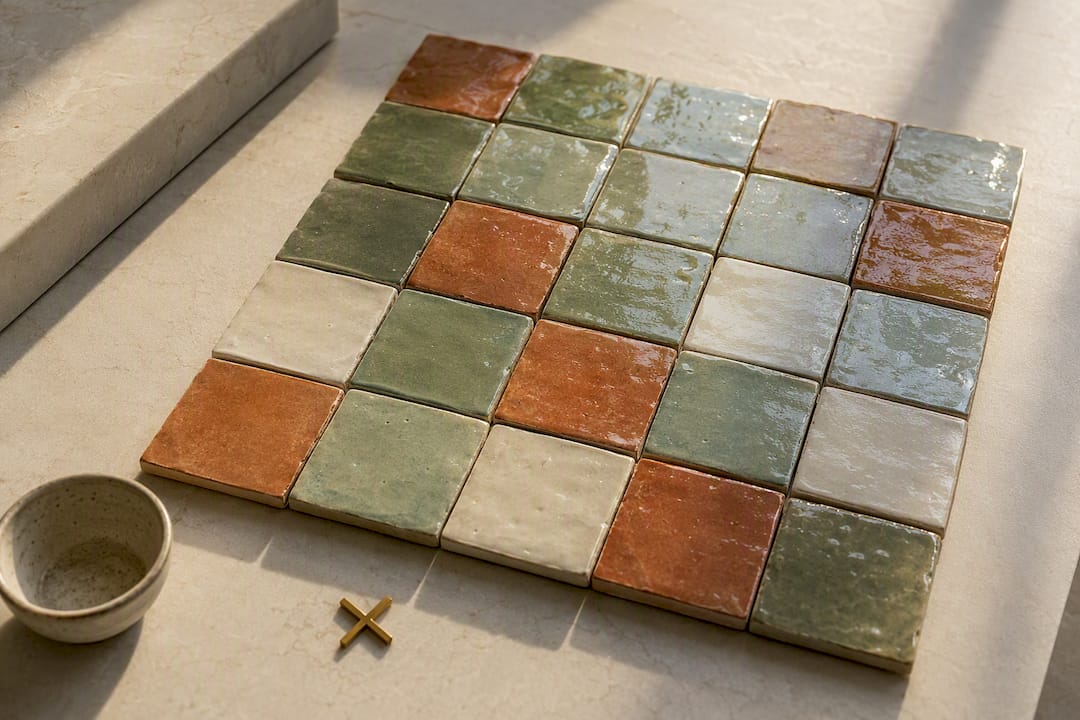
The catch is that handmade tile behaves differently than factory tile. BELK Tile’s buyer’s guide notes that zellige often needs sealing to protect its surface, and it typically calls for a wider grout joint than you’d use with uniform ceramic. That’s not a workaround, it’s the design. Designers recommend acknowledging the tile’s natural variation with a generous joint rather than forcing a tight, uniform grid that fights the material’s character.
A few placement rules keep artisanal tile from feeling chaotic:
Scale matters too. A small zellige tile on a huge wall can look busy; a larger format or a defined accent strip usually reads as intentional. If you’re drawn to the look but nervous about maintenance, ask to see a sample slab in our showroom against your actual cabinet and counter samples before you order.
Subway tile isn’t going anywhere, and design authorities consistently rank it among the most popular backsplash choices for a reason: it’s affordable, forgiving, and endlessly adaptable. What’s changed is how people lay it out.
Grout color changes the whole personality of subway tile. White grout on white tile disappears into a soft, seamless wall; charcoal grout on the same tile turns it graphic and architectural. Finish matters too: glossy subway reflects light and feels crisp, while matte reads more textured and hides fingerprints near a busy sink.
Ceramic subway tile runs roughly $2 to $10 per square foot depending on quality, making it one of the most rental- and budget-friendly options on this list, and one of the easiest for a first-time DIYer to install correctly.
Mixed materials are having a moment in 2026 trend reports, but the successful versions all follow the same unspoken rule: one dominant material, one accent zone.
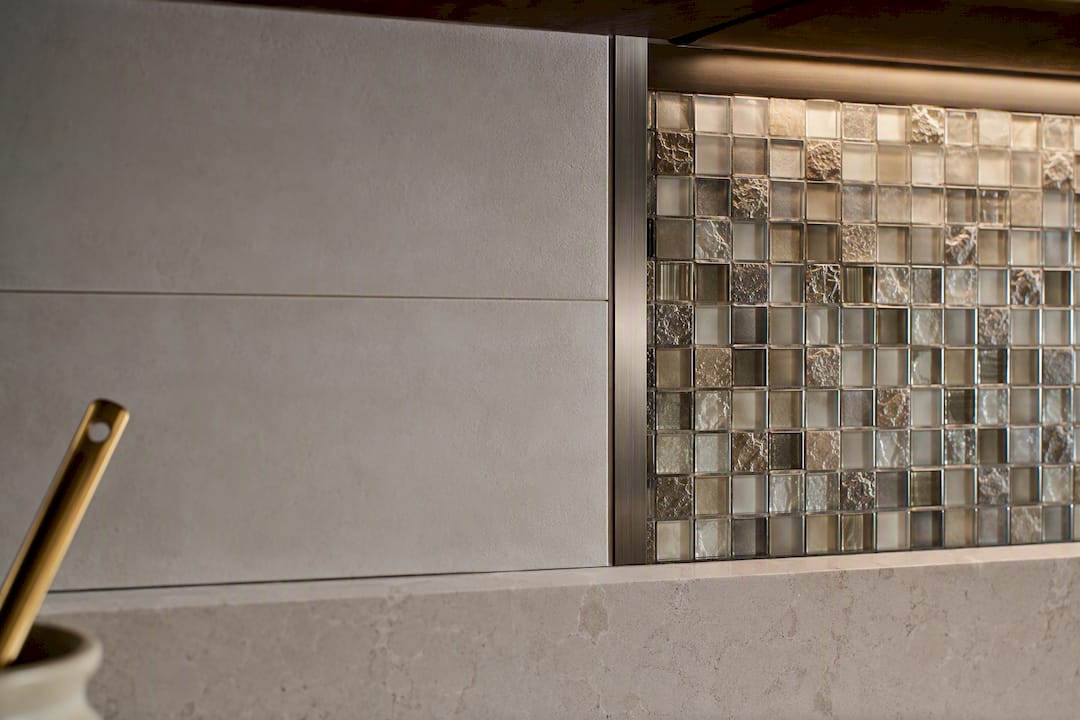
A hammered metal panel behind the range paired with plain tile everywhere else reads intentional. The same metal wrapped around the entire kitchen usually reads busy and hard to keep clean. Glass tile works similarly well as a narrow accent strip near a window, where its reflectivity catches natural light instead of competing with cabinet hardware.
Each material carries its own quirk worth knowing before you commit:
If you love color and pattern but worry about long-term upkeep, anchor the boldest material to the zone that gets seen the most, like behind open shelving, and keep the range wall in something easier to wipe down.
The size of your tile and the way it’s laid changes how big or small your kitchen feels, sometimes more than the color does. Large-format tile reduces the number of grout lines dramatically, and BELK Tile notes that fewer grout lines can make a small kitchen feel more open, though it also demands flatter walls and professional installation to avoid lippage, where tile edges sit unevenly.
Pattern changes perception just as much as size:
Grout choice deserves just as much thought as the pattern itself. For kitchens, designers increasingly recommend epoxy-based or modern stain-resistant grouts over standard cementitious grout, since they resist staining and don’t need annual sealing.
Pro Tip: If you’re torn between two grout colors, go a shade darker than you think you want for a harmonious look that echoes interior door design trends throughout your home. Light grout in a working kitchen shows grease and food splatter within weeks, no matter how careful you are.
Your ideal backsplash material depends less on trends and more on how hard your kitchen actually works. Ranked roughly from lowest to highest maintenance: glazed porcelain or ceramic sits at the easy end, engineered slabs like quartz come next, natural stone slabs need more attention, and porous options like unsealed terra cotta require the most upkeep.
Designers recommend glazed porcelain or ceramic for heavy-use kitchens specifically because the surface is non-porous and resists staining better than many natural stones. If you fry, sauté, and simmer daily, that’s the safer bet over a softer, more porous stone.
Grout care is where most kitchens fall short over time. Porous natural stone grout and tile joints benefit from resealing every 6 to 12 months. Epoxy and stain-resistant grouts sidestep most of that work entirely.
Statistic Callout: Slab backsplashes now represent 28% of renovated kitchen backsplashes, a direct result of homeowners choosing lower-maintenance, grout-free surfaces over traditional tile.
Some backsplash projects are genuinely weekend-friendly. Others aren’t worth the risk to your wall, your tile, or your weekend.
Good DIY candidates: standard ceramic subway tile, peel-and-stick sheets, small mosaic in limited zones, and painted surfaces.
Better left to pros: slab backsplashes, large-format porcelain panels, metal panels, and anything requiring precise templating or heavy cutting.
Rough cost bands, from most to least budget-friendly:
Costs climb further with intricate patterns like herringbone, full-height coverage, and outlet or window cutouts. Before hiring anyone, ask how they handle lippage on large tile, whether they include grout sealing in the quote, and what their timeline looks like from template to finished install. A straightforward subway tile job might wrap in a day; a full-height slab project can take a week or more once templating and fabrication are factored in. If you’re comparing quotes, our guide to finding the right kitchen remodel contractor walks through the questions worth asking before you sign anything.
Before you fall in love with a photo, run through these steps in order:
Red flag to watch for: choosing a highly porous, high-maintenance material for a kitchen where you cook daily. It looks great in photos and turns into a chore within months.
| Cooking style | Countertop pairing | Best backsplash match |
|---|---|---|
| Heavy daily cooking | Quartz or granite | Glazed porcelain or matching quartz slab |
| Occasional cooking, entertaining focus | Marble or quartzite | Hand-painted tile or natural stone slab |
| Rental or budget project | Laminate or butcher block | Ceramic subway or peel-and-stick |
| Showpiece kitchen, light use | Book-matched stone | Slab or artisanal zellige |
Once you’ve settled on a direction, browsing in-stock backsplash tile options against your countertop sample makes the final decision a lot less abstract than scrolling photos alone.
Backsplash materials vary quite a bit in their environmental footprint, and durability is actually the biggest factor most people overlook. A backsplash that lasts 20 years without needing replacement, like glazed porcelain or a well-sealed slab, has a smaller lifetime footprint than a cheaper material you’ll tear out and replace twice in that same span.
Porcelain and ceramic tile are made largely from clay and natural minerals, and many manufacturers now offer options with recycled content. Glass tile is one of the more sustainable choices available, since it’s frequently made from recycled bottle glass and doesn’t require quarrying. Natural stone slabs carry a heavier extraction footprint due to quarrying and transport weight, though their longevity partly offsets that over decades of use.
Local sourcing matters more than people realize. A slab or tile shipped internationally carries a larger transportation footprint than one sourced regionally, so asking your supplier where a material is fabricated is a reasonable question, not an inconvenient one. Reclaimed and salvaged tile, increasingly available through renovation resale shops, is worth a look if you want character and a lower footprint in one move.
Grout and sealant choices matter too. Modern epoxy grouts last significantly longer than traditional cement grout, which means fewer regrouting cycles and less material waste over the life of your kitchen.
We’ve walked plenty of homeowners through this exact decision, and the pattern is consistent: people know their style instantly but freeze up on the practical questions, grout type, slab thickness, who installs what. That’s the gap a one-stop remodel process is built to close, letting you compare samples against your actual cabinets and countertops instead of guessing from photos, with design help, materials, and installation coordinated under one roof and financing available when a slab project stretches the budget. Our guide to how a one-stop remodel service works breaks down what that process actually looks like. If you’re stuck between two directions, bring your countertop sample into a showroom and hold it against a few tile options in person.
— Anna
Picking a backsplash from a screen is one thing. Seeing it against your actual cabinets, under your kitchen’s real lighting, is another. One advantage of working with a full-service remodeling store is the ability to access in-stock tile, slab, and porcelain samples, have installation coordination handled, and have financing options available, so you avoid juggling multiple contractors and showrooms.
Whether you’re leaning toward a quartz slab pulled straight from our kitchen countertop selection or want to see zellige and porcelain samples side by side, our showroom is set up so you can make that decision with real materials in hand instead of guessing from photos. If your project is part of a larger renovation, our kitchen remodeling packages bundle backsplash, countertops, and cabinetry into one coordinated timeline. Book a design consultation or stop by our Jacksonville showroom to get started.