
Choose light-to-medium tones when you want low-maintenance brightness that hides dust and works in almost any room; choose dark tones when you have great natural light, a formal or modern aesthetic in mind, and the willingness to clean more often. The real decision comes down to your natural light, your traffic and pets, your cleaning tolerance, and how much drama you want. Finish and wood species can shift that answer either way.
TL;DR:
- Light floors are best for small or dim rooms and hide light debris but show dark pet hair and stains more clearly.
- Dark floors create a formal, cozy atmosphere but reveal dust, pet hair, and scratches more prominently, especially with high-gloss finishes.
- The durability of a floor depends on wood species and finish, not stain color, making hard woods like oak more resilient regardless of tone.
- Finishing details like matte or satin sheens significantly influence how visible wear and scratches are, often more than the stain’s darkness or lightness.
- Proper maintenance routines, including regular dusting and immediate spill cleaning, are essential to keep either light or dark floors looking their best.
Neither color wins outright. Each one solves a different problem, and once you see them side by side, the right choice usually gets obvious fast.
Light floors, whether that’s white oak, ash, or a pale luxury vinyl plank, bounce daylight around a room and make it read larger and airier. Dark floors do the opposite: they absorb light, add visual weight, and give a room a grounded, formal feel that reads as luxury in the right setting. Lighter floors tend to make spaces feel bigger and brighter, while darker floors create coziness and depth, which is exactly why designers reach for pale wood in a cramped condo and dark walnut in a grand foyer.
Here’s how the trade-offs stack up:
That last point trips up a lot of homeowners. A cheap, soft species stained dark still dents easily. A hard species like white oak or hickory in a light stain still resists wear. The color is cosmetic. The performance comes from what’s underneath it.
The cleaning difference between light and dark floors is real, but it’s about contrast, not actual dirt. Every floor collects the same amount of dust and hair. What changes is how visible that mess is against the background color.
Dark hardwood shows light-colored dust, pollen, and pet hair far more readily than light hardwood does, which is why a dark floor in a home with a golden retriever can look like it needs sweeping an hour after you last swept it. Light floors flip that problem: they hide light debris but make dark hair, mud, and red wine stains pop. There’s no floor color that hides everything. There’s only a color that hides the mess you’re most likely to make.
Scratches follow a similar rule, with one twist. On a dark stain, even a shallow scratch exposes lighter raw wood underneath, so it reads as a bright scar. On light floors, scratches blend into the existing pale tone and often go unnoticed until you’re looking for them. Refinishing compounds this: matching a repaired section of dark-stained hardwood to the surrounding boards is genuinely difficult, because sheen and staining technique both have to line up perfectly, which is why pros often recommend refinishing the whole room rather than patching one spot.
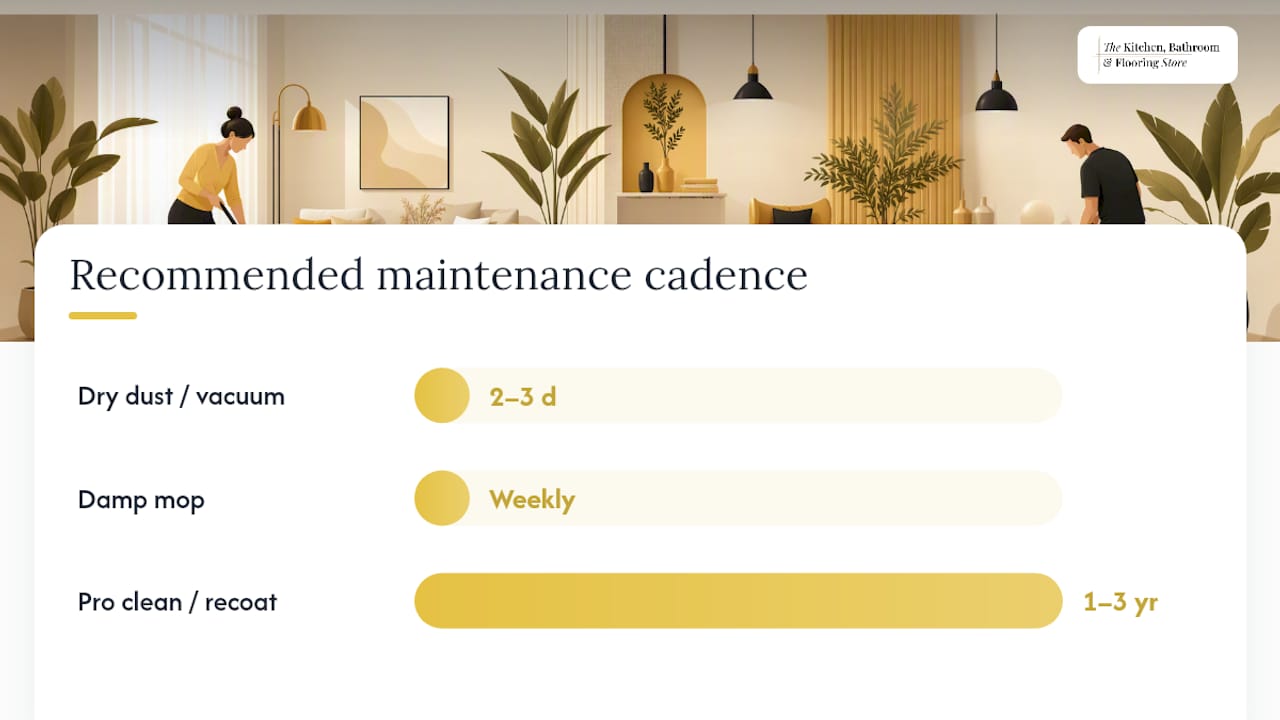
A simple weekly routine keeps either color in shape:
Pro Tip: If you’re set on a dark floor but worried about visible dust, ask your flooring specialist about a matte or low sheen finish. Sheen has more influence on how visible scratches and footprints are than the stain color itself, so a satin dark floor will hide far more daily wear than a glossy one.
The upside of a dark floor’s visibility problem is that it keeps you honest. Because mess shows up faster on dark floors, owners tend to clean more consistently, which actually protects the finish longer between refinishing jobs.
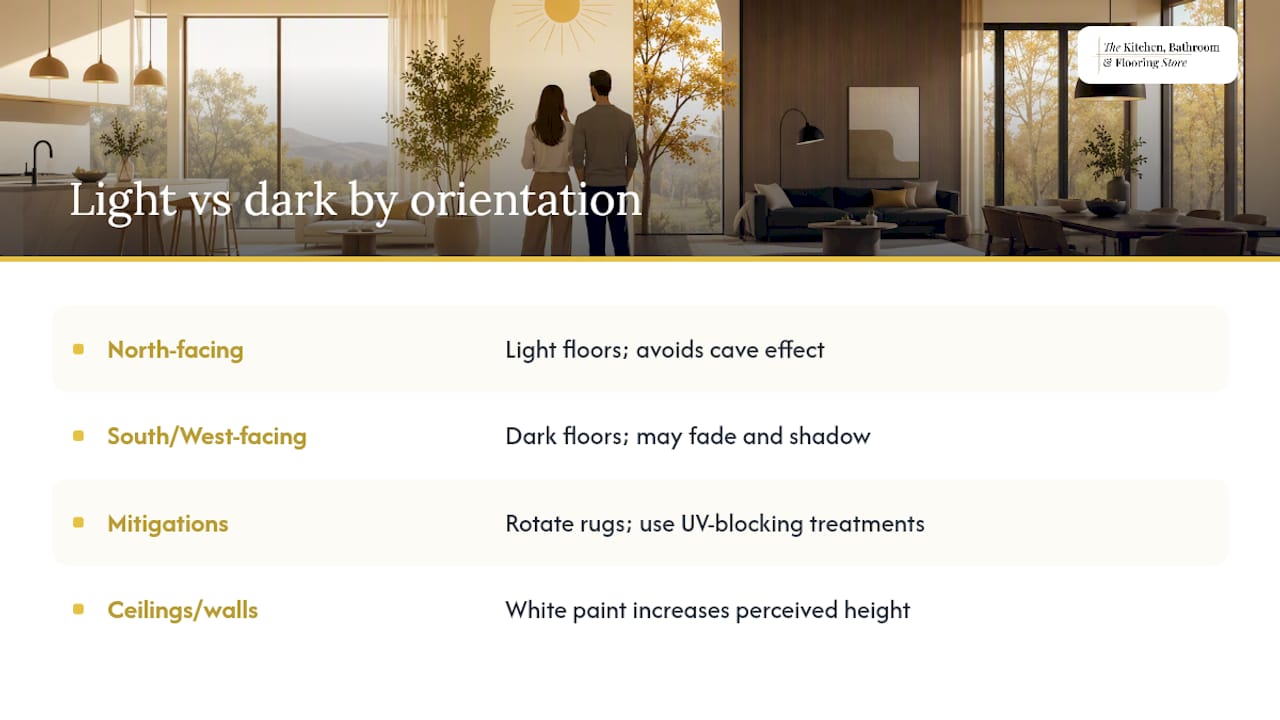
Floor color doesn’t work alone. It works with your windows, your ceiling, and your fixtures, and the interaction changes what a room actually feels like.
Here’s a detail most people get backward: ceiling and wall lightness affects how tall a room feels far more than floor color does. If your ceilings feel low, painting them white will do more than swapping a dark floor for a light one. Floor tone’s real job is influencing perceived width and openness, not height, so it matters most in narrow hallways and small rooms where you want the floor to visually stretch the space rather than anchor it.
Orientation matters too. North-facing rooms with limited natural light generally read better with light floors, since dark tones can make an already dim room feel like a cave. South- and west-facing rooms flooded with sun can carry dark floors beautifully, though that same sun exposure causes uneven fading and rug shadowing over time. Rotating rugs periodically and adding UV-blocking window treatments both reduce that patchy look on dark stains left exposed to strong afternoon light.
Two floors in the exact same stain can perform completely differently depending on what’s underneath the color, and this is where most buying decisions go wrong.
Sheen level changes what you notice day to day. Matte and satin finishes scatter light and hide footprints, dust, and fine scratches far better than high-gloss finishes, which show every smudge like a mirror. If durability against visible wear is your priority, sheen deserves more attention than color.
Species selection matters even more for how a floor actually holds up:
If you’re set on hardwood in a kitchen or bath, ask about water-resistant finishes and engineered construction before you worry about the stain color at all.
Work through these questions honestly, and the right tone usually reveals itself before you even step into a showroom.
Before you commit, run a simple three-part test: view your top swatches in the room at morning, midday, and evening light, since color shifts dramatically across the day; ask for both matte and satin samples of the same stain to compare visible wear; and hold the sample against your existing furniture and trim to check contrast.
Pro Tip: When you visit a showroom, ask three questions: What’s the warranty on the finish? How difficult is refinishing this species down the road? And can they show you a sample that’s been walked on for a few weeks, not a fresh, polished plank?
We’ve walked hundreds of Jacksonville area homeowners through this exact decision, and the pattern holds: the “right” color almost always comes down to lifestyle fit, not trend. Our design team helps you weigh natural light, pets, and traffic patterns against real hardwood species and finish options before you commit to a stain.
We also loan out samples so you can watch how a floor color behaves in your own light at different times of day, something no showroom lighting can replicate. If you’re renovating a bathroom alongside your flooring, our bathroom remodeling packages bundle design, materials, and installation so you’re not juggling separate contractors. Ready to see swatches in your own space? Request an in-home measure and sample loan, and we’ll help you land on a tone that fits how you actually live.
Pick light-to-medium tones if you want brightness, forgiveness, and broad resale appeal. Pick dark tones if your room gets strong natural light, your style is formal or dramatic, and you’re genuinely willing to sweep more often. When in doubt, default to light-to-medium with a satin finish, then test real samples in your own rooms before signing off on anything.
Most articles on this topic obsess over color as if it were the whole decision. It isn’t. The research and the day-to-day reality both point the same direction: finish sheen and wood species do more heavy lifting than stain color ever will. A matte finish on a dark floor will hide more daily mess than a glossy finish on a light one, full stop.
The conventional advice, “light floors for small rooms, dark floors for big rooms,” oversells floor color’s role. Ceiling and wall lightness shape how a room feels far more than the floor does. Floor tone is a supporting actor in that story, not the lead.
If I had one piece of advice for a homeowner stuck between swatches, it’s this: stop asking which color is objectively better and start asking which one matches how you actually clean, live, and use the room. Test real samples, in real light, before you commit to a stain you’ll be living with for a decade.
— Anna