
For most homeowners, the safest shower floor is a small-format porcelain or pebble mosaic with a wet DCOF of 0.42 or higher, set on a properly sloped, well-drained pan. Getting there means checking the tile’s DCOF rating before you buy, not after. Skip that step, and even a beautiful floor can turn into a liability the first rainy morning.
TL;DR:
- Small-format mosaics and pebble tiles offer the highest wet traction, but pebble mosaics require more frequent sealing and cleaning.
- A tile’s slip resistance depends on a verified wet DCOF rating of at least 0.42, tested with the proper ascendant instrument under ANSI A326.3.
- Proper installation practices, including correct slope, grout choice, and drainage, are essential to maintain slip safety in real-world conditions.
- Anti-slip mats or coatings are only short-term solutions and do not substitute for choosing tiles with verified, high DCOF ratings upfront.
- Regular cleaning and resealing are necessary to preserve traction, as soap residue buildup can reduce a surface’s slip resistance over time.
Not all shower tile behaves the same once water hits it, and this is where most homeowners get surprised. Size and texture matter more than the marketing copy on the box.
Small-format mosaics, think 1x1-inch squares, 2x2-inch squares, penny rounds, and small hexagons, are the default recommendation for shower pans, and for a good reason. Every one of those tiny tiles needs its own grout line, and grout itself has texture and grip. More tile edges means more grout, and more grout means more traction underfoot. It’s the same principle as tire tread: more surface breaks, more grip. Mosaics also flex around the slope of a shower pan without the lippage (uneven edges) that plagues larger format tile on a sloped surface.
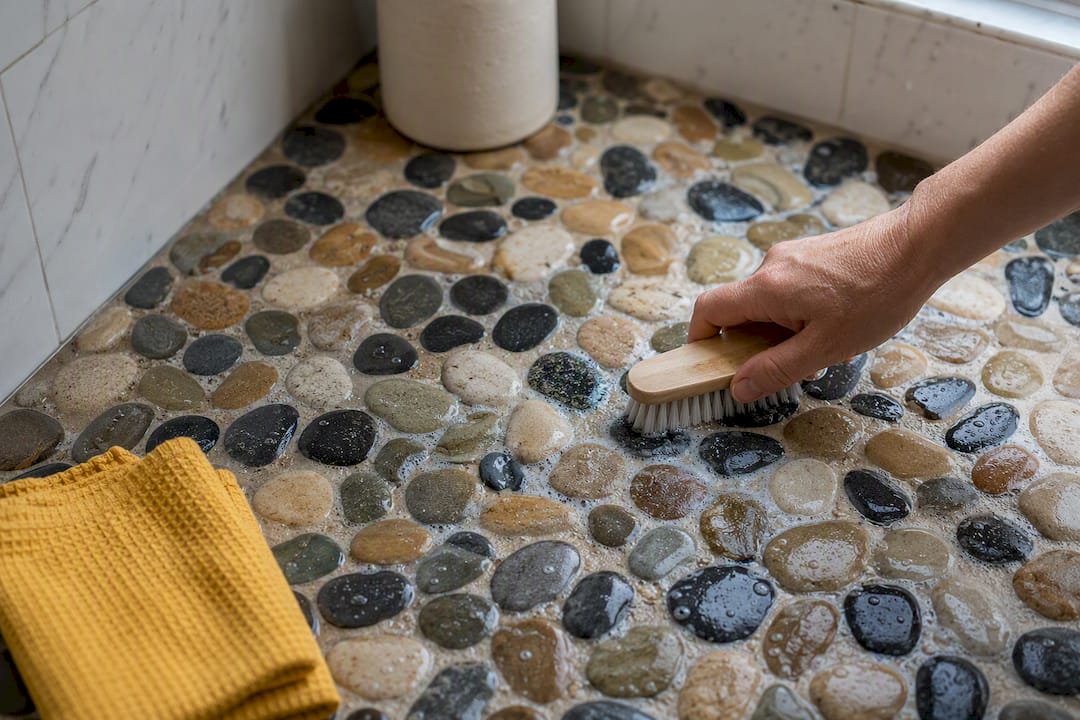
Pebble and stone mosaics push traction even further. The natural, irregular surface of river pebble tile creates dozens of micro contact points and channels for water to escape underfoot, which is why pebble and small-format mosaics rank among the highest performers for wet traction in practical installer experience. The tradeoff is maintenance. Pebble tile has more grout surface and more texture to trap soap residue, so it needs more frequent sealing and cleaning.
Textured or embossed porcelain in larger formats can work, but only with caveats. Look for tiles specifically manufactured with a raised or hammered texture, and confirm the manufacturer publishes a wet DCOF number rather than a generic “slip resistant” label.
Natural stone, honed travertine or slate, can also perform well because matte, unpolished stone finishes create real texture. The catch: glossy or polished finishes routinely test below the 0.42 safety threshold even when the same stone in a honed finish passes comfortably. Natural stone also needs periodic resealing to keep its pores from soaking up soap film, which over time can actually smooth the surface texture that gave it grip in the first place.
Here’s the quick-reference version:
If you’re weighing tile choices against the rest of your bathroom’s look and feel, our guide to tile in modern bathrooms walks through how safety and style intersect.
Here’s the number that actually matters: DCOF, or Dynamic Coefficient of Friction, measures how much resistance a surface offers to a foot sliding across it while wet. It’s the industry’s answer to the old, unreliable “does this feel grippy” test.
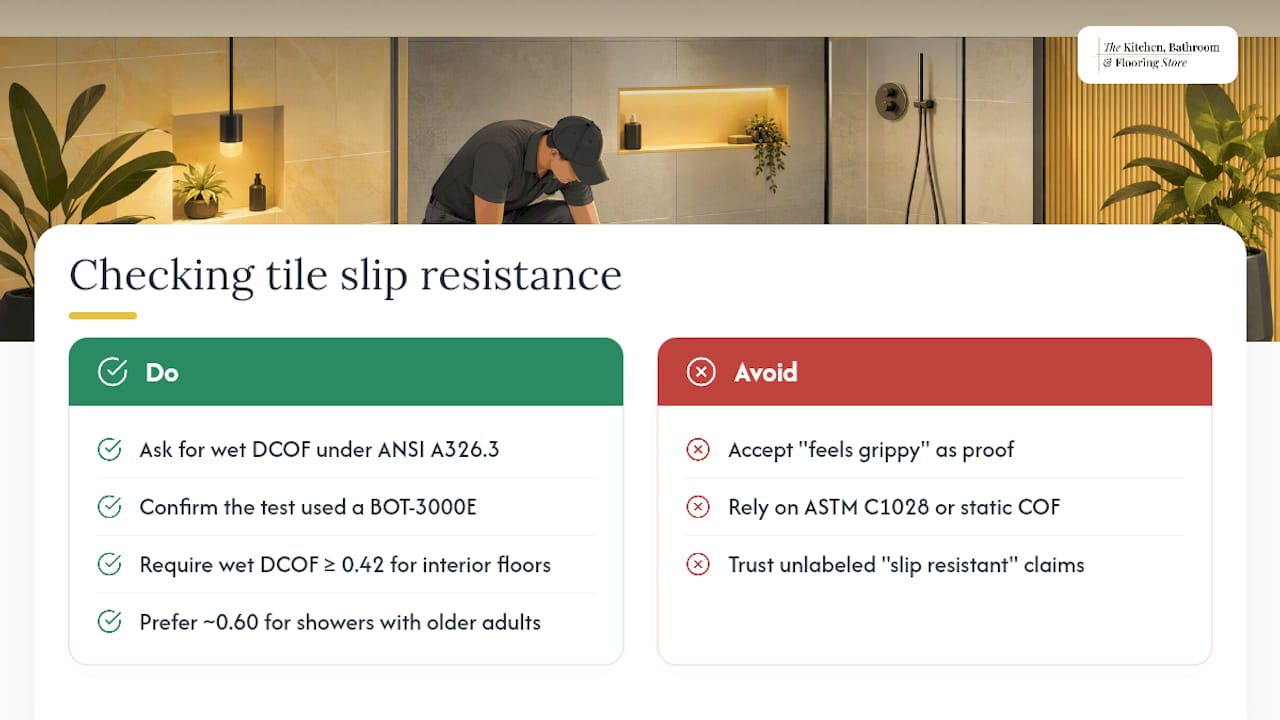
The standard you want to see referenced is ANSI A326.3, the current American National Standards Institute benchmark for measuring slip resistance on hard-surface flooring. Under this standard, any level interior floor expected to get walked on while wet, which includes shower floors, needs a minimum wet DCOF of 0.42.
The 0.42 Threshold: ANSI A326.3 sets 0.42 as the minimum wet DCOF for interior floors people walk on when wet. Shower floors, given standing water and soap, often warrant tile rated closer to 0.60 for extra margin, especially for households with older adults or limited mobility.
The only instrument approved under A326.3 for this testing is the BOT-3000E tribometer, a device that drags a rubber slider across a wet tile sample to measure resistance under controlled conditions. That specificity matters because older or informal test methods, including the outdated static coefficient of friction method under ASTM C1028, can produce misleadingly high numbers that don’t reflect real-world wet performance.
When you’re comparing tile online or in a showroom, ask a direct question: “What is this tile’s wet DCOF under ANSI A326.3, and was it tested with a BOT-3000E?” If a salesperson or product page can’t answer that, treat the “slip resistant” label with skepticism. Documented A326.3 testing below 0.42 is routinely cited as evidence of hazardous flooring in liability cases, which tells you how seriously the industry itself takes this number.
A tile’s DCOF rating on paper means little if the installation undoes it. Slope, drainage, and grout choice decide whether that number holds up in your actual shower.
Pro Tip: Ask your installer to confirm grout sealing happens after full cure, not during installation. Sealing too early traps moisture in the grout and can actually soften its texture over time, quietly working against the traction you paid for.
If you’re also rethinking bathroom hardware while you’re at it, our partners at One Day Doors & Closets cover bathroom door choices worth considering alongside a safety-focused remodel.
Shower mats, adhesive decals, and anti-slip coatings all promise a shortcut, but each comes with real limits worth knowing before you rely on one.
Treat all three as short-term patches for a rental or a floor you’re not ready to redo. If you own the home and the floor is already testing below safe DCOF levels, replacement solves the problem permanently instead of managing it monthly.
Traction isn’t a one-time purchase. Soap scum and conditioner residue build a thin, slick film on tile and grout, and that buildup is a documented reason DCOF performance drops on installed floors over time, even when the tile tested fine on day one.
Homeowners almost always start by picking a tile they love visually, then ask about safety second. We flip that order for shower floors specifically. One recent project involved a homeowner replacing large glossy porcelain that looked sleek but tested slick within a year. Switching to a small hex mosaic with corrected slope solved the recurring slip complaints entirely. The tip we give that almost nobody asks for upfront: match your grout color to hide soap film, because a floor that looks dirty gets scrubbed less, and a floor that gets scrubbed less loses traction faster.
— Anna
Choosing the tile is only half the job. Getting the slope, drain, and grout right is what actually determines whether that DCOF rating holds up in your real shower, and that’s where a full-service approach pays off. The Kitchen, Bathroom & Flooring Store handles DCOF-aware tile selection and the installation details, slope, drainage, grout, sealing, under one roof, backed by warranty coverage and financing options if you’d rather spread out the cost.
If you already know you want a mosaic or pebble floor, browse options on our tile and stone selection page. If you’re planning a full bathroom overhaul and want the shower pan, drain, and tile handled together, our bathroom remodeling packages start with a design consultation where we walk through DCOF ratings on real samples, not just spec sheets. Schedule a visit to our showroom and bring your bathroom’s dimensions; we’ll show you which mosaics and pebble options actually fit your drain layout.
ANSI A326.3, Walkway Management Group’s guide, TCNA’s DCOF resource, and CDC fall-prevention data.