
A typical walk-in shower in Jacksonville and Clay County runs between $2,500 and $8,000 depending on materials and scope, with custom tile and glass projects landing at the top of that range. The biggest reason two similar-looking quotes come in far apart isn’t the fixtures, it’s labor, plumbing changes, and waterproofing work you never see once the tile goes up. Before you sign anything, get a written, itemized estimate so you know exactly what’s included.
TL;DR:
- Labor costs, waterproofing, and plumbing reconfiguration largely determine the final price, with waterproofing alone costing between $800 and $1,500.
- Prefabricated showers reduce costs and construction time, making them ideal for tight budgets or secondary bathrooms, whereas custom tile and large glass enclosures significantly increase labor expenses.
- Most renovations involving plumbing or structural changes require permits costing $150 to $500, and skipping permits can cause issues during resale or insurance claims.
- A straightforward remodel can take less than a week, but custom tile and glass projects often extend to three or four weeks, especially due to fabrication lead times.
- Homeowners should collect at least three detailed estimates outlining waterproofing methods, permit responsibilities, and warranty terms to compare scope and costs effectively.
Not every walk-in shower project needs the same investment, and knowing which tier fits your goals helps you avoid overpaying or under-scoping the job.
A budget project usually means a prefabricated acrylic or fiberglass shower pan and surround, a standard glass door, and minimal plumbing changes. These projects tend to land near the lower end of the local $2,500 to $8,000 range, especially when the existing footprint stays the same.
Mid-range remodels usually add ceramic or porcelain tile walls, a tiled pan instead of a molded one, and a semi-frameless glass enclosure. Expect some plumbing relocation if you’re widening the shower or changing where the showerhead sits.
Premium and custom builds push costs higher because of labor-intensive features:
The jump from mid-range to premium is rarely about the materials alone. It’s the hours a skilled installer needs to get waterproofing, slope, and glass fit exactly right.
Materials matter, but labor is usually the bigger line item on your invoice, and that surprises a lot of homeowners who assumed tile choice would be their main cost lever.
Complexity in demolition, plumbing routing, and waterproofing are the primary reasons two similar-looking showers can carry very different bids, according to This Old House. A straightforward swap costs far less in labor than a full reconfiguration that moves drain lines or shower valves.
Proper waterproofing commonly costs between $800 and $1,500, and skipping or underfunding this step is one of the most common causes of early shower failure.
Here’s how the major cost components typically break down:
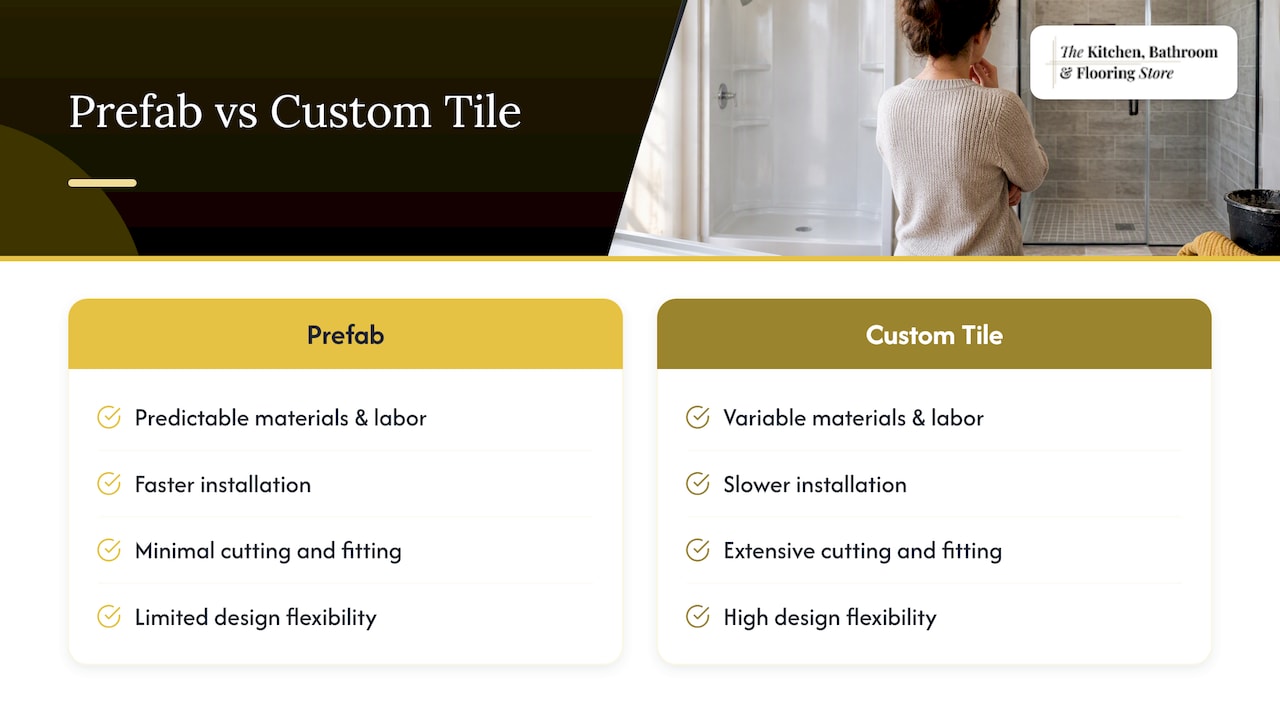
Prefab options keep costs predictable because the pan and walls arrive as matched units. Custom tile gives you more design freedom but multiplies labor hours, since every cut and seam is done by hand.
Most walk-in shower remodels that touch plumbing, electrical, or structural elements require a permit, even if the bathroom’s footprint doesn’t change. Skipping this step can create problems later with resale or insurance claims.
Permit fees for residential bathroom work involving plumbing or electrical changes typically add about $150 to $500 to a Jacksonville-area project. Clay County follows a similar process through its Building Division.
Starting July 1, 2026, HB 803 creates a permit exemption for certain residential work valued under $7,500, but this exemption doesn’t cover plumbing, electrical, mechanical, or structural changes, which describes most walk-in shower conversions.
Pro Tip: Always ask your contractor to pull the permit in their name and show you the approved permit number before work begins. It protects you if an inspection ever becomes an issue during a future sale.
A straightforward prefab swap can wrap up in under a week, but custom tile and glass projects often stretch to three or four weeks once you factor in inspections and fabrication lead times.
Custom glass is frequently the bottleneck. Frameless enclosures are fabricated to exact measurements after the tile is set, which can add one to two weeks of waiting before your shower is usable again.
The single best thing you can do before hiring anyone is collect at least three itemized written estimates for your project, according to local market guidance for Jacksonville-area remodels. Comparing vague, lump-sum quotes side by side tells you almost nothing about where your money is actually going.
Each estimate should spell out:
Red flags worth walking away from include a quote that skips permit costs entirely, a scope that just says “remodel bathroom” with no breakdown, or a contractor who can’t produce proof of license and insurance on request.
Pro Tip: Ask each contractor the same ten questions about scope and materials, then line up their answers side by side. The differences usually reveal more than the price alone.
Most homeowners pay for a walk-in shower remodel through a combination of savings, a home equity line, or contractor-offered financing, since relatively few projects get paid entirely upfront.
Financing for bathroom remodels through The Kitchen, Bathroom & Flooring Store starts at $299 per month, which gives you a concrete reference point when comparing monthly budgets rather than lump-sum totals.
To put that in perspective with illustrative math: a $6,000 project financed over 24 months at a flat $250 per month lands close to that starting figure, while an $8,000 premium remodel spread over 36 months works out to roughly $222 per month before interest. Your actual terms depend on the lender and your credit profile.
The parts of your shower you’ll never see again once tile goes up, the waterproofing membrane, the subfloor prep, the slope toward the drain, are also the parts most likely to cause expensive problems if they’re rushed.
A one-stop remodeling process reduces the coordination risk that often leads to skipped waterproofing steps, since the same team handling design also handles installation and follow-up. At The Kitchen, Bathroom & Flooring Store, that means design assistance, product selection, and installation happen under one roof instead of being split across separate contractors who don’t always communicate.
Spending a little more upfront on proper waterproofing and subfloor prep almost always costs less than tearing out failed tile two years later.
When you add up a real walk-in shower project, the final number is rarely just “materials plus labor.” A typical breakdown for a Jacksonville-area remodel in the $2,500 to $8,000 range includes several distinct categories stacked together.
Demolition and disposal come first, followed by rough plumbing work if you’re relocating a drain or valve. Waterproofing, at $800 to $1,500, sits in the middle of the budget regardless of whether you choose prefab or tile. Then come the visible finishes: wall surfaces, the shower pan, and the glass enclosure, which is where budget and premium projects diverge most sharply.
Permit fees, typically $150 to $500 in Jacksonville-area jurisdictions, belong in this total too, even though they’re easy to overlook when you’re focused on tile samples and fixture finishes. Add fixture costs like the shower valve, showerhead, and any niche or bench features, and you’ve got the full picture.
A budget prefab project might allocate most of its total to labor and waterproofing, with materials representing a smaller share. A premium custom build flips that ratio, with tile, glass, and specialty fixtures consuming a much larger portion of the total. Neither approach is wrong, but knowing where your money goes helps you decide where to spend and where to save.
The honest answer is that it depends on what you’re optimizing for: upfront cost, long-term durability, or design flexibility.
Prefab shower pans and surrounds arrive as matched units manufactured off-site, which keeps both material and labor costs more predictable. Installation moves faster because there’s less cutting, fitting, and curing time. For many Jacksonville homeowners working with a tighter budget, prefab keeps the project closer to the lower end of the local cost range.
Custom tile showers cost more primarily because of labor. Tile is priced per square foot, and that price varies significantly by material, from basic ceramic to natural stone or large-format porcelain. Every cut, every corner, and every transition is done by hand, which adds hours that prefab installation simply doesn’t require.
Frameless glass enclosures compound this gap further. A custom glass order adds both cost and lead time compared to a standard framed or semi-frameless door that ships in stock sizes.
The trade-off isn’t just about money. Custom tile offers design flexibility and can boost resale appeal in ways a prefab unit generally can’t match. If you’re planning to sell within a few years, that flexibility may be worth the premium. If you’re renovating a secondary bathroom or working with a fixed budget, prefab delivers a clean, durable result without stretching your costs toward the top of the local range.
Every experienced contractor has a story about opening up a wall and finding something the homeowner didn’t know about. Older Jacksonville homes, especially those with decades-old plumbing or prior water damage, are more likely to reveal hidden problems once demolition starts.
Mold remediation is the most common surprise, particularly in homes where a shower pan or grout line had been failing quietly for years before anyone noticed. Remediation costs vary widely depending on how far the mold has spread into subfloor or wall framing, so it’s worth asking your contractor how they handle a “surprise” discovery before work begins.
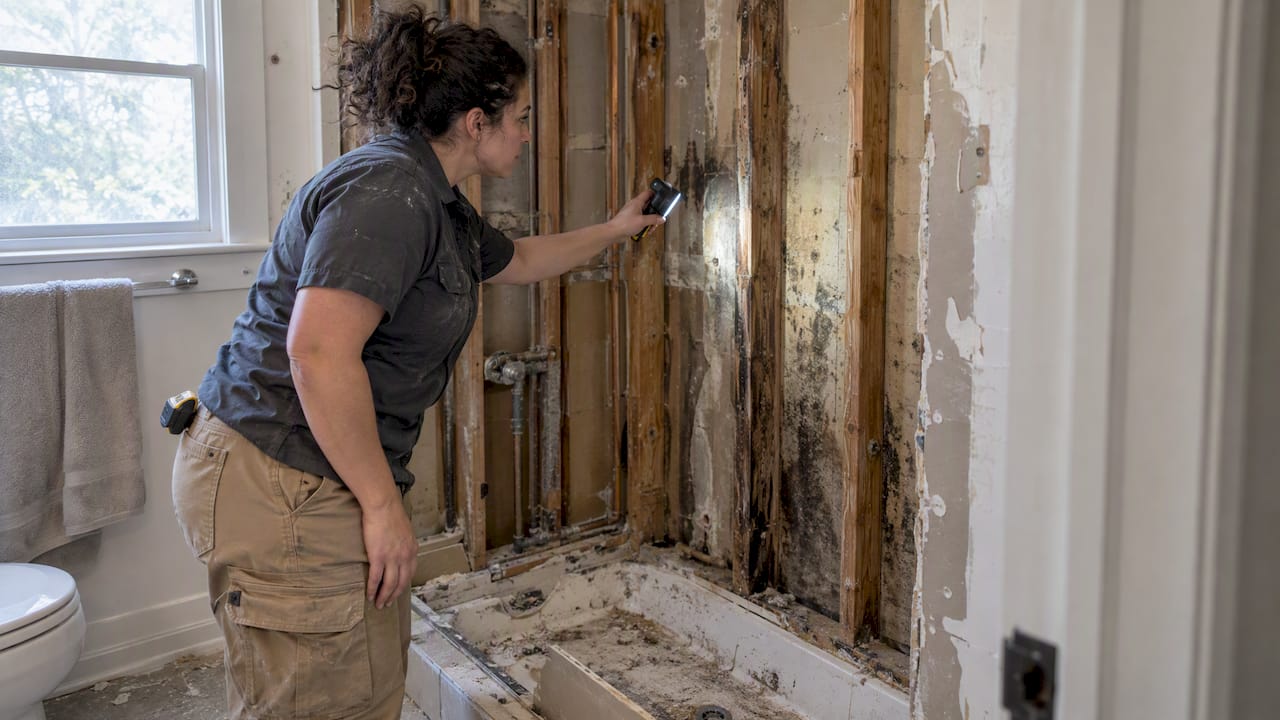
Rotted subfloor from long-term leaks is another frequent find, especially in bathrooms with original 1970s or 1980s plumbing. Replacing a section of subfloor adds both material and labor costs that weren’t part of the original estimate.
Outdated plumbing lines, particularly galvanized pipe or old shutoff valves, sometimes need replacement to meet current code, even when that wasn’t the original scope of the project.
None of this means you should expect a disaster. A contractor who’s upfront about this possibility, rather than promising a guaranteed flat price with no caveats, is usually the more trustworthy one.
The temptation to cut costs is real, but the wrong cuts cost you more later. Here’s where you can actually save without compromising the parts that matter.
Choosing a prefab pan and surround over custom tile is the single biggest lever for reducing both material and labor costs, since it eliminates the hand-cutting and setting time that drives up custom projects. Keeping your existing plumbing layout instead of relocating drains or valves avoids a significant chunk of labor cost tied to rough plumbing work.
Standard framed or semi-frameless glass costs meaningfully less than frameless custom glass, and the functional difference for most households is minimal. If your budget is tight, this is an easy place to save without sacrificing durability.
Where you should never cut corners: waterproofing. Skipping or underfunding the membrane or pan system to save $500 upfront routinely leads to repairs costing several times that amount once leaks reach the subfloor. The same goes for skipping permits to save the $150 to $500 fee. An unpermitted plumbing change can complicate a future home sale or an insurance claim far beyond what the permit itself would have cost.
If you want design flexibility without the full custom price tag, consider tiling just the shower walls while keeping a prefab base. It’s a middle path that keeps costs closer to mid-range while still giving you a more finished look than an all-prefab unit.
If you’ve gathered a few quotes already, you’ve probably noticed the spread can be significant even for what sounds like the same project. Several local factors explain that gap.
Labor rates vary by contractor experience and crew size, and a smaller outfit with lower overhead may quote less than a larger company, though that doesn’t always mean lower quality. Material sourcing matters too: a contractor who buys tile and fixtures through a showroom with direct supplier relationships can sometimes offer better pricing than one sourcing piecemeal from multiple vendors.
Permit handling differs as well. Some contractors build permit fees and the administrative time of pulling them directly into their quote, while others treat it as a separate line item or, worse, leave it out entirely and hope you won’t ask.
The volume of work a contractor does in your specific area also plays a role. A company with an established local presence in Clay County or Duval County often has a clearer sense of typical inspection timelines and local code quirks than a contractor working outside their usual territory.
None of this means the cheapest quote is the worst, or the most expensive is the best. It means the quote itself needs to be detailed enough that you’re comparing identical scopes, not just bottom-line numbers.
If I had to choose one place to spend more and one place to save, I’d put the extra dollars into waterproofing and a contractor who does it right, every time, no exceptions. That’s the work that determines whether your shower lasts fifteen years or fails in three.
Prefab makes sense for tight budgets or secondary bathrooms. Custom tile earns its price when resale value or long-term design matters to you. Either way, get itemized quotes you can actually compare, and confirm the permit is handled before a single tile comes off the wall.
— Anna
We handle your walk-in shower project from design through installation, so you’re not juggling a plumber, a tile setter, and a glass installer who’ve never spoken to each other. Our bathroom remodeling packages include personalized design assistance, in-house installation, and available financing options.
When you request a free, itemized estimate from us, you’ll get a clear breakdown of materials, labor, waterproofing method, and permit handling before you commit to anything. If your remodel includes swapping out a bathroom door or you want a quick, low-mess door replacement elsewhere in your home, our local partners at One Day Doors & Closets of Jacksonville handle that separately with minimal disruption to your project timeline.
Ready to see what your project would actually cost? Request your free bathroom remodeling estimate and we’ll walk you through the numbers together.
A basic, prefabricated walk-in shower in the Jacksonville area typically falls at the lower end of the local $2,500 to $8,000 range, depending on plumbing changes and permit fees. Choosing a standard acrylic or fiberglass unit over custom tile keeps both materials and labor costs down.
A premium walk-in shower conversion fits within the local cost range, including waterproofing, tile, and glass. For a full bathroom remodel involving vanities, flooring, and fixtures beyond the shower, the budget needed varies depending on scope, so an itemized estimate is the only way to know for sure.
Most bathroom renovations involving plumbing, electrical, or structural changes require a permit in Florida, including in Clay County and Jacksonville-area jurisdictions. Starting July 1, 2026, HB 803 exempts certain residential work under $7,500, but plumbing and structural changes, which describe most shower conversions, remain permit-controlled.
Pricing for walk-in shower installation through a big-box retailer depends on the specific product line and local installer network, and isn’t publicly listed as a flat rate. A full-service local remodeler can often provide a more detailed, itemized quote that accounts for your home’s specific plumbing and layout.