
A change order is the written amendment to your remodeling contract that adjusts scope, cost, or schedule once work is underway. If your contractor proposes any change, whether it’s swapping a countertop or fixing rotted subfloor, don’t let anyone lift a hammer until you have a signed change order in hand covering three things: what’s changing, what it costs, and how it shifts your timeline.
TL;DR:
- Most change orders are caused by unforeseen site conditions, homeowner design changes after demo begins, permit requirements, or material substitutions.
- A proper change order must specify scope, itemized costs, schedule impact, payment terms, and obtain signatures from both parties before work starts.
- Model contracts and in-house remodeling packages reduce delays and disputes by resolving scope and scheduling issues before work begins.
- Verbal change orders are legally risky and often unenforceable, so always insist on signed documentation for any scope or cost adjustments.
- Document all changes with photos, clear communication, and a centralized record to protect quality, warranties, and resolve disputes efficiently.
A change order is a formal, written modification to your original remodeling contract. It applies any time the agreed scope, cost, or schedule needs to shift after the contract is signed, whether that’s adding a task, removing one, or swapping a material.
Additions and deletions work differently on paper. An addition tacks new work and cost onto your contract. A deletion removes a task and should reduce your total price accordingly. Contractors sometimes forget to credit homeowners for deleted scope, so read every change order line by line, not just the additions.
Written documentation isn’t a formality. It’s the difference between a clear paper trail and a verbal argument nobody can win. A change order properly describes the added or removed work, the price adjustment, and the effect on your completion date, and both parties sign it before the changed work begins.
Change orders are a normal part of remodeling, not a red flag. The Associated General Contractors of America treats them as the standard contractual tool for handling scope changes, and they protect both you and your contractor when they’re used correctly. Problems arise only when they’re handled with a handshake instead of paperwork:
Most remodeling change orders trace back to one of four sources, and knowing which one you’re dealing with helps you judge whether the cost is fair.
In a bathroom remodel, a common example is discovering water damage around a shower pan once tile comes down. In a kitchen, it’s often a structural beam needed to remove a load-bearing wall for an open floor plan. Both are classic change-order territory, and both should come with a number attached before work continues.
A change order that skips any of these elements isn’t protecting you. Treat this as your personal checklist before you sign anything.
Pro Tip: Ask for the change order before the crew shows up with new materials, not after. A contractor who wants to start “while we sort out the paperwork” is asking you to waive your own protection.
Model consumer contracts back this up directly. The NYC Home Improvement Model Contract requires every change order to state whether the price is going up or down, the new total, and when payment is due, with a signed copy handed to the homeowner before work begins.
Getting ahead of change orders starts before demo day, not after the first surprise. A little process up front saves you from panicked decisions mid-project.
Red flags to watch for: change orders with vague descriptions, missing signatures, or a contractor asking for payment before you’ve seen paperwork. Any of those should stop you cold until it’s fixed.
Working under one roof in a design-plus-install model, we’ve seen the same pitfalls repeat across kitchen and bathroom projects: homeowners who delay picking a countertop until installers are already scheduled, demo surprises nobody flagged early, and substitute materials approved verbally over the phone.
A design-plus-install model under one contract removes several of these triggers before they happen. When your designer, product selection, and installation crew all answer to the same company, scheduling conflicts and miscommunication between separate contractors, a major source of change orders, mostly disappear.
If you’re buying a remodeling package, ask for:
Oral change orders are a legal gray area you don’t want to test. Practitioner guidance consistently warns that verbal agreements to change scope or cost are difficult to enforce, because there’s no record of what was actually agreed to. If your contractor says “just do it, we’ll sort the paperwork later,” you’re the one exposed if a dispute follows.
Failing to insist on a signed, written change order can effectively waive your right to control scope and cost. That’s not a technicality. If work happens without documentation and a disagreement follows about price, you have no contract language to point to, only two different memories of a conversation.
State laws often reinforce this. Many states require written change orders and specific consumer notices as part of home improvement contracts, and the Contractors State License Board recommends homeowners check their own state’s requirements before signing anything. A verbal “yes” might feel efficient in the moment, but it removes the only protection you actually have: a paper trail showing what was agreed to, at what price, and on what timeline.
If a contractor pushes back on putting a change in writing, that resistance itself tells you something. Legitimate businesses document changes because it protects them too, not just you.
Good documentation isn’t complicated, but it does need to be consistent. Every change order should live in one place, whether that’s a shared folder, a project app, or a simple email thread you can search later.
Photograph the site condition that triggered the change before it’s covered up. If a change order cites hidden water damage, a photo of that damage protects both you and the contractor if questions come up later. Keep every version of a proposal, even rejected ones, so you have a record of what was discussed and what was declined.
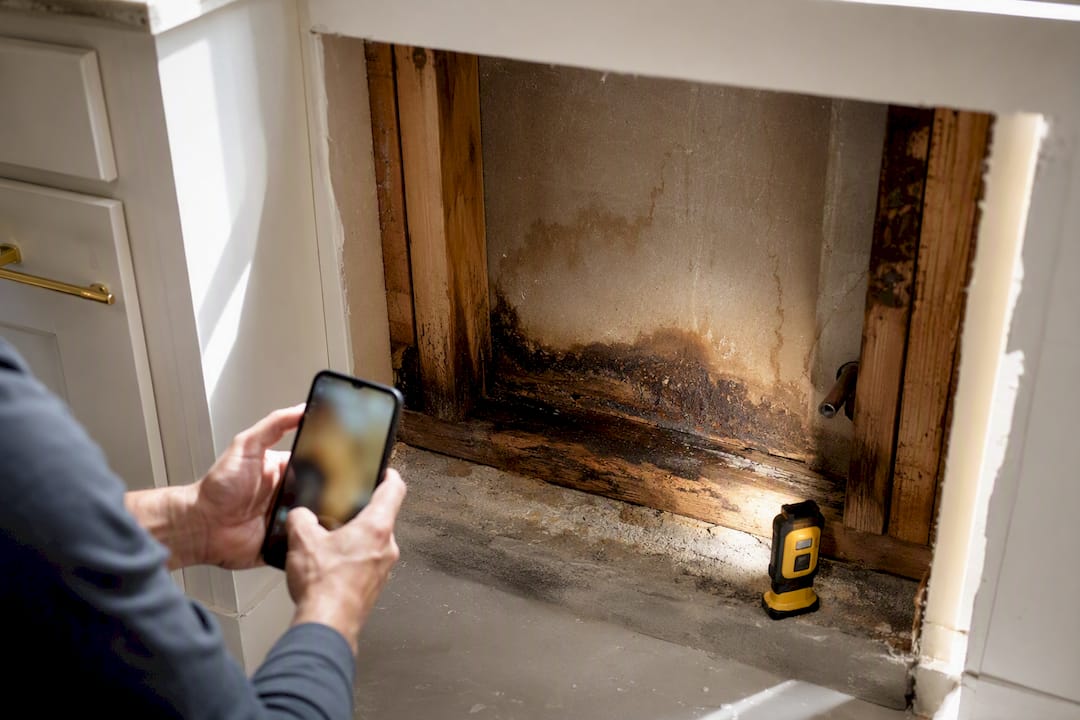
Communicate in writing, even for small items. A text message confirming “okay to proceed with the tile substitute at the quoted price” is far better than a phone call nobody remembers the same way. If your project uses a management platform, tools like Procore are built specifically to track change orders, approvals, and cost updates in one visible record, which is worth asking about if your contractor uses similar software.
Set a weekly check-in, even a five-minute one, to review any pending changes. Waiting until the final walkthrough to discover three unsigned change orders is a bad way to end a remodel.
Negotiation works best when you’ve already agreed on the rules before a change ever comes up. If your contract sets a markup percentage for change orders upfront, say 15% over cost, you’re negotiating from a fixed reference point instead of guessing whether a number is fair.
Ask for the breakdown, every time. A change order that just says “$1,200 for additional plumbing work” tells you nothing. One that separates materials, labor hours, and markup lets you actually evaluate whether the price makes sense, and it gives you something concrete to question if a number looks high.
Push back on urgency. Contractors sometimes frame a change order as needing immediate approval to keep the schedule on track. That’s sometimes true, but it’s also sometimes pressure to skip your review. A reasonable approval window, even 24 to 48 hours, rarely derails a project.
Consider scope trade-offs instead of just price. If a change order is going to add $800 to your budget, ask whether a different material or a smaller version of the change accomplishes the same goal for less. Contractors are often more flexible on scope than they are on their labor rate, and payment timing tied to milestones, as outlined in construction payment guidance, gives you more room to negotiate when a change hits a natural billing point.
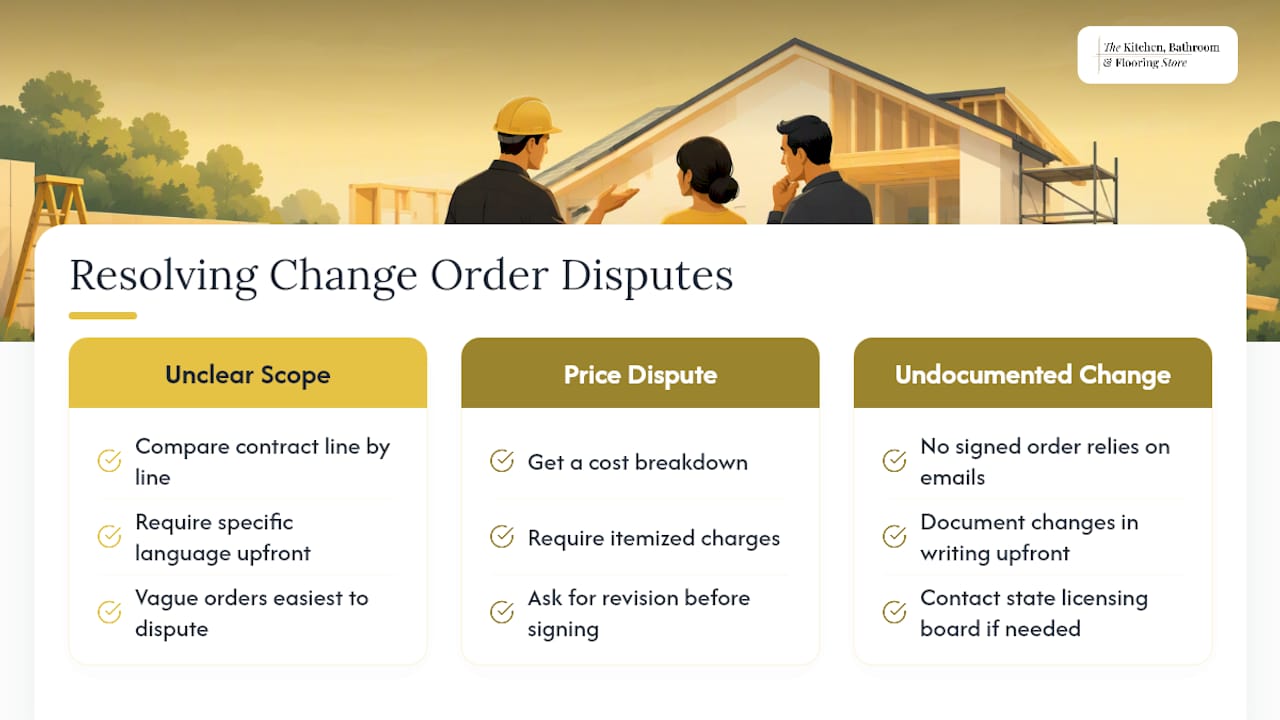
Most change order disputes come down to one of three things: unclear scope, disagreement over price, or a change that was never properly documented in the first place. Each has a different fix.
When scope is unclear, go back to the original contract language and compare it line by line against what the change order describes. A vague change order is the easiest one to dispute, and the easiest one to avoid by requiring specific language from the start.
Price disagreements are usually resolved faster when you have a cost breakdown to reference. If a contractor can’t or won’t itemize a charge, that’s a legitimate reason to ask for revision before you sign.
For changes that were never documented, this is where things get harder. Without a signed change order, you’re relying on emails, texts, or memory to establish what was agreed to. This is exactly why written documentation matters so much upfront. If a dispute does escalate, many states require contractors to carry a documented change process as part of their license, so your state licensing board is a real resource if a contractor won’t cooperate.
Industry data backs up patience as part of the process, too. A joint study by the GAO found that while many change orders settle within 60 days, a meaningful share take longer, and recommends holding an initial change-order meeting at project start to align expectations and speed up resolution when disagreements come up later.
Change orders themselves don’t lower quality; skipping the paperwork does. A properly documented change order that swaps one countertop material for another, or upgrades a shower valve, carries the same warranty protections as your original contract, as long as the new work is clearly described and signed off.
The risk shows up when changes happen off the books. If a contractor makes a substitution without documenting it, and that substitute product fails later, you may have no record proving what was actually installed, which complicates any warranty claim. A signed change order that specifies the exact product and installation method protects your ability to make a claim if something goes wrong down the line.
Rushed, undocumented changes also tend to correlate with rushed installation. When a contractor is juggling an unplanned change alongside the original schedule without adjusting the timeline, corners get cut. That’s one more reason a change order should always include a revised completion date, not just a new price. Giving the work proper time protects the quality you’re paying for, not just the paperwork.
Change orders aren’t a sign your remodel went wrong. They’re the normal, expected way a contract adapts when reality doesn’t match the original plan, and they work exactly as intended when both sides put things in writing. The single rule worth remembering is this: nothing changes hands, no work starts, no money moves, until there’s a signed piece of paper describing exactly what, how much, and by when.
— Anna
The Kitchen, Bathroom & Flooring Store handles design, product selection, and installation under one contract, which removes the biggest source of change-order chaos: coordination failures between separate contractors. When your designer and your installer work for the same company, selection deadlines, material substitutions, and scheduling conflicts get resolved before they ever turn into a change order.

Our Kitchen Remodeling Packages and Bathroom Remodeling Packages bundle design assistance with in-house installation and a single warranty, so you’re not managing separate change-order conversations with a designer, a supplier, and a contractor. If your project also involves new flooring, our flooring and installation services work off the same coordinated schedule. Flexible financing options mean a change in scope doesn’t have to mean a scramble for cash mid-project. Set up a design consult with us to establish your selection deadlines and change-order rules before a single wall comes down.
Common examples include upgrading a countertop material after seeing samples in person, discovering water-damaged subfloor once old tile comes out, or substituting a discontinued vanity for a similar in-stock model. Permit-driven electrical upgrades are another frequent example, since inspectors sometimes require changes the original plan didn’t include.
Yes, most change orders carry a cost adjustment tied to the added or removed materials, labor, and a markup percentage. A properly written change order should show that cost broken down by materials, labor, and markup, not as a single lump figure.
A change order should include a specific description of the scope change, an itemized cost adjustment, the revised schedule or completion date, and payment timing. It needs signatures from both the homeowner and contractor before the changed work begins, with a copy given to the homeowner first.
The three most common reasons are unforeseen site conditions revealed during demolition, homeowner-driven design changes made after work starts, and permit or code requirements that weren’t part of the original plan. Material substitutions due to discontinued or backordered products are also frequent, especially in kitchen and bathroom remodels.
Because design, product selection, and installation happen under one contract, coordination gaps between separate vendors, one of the most common change-order triggers, are largely eliminated. Homeowners get a single point of contact and a clear selection deadline, which reduces late-stage scope changes on both kitchen and bathroom projects.