
Porcelain tile is among the most scratch-resistant flooring options available, with a Mohs hardness rating near 7. For waterproof, pet-friendly performance in kitchens, entryways, and living areas, choose SPC or LVP with a wear layer of 20 mils or more. For the hardest plank surface in dry rooms, AC4 or higher laminate wins. Each option trades off comfort, impact resistance, or refinishing ability, and the rest of this guide walks through exactly how to weigh those tradeoffs for your home.
TL;DR:
- Porcelain tile and granite offer the highest scratch resistance due to their Mohs hardness near 7, ideal for high-traffic and pet areas.
- A wear layer of 20 mils or more on SPC or LVP provides effective resistance against dog nails and household traffic, especially in water-prone rooms.
- AC4 or higher laminate flooring delivers superior scratch resistance for dry rooms with heavy impact or pet activity, outperforming lower-rated options.
- Proper installation practices, including correct underlayment and humidity control, are crucial in preventing early surface damage and scratches.
- Warranties often exclude damage from pet nails or impact, so verify specific coverage details and ask for independent scratch testing results before purchasing.
Not all flooring wears the same way, and the material you pick determines whether your floors still look new in five years or show every dog nail and dropped dish within months.
Porcelain and granite sit at the top of the durability chart. Porcelain rates near 7 on the Mohs hardness scale, the same measure used for gemstones, and granite rates close to this range. That hardness means a dog’s nails, a dragged chair leg, or grit tracked in on shoes barely leaves a mark. The tradeoff is comfort. Tile is cold, hard underfoot, and unforgiving if you drop a glass.
Laminate relies on a melamine wear layer, often reinforced with aluminum oxide, pressed over a high-density fiberboard core. In controlled testing, laminate scored a perfect 5 out of 5 on visible scratch resistance, outperforming both vinyl and hybrid flooring. That hard surface has a catch: laminate is rigid, so a heavy impact can chip the wear layer rather than absorb the hit the way a softer material would.
LVP, SPC, and WPC (luxury vinyl plank, stone plastic composite, and wood plastic composite) resist scratches in direct proportion to wear-layer thickness. Products with 20 to 28 mil wear layers and ceramic-bead reinforcement hold up well against dog nails and daily household traffic, while thin 0.3mm layers on budget products often fail the same tests laminate passes easily.
Hardwood brings warmth and resale value, and an aluminum-oxide finish adds meaningful scratch resistance. Even so, solid hardwood scratches more visibly than tile or laminate. The upside is refinishability. Sand it down and it looks new again, something no laminate or vinyl floor can do.
Bamboo, cork, and concrete each solve narrower problems. Bamboo behaves like a harder hardwood but still dents under sharp impact. Cork cushions feet beautifully but scratches and dents more readily than any option above. Polished concrete resists scratching almost entirely, but it’s cold, loud, and typically a bigger renovation commitment than a floor swap.
Marketing copy calls almost every floor “durable.” The spec sheet tells you the truth, and three numbers matter more than any adjective on the box.
Mohs hardness measures how resistant a material is to scraping. Porcelain’s rating of about 7 explains why it shrugs off nail scratches that would mark a softer surface within a week.
Wear-layer thickness, measured in mils for vinyl and SPC products, is the strongest predictor of scratch performance in resilient flooring. Thicker wear layers correlate directly with better resistance, and thinner ones fail faster under the same stress.
AC ratings classify laminate by abrasion resistance, with AC3 generally suited to residential use, AC4 to heavier residential and some commercial traffic, and AC5 to the highest commercial environments. Most family homes with pets do well with AC4 or higher.
Here’s how those numbers translate into a buying decision:
A wear layer under 12 mils is a red flag for any household with pets or kids. Products in that range are built for light residential use, not daily nail traffic or dropped toys, and they show wear noticeably faster than higher-mil alternatives.
Core construction matters too. SPC (stone plastic composite) cores resist punctures and impact better than WPC (wood plastic composite), which is softer and quieter underfoot but slightly more forgiving of dents than scratches. HDF cores under laminate provide stability but no water resistance, which is why laminate belongs in dry rooms only.
The mistake most homeowners make is choosing one floor for the whole house. Consumer Reports recommends matching material to room function instead, since forcing one flooring type across every space usually leads to premature failure somewhere in the house.
Pro Tip: Skip high-gloss finishes if you have an older dog. Polished surfaces look sharp in photos but reduce paw traction, and a textured or matte finish gives senior pets much better grip without sacrificing scratch resistance.
A few habits protect any floor far more than the material choice alone.
Installation quality plays a bigger role than most people expect. Poor underlayment or incorrect acclimation before installation can cause edge scuffing that looks exactly like surface scratching, even on a high-spec floor. Proper humidity control in the room, discussed in more detail in this room-by-room guide to healthier indoor air, also helps stabilize wood and laminate floors long term.
We install flooring for a living, and the pattern is consistent: customers pick a floor by color swatch, then call us six months later asking why it’s scratched. Color tells you nothing about wear-layer thickness or Mohs hardness.
The single biggest mistake we see isn’t the material choice. It’s skipping proper underlayment or letting planks acclimate incorrectly before installation. A great floor installed poorly will scratch and gap faster than a mid-range floor installed right.
That’s why we walk every customer through wear-layer specs and AC ratings before they buy, not after. If you’re weighing several materials for one room, a professional measure and consultation catches subfloor issues, moisture risk, and traffic patterns that a spec sheet alone can’t show you. DIY works fine for a simple room-by-room swap; a full remodel with mixed materials benefits from professional installation to protect your warranty.
Warranty language on scratch resistance is one of the most misread parts of any flooring purchase. Most manufacturers separate “wear warranty” from “scratch and dent warranty,” and the two cover different things.
A wear warranty typically guarantees the finish or wear layer won’t wear through under normal foot traffic for a set number of years, often 15 to 30 for quality laminate and LVP. A scratch and dent warranty, when offered, is narrower. It usually covers manufacturing defects in the surface, not damage from dog nails, dragged furniture, or grit tracked in on shoes. That distinction catches a lot of homeowners off guard when they file a claim expecting full coverage for pet-related wear.
Warranties almost always require professional installation records or proof of correct underlayment to stay valid. Skipping acclimation time or installing over an uneven subfloor can void coverage entirely, even if the floor itself was never at fault. Read the fine print on humidity requirements too. Many hardwood and laminate warranties specify an acceptable humidity range, and damage outside that range isn’t covered.
Before buying, ask specifically what the warranty excludes, not just what it covers. “Scratch resistant” on the box and “scratch warranty” in the paperwork are two different promises, and only one of them means anything if a claim goes wrong.
Manufacturers approach scratch resistance differently depending on the technology behind their wear layers, and understanding the category differences matters more than chasing a specific brand name.
Laminate manufacturers compete mainly on AC rating and the composition of the melamine or aluminum-oxide wear layer. Higher-end laminate lines push into AC4 and AC5 territory specifically to compete with LVP on durability while keeping the lower price point laminate is known for.
LVP and SPC manufacturers differentiate on wear-layer mils and core rigidity. Budget lines often ship with wear layers around 6 to 12 mils, fine for a guest bedroom but undersized for a home with dogs. Premium SPC lines push past 20 mils and add ceramic-bead reinforcement, which is the spec worth asking about regardless of which brand’s showroom you’re standing in.
Tile and porcelain don’t really compete on “scratch resistant” marketing at all, because Mohs hardness makes the category durable by default. The differentiation there is more about finish, size format, and installation cost.
The practical takeaway: skip brand name as your first filter. Compare wear-layer mils, AC ratings, and core type across whatever brands your flooring showroom carries, and let those numbers, not the label, decide.
Durability and sustainability overlap more than most buyers realize. A floor that resists scratching lasts longer before replacement, which means less material in landfills and fewer manufacturing resources consumed over a home’s lifetime.
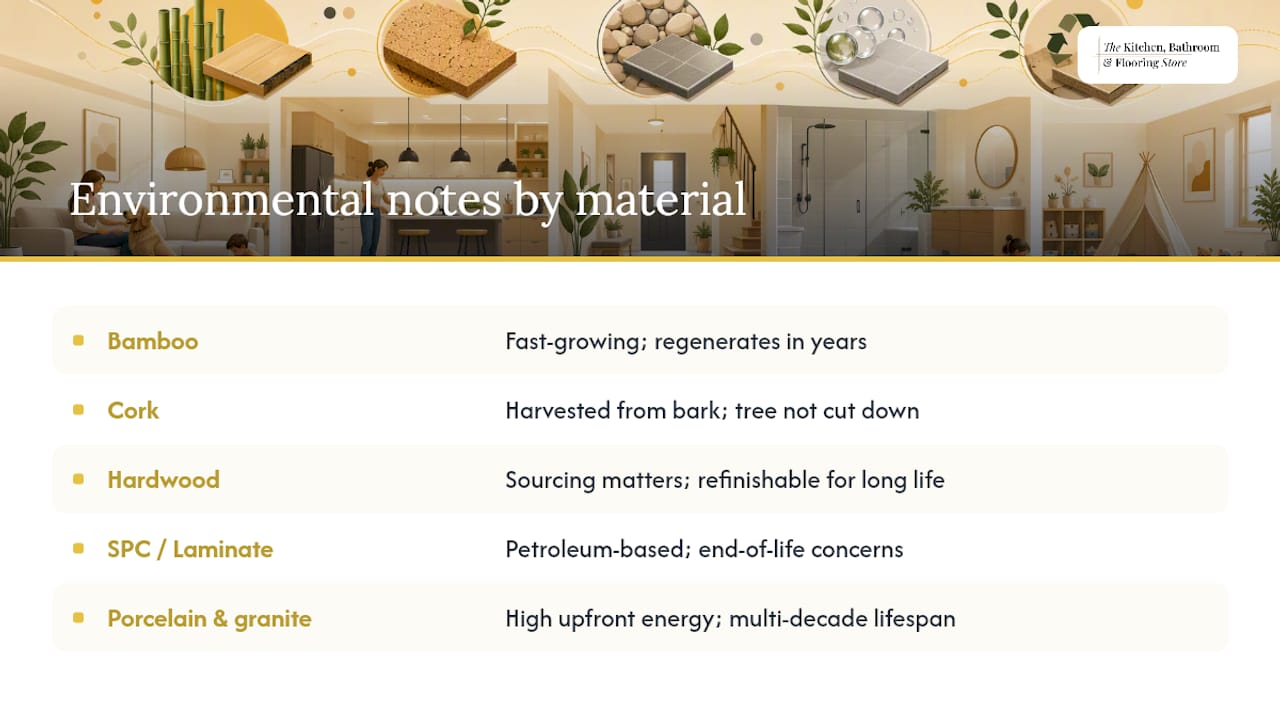
Bamboo grows faster than hardwood trees and regenerates within a few years, making it one of the more renewable options despite scratching more easily than a hardened finish. Cork comes from tree bark harvested without cutting down the tree, another genuinely renewable choice, though its softness limits it to lower-traffic rooms.
Hardwood’s environmental profile depends heavily on sourcing. Look for certifications indicating responsibly managed forests, and remember that hardwood’s refinishing ability extends its lifespan well beyond materials that must be replaced once damaged.
SPC and laminate are petroleum-based or composite products, which raises different sustainability questions around manufacturing and end-of-life disposal. Some manufacturers now offer recycled-content cores or lower-emission adhesives, worth asking about if sustainability weighs into your decision alongside scratch resistance.
Porcelain and granite are mined and manufactured with real energy inputs upfront, but their multi-decade lifespan and near-total scratch resistance mean they’re rarely replaced, which offsets that initial footprint over time.
“Scratch resistant” on packaging has no legal definition, which means it’s marketing language until you check the numbers behind it.
Start by asking for the wear-layer thickness in mils on any vinyl or SPC product. If a salesperson or listing can’t give you that number, treat the “scratch resistant” claim as unverified. The same goes for AC ratings on laminate. A product labeled simply “durable laminate” without a stated AC number is telling you less than it appears to.
Ask whether the scratch resistance claim comes from an independent test or the manufacturer’s own internal standard. Independent comparisons, like published scratch and stain tests across laminate, hybrid, and vinyl categories, give you a real benchmark because they test multiple brands under identical conditions rather than relying on one manufacturer’s own criteria.
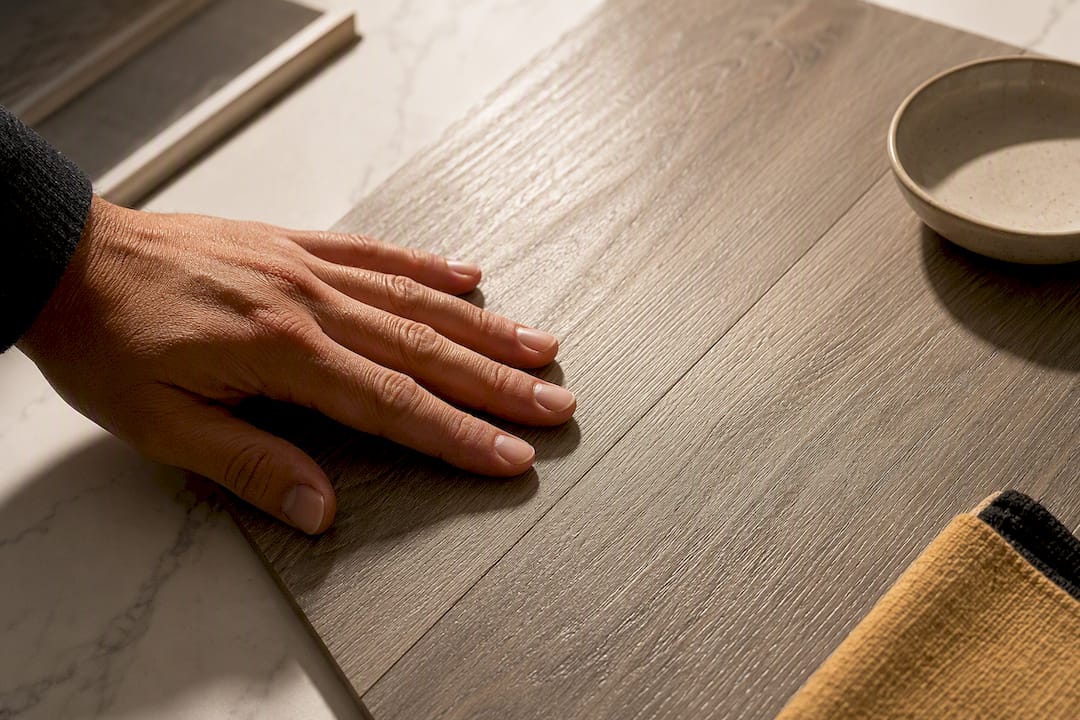
Check whether the warranty documentation matches the marketing claim. If the box says “scratch resistant” but the warranty excludes scratch damage entirely, that gap tells you the real story. Finally, ask to see or touch a sample under real light, since texture and finish affect how visible scratches actually appear day to day, regardless of what the spec sheet promises.
Most flooring guides lead with aesthetics and treat durability as a footnote. That order is wrong for anyone with pets or kids, and the research backs that up. Wear-layer thickness and AC ratings predict real-world performance far more reliably than a product’s marketing language or even its price point. A $4-per-square-foot laminate with an AC4 rating can outlast a $7 vinyl plank with a thin wear layer, and most showroom displays won’t tell you that.
The conventional wisdom of “vinyl is the pet-friendly floor” also oversimplifies things. Vinyl’s waterproofing genuinely matters for accidents and spills, but laminate’s harder melamine surface often resists visible nail scratching better, according to head-to-head scratch testing. The honest answer depends on which risk worries you more in a given room: water or scratches. Rarely is it both at equal intensity.
If you take one thing from this guide, make it this: ask for the wear-layer mil count and AC rating before you ask about color. Everything else is secondary to those two numbers.
— Anna
Picking the right wear layer or AC rating from a spec sheet is one thing. Matching that choice to your specific rooms, subfloor, and budget is another, and that’s where a showroom consultation saves you from an expensive guess. At The Kitchen, Bathroom & Flooring Store, you work with our design team in person, comparing real samples of laminate, luxury vinyl plank, and tile and stone side by side instead of guessing from a photo online.
A consultation typically covers your room-by-room traffic patterns, a look at wear-layer and AC specs for the products you’re considering, and a full quote with timeline before any work starts. Design, product selection, and professional installation may be handled under one roof, with financing options available so a full remodel doesn’t have to happen all at once. If you’re weighing a bathroom or kitchen floor alongside cabinets or fixtures, our bathroom remodeling packages bundle flooring into the broader project. Bring your room measurements and ask us directly about wear-layer mils for any vinyl sample you like.
Porcelain tile is the most scratch-resistant common residential flooring, with a Mohs hardness of about 7. Among plank-style flooring, AC4 or higher laminate typically resists surface scratches better than vinyl or hybrid products.
SPC or LVP with a wear layer of 20 mils or more handles dog nails well while staying waterproof, and a textured or matte finish gives paws better traction than high-gloss surfaces. Porcelain tile is also an excellent choice for entryways and high-traffic pet areas.
Porcelain and granite tile resist scratching, staining, and water damage better than any other common flooring material, making them the top choice for entryways, kitchens, and bathrooms. The tradeoff is a harder, colder surface underfoot compared to laminate or LVP.
In controlled testing, laminate’s melamine wear layer scored higher on visible scratch resistance than LVP or hybrid flooring. LVP with a thick wear layer holds up well too and adds waterproofing that laminate can’t match, so the better choice depends on whether the room faces more risk from scratches or moisture.
Look for at least 20 mils in any home with dogs or heavy foot traffic. Wear layers under 12 mils are built for light residential use and wear through noticeably faster under daily nail and paw contact.