
For most homeowners, the best balance of durability, cost, and easy installation is an 18 or 16 gauge stainless steel undermount sink or a granite composite single bowl, chosen based on cooking habits and countertop material. Farmhouse sinks earn their keep in kitchens built around big pots and statement style, while workstation sinks suit anyone who preps and entertains constantly. The sections below walk through mounting styles, bowl layouts, materials, and a step-by-step way to match all three to your kitchen.
TL;DR:
- Choosing a sturdy, quiet 16- or 18-gauge stainless steel or granite composite sink depends on your cooking habits and countertop material.
- Proper measurement and cabinet reinforcement are crucial for heavy or integrated sinks like fireclay or farmhouse styles to prevent costly fixes later.
- Workstation sinks with built-in accessories are trending in 2026 but suit frequent cooks, while bold finishes are becoming more common as design statements.
- The ideal sink type and configuration depend on your daily routines, with single bowls favored for large cookware and double bowls for multitasking.
- Coordinating sink, cabinet, and countertop selection through a full-service remodeler minimizes errors and ensures compatibility for heavier or integrated models.
Before picking a bowl shape or material, you have to know how the sink actually sits in your counter. Mounting style determines your cleanup routine, which countertops you can pair it with, and how much your installation will cost.
Drop-in, also called top-mount, rests its rim on top of the countertop cutout. It works with almost any countertop material, including laminate, and it’s the easiest and cheapest style for a contractor to install. The trade-off is that visible rim, which collects crumbs and grime and reads as less streamlined than a flush mount.
Undermount sinks attach beneath the counter so the edge disappears, giving you a clean sweep straight from countertop into basin. Manufacturer guidance from Kohler’s buying guide is clear that undermounts require a solid, waterproof countertop such as granite, quartz, or solid surface, since the mounting brackets need something sturdy to grip. That requirement also makes undermounts pricier to install than drop-ins, since fabricators have to cut and polish the underside of the counter to match.
Integrated sinks, molded from the same solid-surface material as the countertop, take the seamless look one step further by eliminating the seam between counter and basin entirely. They’re a smart pick for anyone who wants zero crevices to scrub, but they share a weakness with most solid-surface products: very hot cookware set directly in the bowl can scorch or discolor the surface.
Wall-mount sinks are the outlier here, bolted directly to the wall with no cabinet underneath. They’re rare in primary kitchens but occasionally show up in butler’s pantries or compact prep kitchens where floor space matters more than storage.
Retail buying guides from major suppliers consistently group kitchen sink types into three dominant categories: drop-in, undermount, and farmhouse or apron-front. That’s a useful shortcut when you’re narrowing options fast.
Bowl configuration is where most kitchens live or die on daily function. Get this wrong, and you’ll spend years fighting a sink that’s too small for your stockpot or too split up to soak a sheet pan.
One common pitfall: some compact double-bowl and bar sinks are cut too small to accept a standard garbage disposal flange. Always confirm interior bowl dimensions, not just the marketed size, before you commit.
Specialty styles are where function and personality collide, and 2026 is pushing both further than usual.
Farmhouse, or apron-front, sinks expose the front face of the basin instead of hiding it behind a cabinet door. The look is the whole appeal: a deep, single-bowl farmhouse sink handles oversized cookware effortlessly and anchors a kitchen with real visual weight. But that exposed apron means a custom cabinet cutout, and materials like cast iron or fireclay can weigh well over 100 pounds empty. Product documentation on sink weight confirms these heavier units often need reinforced base cabinets to safely bear the load once filled with water and dishes. If you’re weighing farmhouse sink pros and cons, put structural support at the top of the list, not an afterthought.
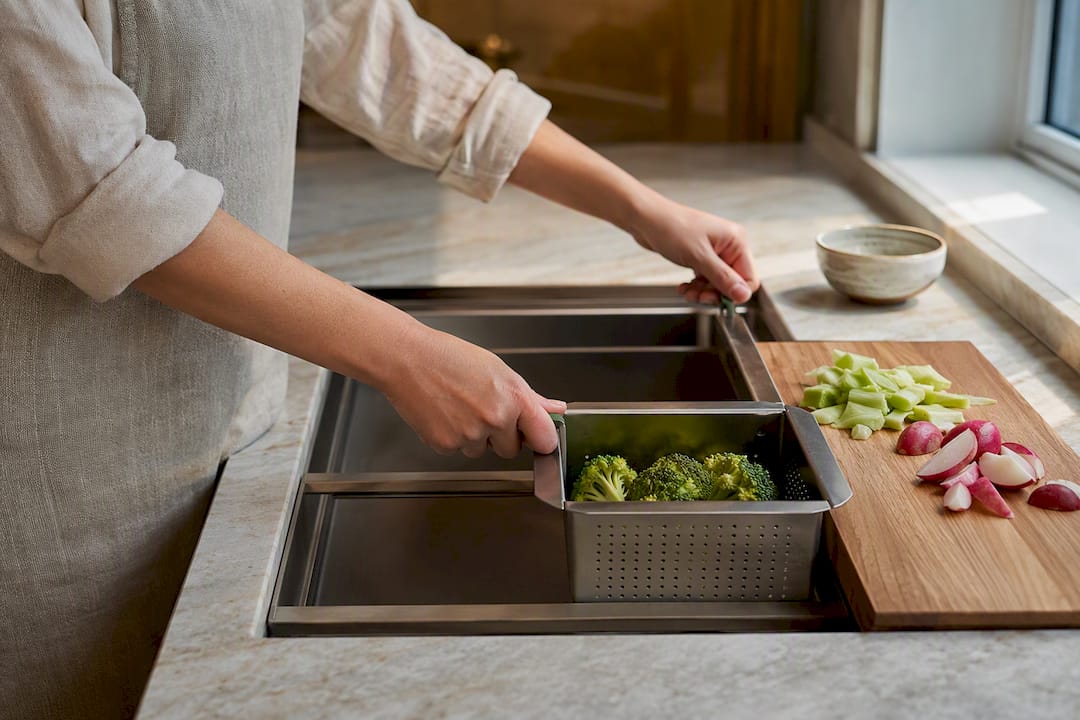
Workstation sinks, sometimes called supersinks, are the breakout trend of the moment. They come with built-in ledges that hold cutting boards, colanders, and drying racks directly over the basin, turning the sink into a working prep station rather than just a cleanup spot. Architectural Digest’s coverage of 2026 kitchen trends notes workstation and supersized basins, some stretching close to six feet, are becoming a design focal point rather than a purely functional afterthought. They’re the clear winner for anyone who cooks daily or hosts often, since prepping vegetables, draining pasta, and staging dishes can all happen in one footprint.
Drainboard and trough sinks build a sloped ribbed section into one side of the basin for air-drying dishes without a separate rack cluttering the counter. They cost more and eat up counter space that could otherwise hold a second bowl, so they suit kitchens with room to spare more than tight galley layouts.
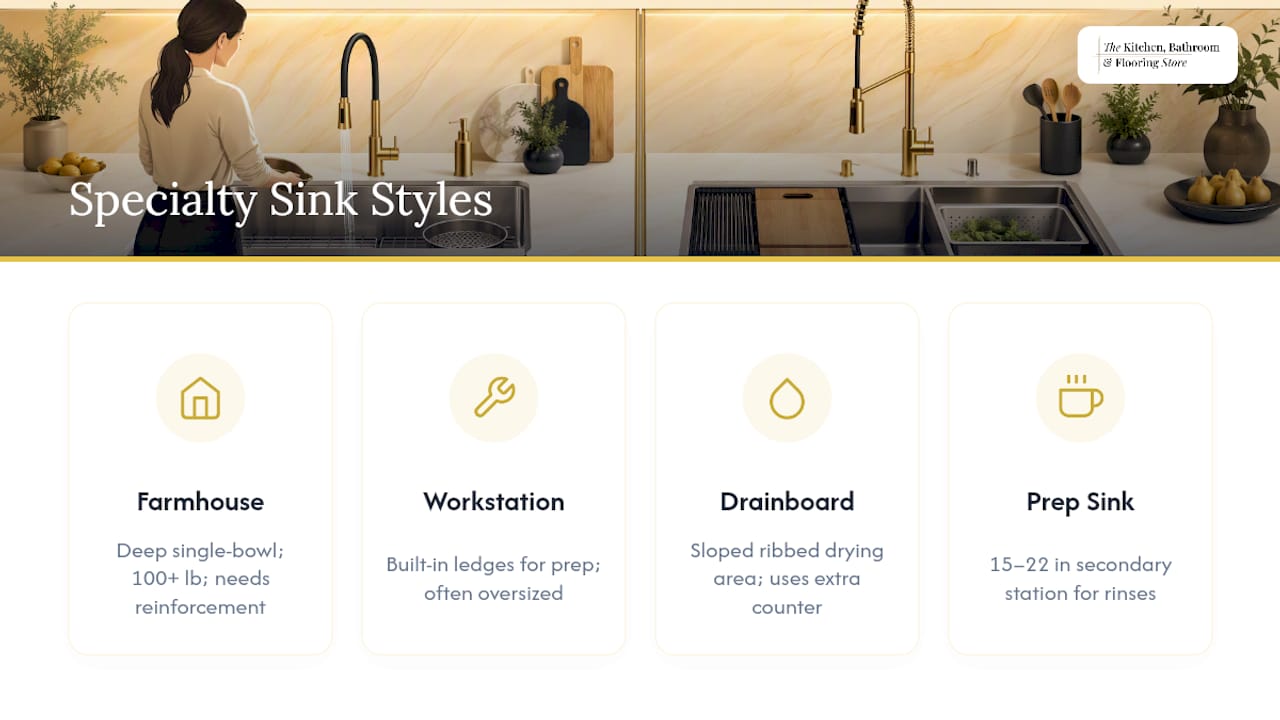
Island and bar prep sinks typically run 15 to 22 inches and serve as a secondary station for quick rinses, cocktail prep, or keeping guests out of the main workflow during dinner parties.
Pro Tip: Before falling in love with a farmhouse or oversized workstation sink, ask your fabricator or installer to confirm your base cabinet can be reinforced. It’s a fast fix during a remodel and a costly one afterward.
Material choice affects everything from how loud your dishwasher sounds to how many years the sink actually lasts.
According to material comparisons from The Plumbing Directory, 18-gauge stainless with sound pads offers the best overall value for typical kitchens, while granite composite stands out as the top upgrade pick when durability and quiet operation matter more than upfront cost.
By the numbers: stainless steel leads every other material in consumer popularity, according to Consumer Reports testing, while fireclay and enamel both showed clear chip damage under impact testing that stainless simply didn’t exhibit.
Turning all of this into a decision is easier with a sequence, not a checklist you skim once and forget.
Pro Tip: Ask your installer for the sink’s outside dimensions, not just the bowl size marketed on the box. NKBA specifying guidance notes fabricators sometimes list interior measurements separately from the overall footprint, and that gap can throw off a tight cabinet layout.
A full-service remodeler looks at cabinet reinforcement, countertop compatibility, and accessory clearance together, not as separate decisions made by three different contractors. That coordination matters most with heavy or integrated sinks, where a mismatch between cabinet strength and sink weight becomes expensive to fix after installation. Homeowners weighing a single-contractor approach versus juggling separate plumbers, cabinet makers, and countertop fabricators generally find the coordinated route reduces both delays and installation errors.
Workstation sinks are the clearest functional trend this year, built for households that prep constantly or entertain often, according to Architectural Digest’s 2026 kitchen coverage. Bold sink colors and mixed metal finishes are showing up as design statements rather than afterthoughts, a shift also flagged in trend commentary on sinks and finishes. If resale value matters to you, stick with stainless or a neutral granite composite in a standard mount; save the bold matte black or mixed-metal statement piece for a kitchen you plan to enjoy long-term rather than flip quickly.
Most sink advice online treats this like a beauty contest, ranking farmhouse against undermount against workstation as if one wins outright. It doesn’t work that way. The right call depends entirely on what happens at your sink on a Tuesday night, not what looks best in a showroom photo.
Here’s the pattern worth noticing: homeowners who fall for a farmhouse sink because it looks warm and traditional often discover, a year in, that they miss the second basin for soaking dishes while they rinse produce. Meanwhile, households that buy the trendy workstation sink but rarely cook from scratch end up with an oversized basin they use like a regular single bowl anyway, having paid a premium for ledges and accessories that gather dust in a cabinet.
The gauge obsession around stainless steel is another place conventional wisdom overreaches. Consumer Reports testing found gauge alone had limited impact on real-world performance, yet plenty of buying guides treat 16-gauge as automatically superior. It’s sturdier and quieter, sure, but 18-gauge with a sound pad handles a normal household’s daily use just fine. Spend the difference on a better faucet or a reinforced cabinet instead.
If there’s one honest takeaway, it’s that structural planning deserves as much attention as style. A gorgeous fireclay farmhouse sink installed on a cabinet that wasn’t built to hold it is a problem waiting to happen, and it’s the kind of detail that gets skipped when homeowners shop sink and cabinet separately instead of planning them together.
— Anna
Choosing between mounting styles, bowl layouts, and materials is a lot easier when the same team measuring your cabinets is also fabricating your countertop and installing the sink, instead of three separate schedules you have to coordinate yourself. A full-service remodeler handles design consultation, cabinet modification, countertop fabrication, and professional sink installation under one roof, so a heavy farmhouse basin or an undermount sink paired with new granite gets planned and executed by people talking to each other, not passing blame between trades.
Before your consultation, bring rough kitchen measurements and a sense of which sink styles you’re drawn to. It helps our design team narrow material and mount options fast instead of starting from zero. If your project includes a bathroom too, take a look at our bathroom remodeling packages, or visit our Jacksonville showroom to see sink materials and finishes in person before you decide.
Workstation and supersized sinks are the dominant 2026 trend, built with integrated ledges for cutting boards and colanders, alongside bold finishes and mixed metal pairings that treat the sink as a design feature rather than a purely functional fixture.
Buying guides most often group sinks into drop-in (top-mount), undermount, and farmhouse (apron-front) styles, distinguished mainly by how the sink attaches to the countertop and cabinet.
Workstation or supersized single bowls, bold colored finishes, and mixed metal fixture pairings are the styles designers are leaning into this year, alongside continued demand for durable, sustainable materials like recycled-content stainless steel.
Kitchen sinks come in single bowl, double bowl (equal split, 60/40, or D-shaped), low-divider, triple bowl, and smaller bar or prep configurations, each suited to different cooking and cleanup habits.
Undermount sinks give a seamless look but require a solid, waterproof countertop like granite or quartz, while drop-in sinks work with virtually any countertop material and cost less to install.