
The single best thing you can do for your quartz countertop is also the simplest: wipe it daily with warm water, a few drops of mild dish soap, and a microfiber cloth, then dry the surface completely. That routine handles almost every spill before it becomes a stain. Skip bleach and abrasive pads, keep hot pans off the surface, and you’ve covered 90 percent of what quartz countertop maintenance actually requires.
TL;DR:
- Regular maintenance involves wiping with warm water, mild dish soap, and drying thoroughly to prevent haze and streaks caused by soap residue.
- For stains, start with soap and water, then use rubbing alcohol or hydrogen peroxide for stubborn spots, avoiding harsh or abrasive products.
- Avoid bleach, oven cleaner, acetone, abrasive powders, steel wool, and Magic Eraser, as they can damage the resin binder in quartz surfaces.
- Hot pans should always be used with a trivet or hot pad, and knives must be used with a cutting board to prevent scratches.
- Proper installation with well-finished edges and sealed seams simplifies maintenance and protects against moisture-related damage.
You don’t need a cabinet full of specialty cleaners to keep quartz looking new. A few basic supplies handle nearly everything:
The daily version of this routine takes about two minutes. Clear crumbs and debris first, then wipe the whole surface with your soapy cloth, rinse with a clean damp cloth, and dry it thoroughly. That last step matters more than people think. Quartz care guidance from The Spruce points out that most haze and streaking on quartz comes from leftover soap residue and water spots, not from the stone reacting badly to anything. Drying the surface every time prevents that cloudy look before it ever starts.
Weekly, give the counter a slightly deeper clean, paying attention to the areas around the sink and stove where hard water and grease tend to build up film. If you’re in an area with hard water, a light vinegar and water rinse followed by a thorough dry can cut through mineral haze, though you should never let vinegar sit for long or use it as your everyday cleaner.
Kitchens with heavy daily cooking traffic benefit from a quick wipe after every meal prep session, not just once a day. Bathrooms typically need less frequent attention since they see fewer oil and food spills.
Pro Tip: Keep a small spray bottle of diluted dish soap right under the sink. Countertop maintenance only stays easy when the supplies are within arm’s reach.
Coffee rings, wine splashes, and cooking oil don’t have to become permanent. The key is working from the gentlest method up, never jumping straight to something harsh.
Always rinse and dry after any spot treatment. If you’re dealing with rust spots, deep-set stains, or a discoloration that doesn’t respond to any of the above, stop experimenting. Aggressive scrubbing at that point risks the finish. Contact the slab manufacturer or your fabricator instead of reaching for something stronger.
Quartz countertops are engineered stone: roughly 90 percent ground quartz bound with polymer resin. That resin is exactly why certain products are off-limits. Anything that attacks the resin binder will dull the shine, discolor the surface, or leave a mark you can’t buff out.
Avoid these entirely:
Is it okay to use Clorox wipes on quartz countertops? Generally, no. Most Clorox wipes contain bleach compounds, and manufacturer care guidance is direct on this point: bleach and abrasive pads can dull or damage the resin in engineered quartz over repeated use. The damage isn’t always instant. It’s often a gradual loss of shine that only becomes obvious months later.
For tough jobs, stick with diluted dish soap, rubbing alcohol on a soft cloth, or a manufacturer-approved spot cleaner. None of these carry the same risk.
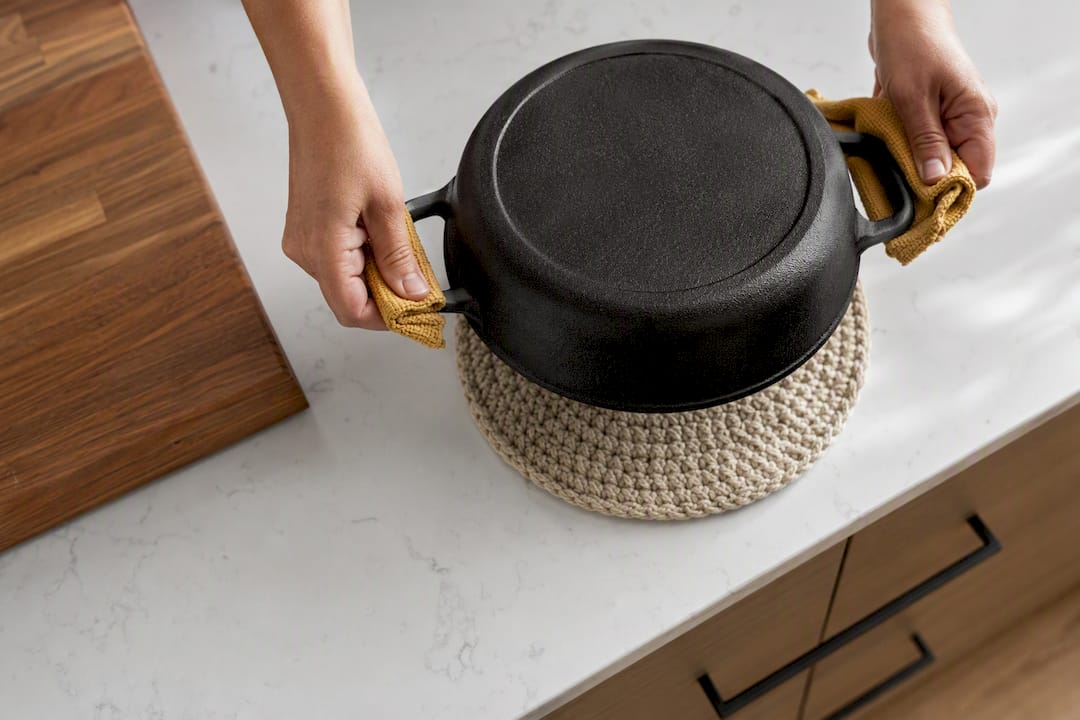
Quartz resists heat far better than laminate, but “resistant” isn’t the same as “proof.” The resin binder can scorch or discolor if a hot pan sits directly on the surface, so always use a trivet or hot pad, even for a quick set-down between the stove and the table. If you’re weighing surfaces by heat tolerance, this comparison of heat-resistant countertop options is worth a look before you commit to a material.
For scratches, quartz is hard but not immune to a sharp knife edge or a dragged cast-iron pot. Use a cutting board every time you chop, and lift heavy cookware rather than sliding it across the surface. Minor surface marks sometimes buff out with a little polish. Anything deeper than a light scuff calls for a fabricator, not a home fix.
Quartz never needs sealing. Its resin composition makes it non-porous, and applying a sealant on top can actually leave a residue instead of adding protection, according to manufacturer care documentation. That’s one maintenance task you can permanently cross off your list.
What you should check once a year: seams, caulk lines, and exposed edges near sinks. Cracked caulk lets water seep underneath, which can cause problems the countertop itself never would. Recaulking is a small job that prevents a much bigger one.
Keep your manufacturer’s care sheet and purchase receipt somewhere accessible. If a claim ever comes up, insurers and warranty providers typically ask whether banned chemicals were used, and improper cleaning products can void coverage entirely.
A countertop that’s fabricated and installed correctly is simply easier to live with. Clean seam work, properly finished edges, and tight caulking around the sink cut down on the crevices where grime and moisture like to collect, and that in turn makes your daily wipe-down routine faster and more effective. Proper fabrication is a maintenance advantage in its own right, not just a cosmetic one.
That’s the philosophy behind how The Kitchen, Bathroom & Flooring Store approaches every countertop installation: correct material selection and precise edge finishing up front, backed by an in-house warranty, so homeowners spend less time troubleshooting and more time actually using their kitchen.
Pro Tip: Ask your installer to walk you through the exact care sheet for your specific quartz brand before the job wraps up. Slight variations between manufacturers are common, and five minutes of instruction saves you guesswork later.
Not every stain responds to the same treatment, and oil-based marks behave differently than water-based ones.
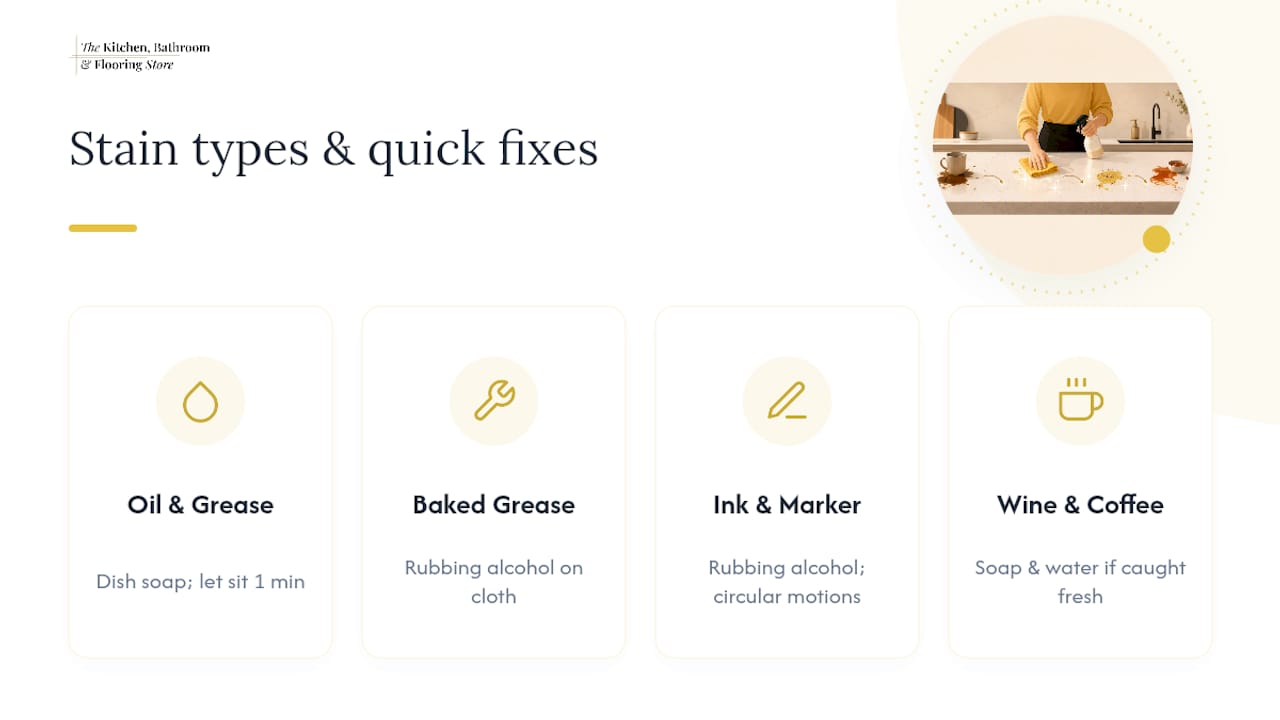
Cooking oil and grease tend to sit on the surface rather than soak in, since quartz is non-porous, but they can leave a slick film if you only rinse with water. Use a small amount of dish soap directly on the spot, let it sit for a minute, then wipe with a soft cloth. For grease that’s dried or baked on near a stovetop, rubbing alcohol on a cloth works better than soap alone.
Ink and marker stains, from a stray pen or a kid’s art project, usually lift with rubbing alcohol applied on a cloth in small circular motions. Avoid pressing hard. If the ink has been sitting for days, a brief application of the hydrogen peroxide method mentioned earlier can finish the job.
Wine and coffee, both common culprits, typically respond to plain soap and water if you catch them within a few hours. Older, set-in wine stains sometimes need the rubbing alcohol step.
The pattern across nearly every stain type is the same: start gentle, give the treatment a minute to work, and never let a stronger product sit longer than necessary. Rinsing and drying immediately after any spot treatment protects the shine and keeps residue from building up.
True fading from normal use is rare on quartz, and it’s worth knowing why before you panic over a color change. What looks like fading is usually one of three things: sun exposure, chemical damage, or residue buildup.
Direct, prolonged sunlight can affect the resin in some quartz slabs over years, particularly near a bright window or an outdoor kitchen application where quartz isn’t typically recommended. Discoloration that shows up faster, sometimes within weeks, is more often chemical. A cleaner containing bleach or a strong solvent left on the surface too long can leave a permanently duller patch, even if you didn’t scrub hard.
The far more common cause is simply soap residue and hard water film that never got wiped away properly. This can look like a cloudy discoloration but isn’t damage at all. Re-cleaning with soap and water, followed by a thorough dry, usually restores the original look.
If a patch of discoloration doesn’t respond to a normal clean and dry, and you know it wasn’t sun exposure, think back to what touched that spot. Identifying the chemical culprit helps you avoid repeating the mistake, and it’s useful information to share with your fabricator if you need a professional opinion on repair options.
Light surface scuffs, the kind you can barely feel with a fingernail, sometimes respond to a quartz-specific polishing compound applied with a soft cloth in small circular motions. This works for surface-level dullness, not for anything that’s actually gouged into the material.
For a genuine chip, especially at a corner or an edge near the sink, a two-part epoxy resin kit color-matched to your slab can work as a temporary fix. Clean and dry the area completely first, apply the epoxy per the kit instructions, and let it cure fully before using that section of the counter again. This buys you time, but it rarely disappears completely and it’s not a permanent structural repair.
Deep chips, cracks that run any real length, or damage near a seam are a different category entirely. DIY filler in those spots often looks worse than the damage itself and can trap moisture underneath. That’s when it makes sense to call your original fabricator or installer, who can match the resin more precisely and, in some cases, address the damage as part of an existing warranty.
Most quartz “damage” people worry about isn’t damage at all. It’s soap residue they never dried off. Memorize one routine: soap, water, microfiber, dry. Save DIY spot treatment for surface stains only, and hand chips or heat scorching to a fabricator instead of a home fix. Keep that short mental checklist by the sink and you’ll rarely need anything else.
— Anna
If your current countertop is fighting you on every one of these steps, chasing chips near a bad seam or discoloration around a poorly sealed edge, the problem might not be your routine. It might be the installation. Design consultation, product selection, and professional installation can be handled under one roof, sometimes accompanied by an in-house warranty.

That matters most when your project involves complex edge profiles, an integrated sink, or specific seam placement decisions, all situations where a fabrication mistake becomes a maintenance headache for years afterward. Our team walks you through slab options, including quartz, and handles the installation details that make daily cleaning simple instead of frustrating. If you’re ready to see what a properly fabricated quartz countertop looks like in your own kitchen, request a consultation and we’ll help you plan the project from design through the final wipe-down.
Quartz can’t handle direct heat as well as natural stone, so hot pans need a trivet every time, and it’s vulnerable to bleach, acetone, and abrasive scrubbing pads. It also doesn’t get the exact same look as natural granite or marble, since it’s an engineered material.
Yes. Dawn is a mild dish soap commonly recommended for quartz surfaces and it’s exactly the kind of gentle cleaner your daily routine should use, applied with warm water and a soft cloth.
Avoid bleach, oven cleaner, acetone, Bar Keepers Friend or other abrasive powders, steel wool, and Magic Eraser sponges. These can dull the finish or damage the resin binder that holds engineered quartz together.
No, most Clorox wipes contain bleach, which manufacturers specifically warn against for quartz. Stick to mild dish soap and water for everyday cleaning instead.
No. Quartz is non-porous because of its resin content, so sealing isn’t necessary and can even leave a residue behind. Yearly attention to seams and caulk lines matters far more than sealing ever would.