
Tile to the ceiling in your shower when you build a bonded waterproof membrane behind it, installed to ANSI A118.10 and the TCNA steam-shower methods SR613 and SR614 when steam is involved. Skip it if you can’t commit to that assembly, and choose a water-resistant painted ceiling instead. If you’d rather hand off the details, we manage the whole install at The Kitchen, Bathroom & Flooring Store — and can help you with choosing the best bathroom doors for your Dallas home as part of your remodel.
TL;DR:
- Tile and grout let water through, so the bonded membrane must cover every shower surface and meet ANSI A118.10, installed at the specified thickness.
- Continuous use steam rooms also need low vapor permeance and a ceiling slope of at least 2 inches per foot to direct condensation toward walls.
- Choose small, lightweight tiles and mortar rated for overhead use, then brace each tile until the mortar sets to prevent slippage.
- Hire a qualified installer for steam rooms, large format overhead tile, complex drain connections, or structural concerns, and request membrane and warranty details in writing.
Full-height tile gives a shower a finished, continuous look, but it asks more of the installer than stopping at the showerhead.
Benefits:
Drawbacks:
One point trips up many DIY remodelers: tile and grout are not waterproof on their own. Water moves through grout joints, so the membrane behind the tile does the real waterproofing work. If you want a sense of what drives the price, our bathroom tile cost guide breaks it down.
Every wet surface in the shower, ceiling included, needs a bonded waterproof membrane that meets ANSI A118.10. Bonded membranes should be applied on all shower surfaces, including ceilings, and that guidance also covers the vapor side of steam rooms.
You have two main routes:
Both work when you follow the maker’s instructions to the letter. Skipping the specified thickness is the classic way a liquid membrane fails.
Steam changes the rules. For a continuous-use steam shower, TCNA methods require low vapor permeance, and the ceiling needs a minimum slope of 2 inches per foot so condensation runs down the walls instead of dripping on you.
Standard to know: TCNA steam-shower methods require a minimum ceiling slope of 2 inches per foot, a mandatory design detail for continuous steam rooms.
A flat ceiling in a steam shower is a design error, not a style choice. Vapor control matters as much as waterproofing, and failing to control vapor permeance is a common cause of hidden mold even when the tile looks perfect.
Use a cement backer unit or a foam-core tile board built for wet areas. Choose a backer board or tile substrate suited to the wet shower assembly, and follow its manufacturer’s installation guidance.
What we’d put up there:
Manufacturer demonstrations, such as applying KERDI over solid backing for ceilings, show the attachment and sealing details that matter overhead. Standards like ANSI A108, A118.10 and A118.15T address acceptable backings, setting mortars and membrane installation, so check which ones apply to your products before you buy.
Tile weight counts too. A heavy porcelain slab that’s fine on a wall can be too much overhead, which brings us to size.
Keep ceiling tile small and light. Choose small, lightweight ceiling tiles or mosaics, and make sure the tile and setting system are suitable for overhead use.
Work through the setting in this order:
Drains matter even though they sit at the other end of the shower. Choose an integrated bonding-flange drain with a bonded membrane, because bonded membranes with integrated drains create a waterproof envelope that reduces saturated mortar beds. TCNA methods for shower receptors, such as B421C, spell out the details.
Pro Tip: Dry-fit a few rows of tile on the ceiling with painter’s tape before mixing any mortar, so you can adjust layout without racing the mortar’s working time.
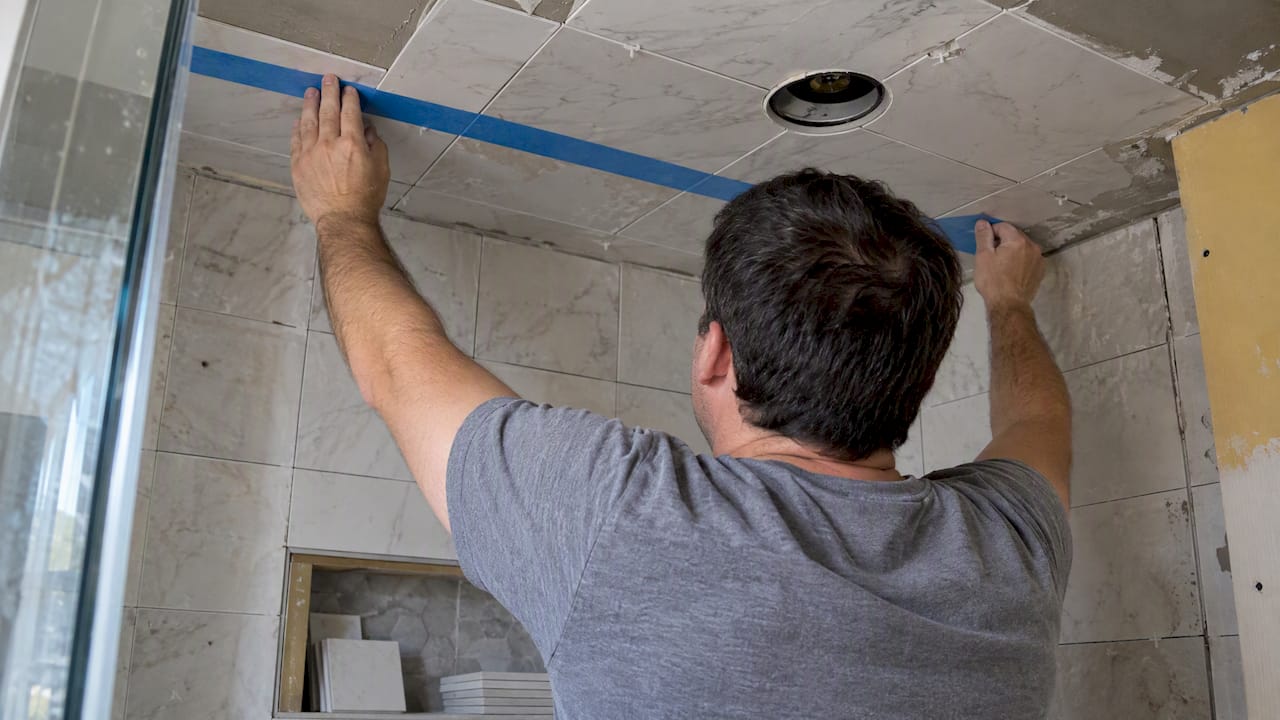
Pattern choice also affects how visible small errors are, and our bathroom tile patterns guide can help you plan the layout.
Hire a professional for steam showers, complex drain tie-ins, large-format tile overhead, or any job with structural concerns. The ceiling demands precision that’s hard to learn on a weekend.
Credentials worth checking: NTCA guidance recommends installers with CTI or ACT certifications for complex work like steam shower ceilings, because those programs test membrane application and substrate prep.
Good questions for any installer:
If a contractor can’t answer these plainly, keep looking.
Design choices decide how the ceiling looks and ages. Pick a grout color close to the tile so seams recede, keep joints narrow and consistent, and place recessed lighting rated for wet locations so fixtures don’t become weak points. Choose a layout that is easy to clean and maintain.
Ventilation and insulation can help manage moisture; choose an exhaust fan suited to the room and insulate the ceiling above.
Annual upkeep checklist:
Our view is simple: a tiled shower ceiling fails at the handoffs. The tile setter blames the membrane, the plumber blames the drain tie-in, and you hold the bill. We offer end-to-end bathroom remodels at The Kitchen, Bathroom & Flooring Store, covering membrane selection, drain tie-ins, tile setting and warranty, so one team owns the result. Fewer contractors mean fewer gaps and one warranty to call. If you want site-specific advice, schedule a consultation and we’ll look at your space.
— Anna

Our bathroom remodeling packages include design help and product selection, so a full-height shower isn’t a puzzle you solve alone. Not sure where to start? Visit our showroom or ask for an on-site assessment, where we check ceiling slope, decide which membrane the project needs and give you a quote. You can also see our work on the bathroom tile contractors page. Reach out today to book your visit.
Yes, as long as the ceiling has a proper backer and a bonded waterproof membrane under the tile. Use small, light tile and a non-sag mortar so it stays put overhead.
A water-resistant painted ceiling with good ventilation is the usual alternative. It still needs a quality exhaust fan, since the tile-to-ceiling option is what carries the full waterproof envelope.
Install a cement backer unit or foam-core board, waterproof it with a bonded membrane, then set small tiles with non-sag mortar and high coverage. Seal seams and corners per the membrane maker’s instructions.
Yes. TCNA methods call for a ceiling slope of at least 2 inches per foot in continuous steam assemblies so condensation doesn’t drip on you.