
A toe kick drawer is a slim, hidden drawer built into the empty space under your base cabinets. For most remodelers, it earns its keep as storage for flat, seldom-used items like baking sheets and placemats. It will not hold bulky cookware. Next, we cover what fits, how to install them, and what they cost.
TL;DR:
- Plan for roughly 3 inches of usable height; baking sheets, cutting boards, platters, and linens fit, while pots and kettles do not.
- Retrofits cost about $150 per drawer, while factory ordered drawers run $175–$225 each; new cabinets usually produce cleaner face and baseboard alignment.
- Measure after flooring is installed, check for plumbing, electrical lines, and blocking, and split unusually wide openings into two drawers to limit slide sag.
- Choose push to open, soft close, full extension slides, but leave toe kicks open where wheelchair clearance, knee room, or turning space is required.
A toe kick drawer sits in the recessed strip at the bottom of a base cabinet, where the toe space normally goes unused. From the outside it looks like a continuous baseboard strip until you press or pull it open. Because the space is shallow in height but runs the full length of the cabinet, it suits flat items that otherwise get stacked awkwardly in a deeper drawer.
Homeowners and cabinet makers commonly point to a handful of uses:
Houzz notes that these drawers work best for narrow or infrequently used items, and mentions built-in step stools and pet-bowl drawers as popular variations. If you reach for something daily, it likely belongs in a regular drawer instead.
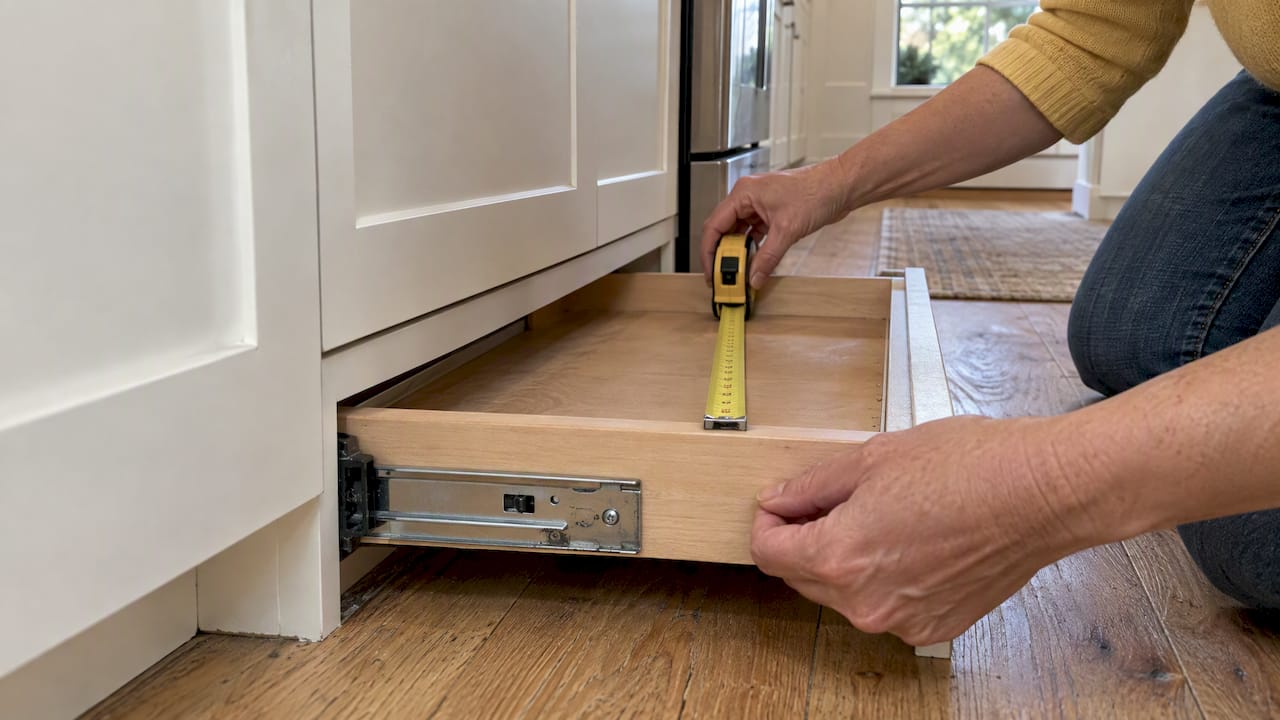
Standard toe kicks run about 3 to 4 inches high, which leaves roughly 3 inches of usable drawer height once you account for the slides and the drawer box. Depth is far more generous, since the drawer can run most of the way back under the cabinet. A manufacturer install guide for frameless cabinetry lists a minimum toe-kick height of 3 inches, so you rarely get more than that to work with.
Measure before you plan anything:
Cookie sheets, flat platters, cutting boards and folded linens fit comfortably. A tall kettle, a stockpot or a stack of mixing bowls will not. If you cannot lay it flat in a 3-inch space, it belongs elsewhere.
You have two routes. You can order factory-built toe kick drawers along with new cabinets, or you can retrofit drawers under cabinets you already own. Ordering with new cabinets gives the cleanest result, since the drawer face and baseboard are designed to line up. Retrofitting works well when your cabinets are in good shape and you only want extra storage.
Cost guidance from Houzz puts a retrofit at about $150 per drawer, and factory-ordered drawers at roughly $175–$225 each when bought with new cabinets. The retrofit steps below follow the process Family Handyman describes:
Pro Tip: Cut and test-fit your first drawer before you build the rest, because a small measuring error repeats across every cradle.
A confident DIYer with basic carpentry skills can handle a single run. If your cabinets have plumbing or electrical behind the kick plate, or you want several drawers to line up perfectly, hire a carpenter.
Hardware decides whether a toe kick drawer feels useful or annoying. Here is what we recommend specifying:
The NKBA planning guidelines also say drawers should not require excessive force and should provide full access, and that hardware should avoid excessive wrist twisting. Hidden latches generally meet that test better than tiny pulls.
The NKBA recommends planning reachable storage for seated users, as described in its pull-out storage guidance. Toe kick drawers sit well below seated reach, so they are best for items you do not need often.
Review your turning space and knee clearances before adding drawers near any required clear floor area.
Use this short checklist to decide.
Questions to bring to your remodel consult:
If you can name several items that would live there, the drawers will probably pay off.
Showing up prepared makes quoting faster and more accurate. Bring or decide on the following:
With a single-source remodeling package, one team handles the measuring, ordering and installation, so nothing gets lost between the cabinet order and the floor install. Our space planning guide walks through layout and clearances if you want to prepare further.
We like toe kick drawers in small kitchens, in homes with lots of narrow items like baking sheets and linens, and for anyone who wants hidden storage without losing counter or cabinet space. When the kitchen is getting new cabinets, we usually prefer factory-ordered drawers, because the faces and baseboard line up from day one. Retrofits make sense when your existing cabinets are solid and you just want a few extra slim drawers. Because we handle cabinet selection and installation under one roof, we can tell you honestly which route fits your kitchen.
— Anna
If you are planning a kitchen update, our Kitchen Remodeling Packages bring design help, cabinet selection and installation together. Here is what you get:
Book a consultation or visit our showroom, and bring your measurements. We will help you decide where these drawers make sense.
They are worth it if you have flat, seldom-used items that need a home. They cost more per drawer than a standard drawer and hold only slim items, so they work best as a supplement to your main storage.
Base cabinets almost always have one, because the recessed space lets you stand close to the counter without stubbing your toes. A toe kick drawer simply puts that recessed space to use. Toe clearance also matters for accessible design, per the NKBA guidelines.
Order them with new cabinets for the cleanest fit, or retrofit them under existing cabinets by removing the kick plate and building cradles for slides. Our kitchen cabinets page shows what we offer.
The upside is reclaimed space, hidden storage and a clean look. The tradeoffs are shallow height, a limit on what fits and a per-drawer cost, so measure first and plan the seams carefully.