
For most homes, luxury vinyl plank with an SPC or WPC core is the best all-around waterproof flooring, and porcelain tile is the premium, longest-lasting choice for wet rooms. The rule that actually matters: full bathrooms, basements, and anywhere standing water is likely need a fully waterproof core, while kitchens and living areas can often get by with water-resistant materials if spills get wiped up fast. Cost, comfort underfoot, and installation difficulty are what separate these options once waterproofing is off the table.
TL;DR:
- Fully waterproof cores like SPC are essential for rooms with constant water exposure such as bathrooms and basements, while water-resistant options suffice elsewhere if spills are cleaned quickly.
- SPC vinyl plank offers near-total waterproofing and dent resistance, making it ideal for high-traffic areas with pets, whereas WPC provides a softer feel suited for comfort-focused spaces like bedrooms.
- Proper porcelain tile installation requires a waterproof membrane and sealed grout to prevent leaks from grout lines and subfloor moisture; DIY attempts often fail without professional help.
- Sheet vinyl, rubber flooring, and sealed concrete provide seam-free, waterproof solutions for utility spaces, basements, or areas prone to flooding, with varying costs and installation complexity.
- Checking core type, wear layer thickness, warranty specifics, underlayment, and installation method before purchase can prevent costly mistakes and ensure long-term waterproof performance.
You don’t need to master every material on the market. You need to know which one or two options fit each room, and why. Here’s the shortlist we give customers who walk into our showroom overwhelmed by choices.
SPC (stone plastic composite) and WPC (wood plastic composite) are the two dominant waterproof vinyl planks on the market, and they solve different problems.
SPC cores blend limestone and PVC into a dense, rigid plank that resists dents, swelling, and temperature swings. That density makes it genuinely 100% waterproof at the core, which is why installers steer basements, kitchens, and bathrooms toward SPC first. WPC uses a foamed core with wood-like fillers, which trades some of that rigidity for a softer, warmer feel underfoot. It’s a better match for bedrooms or living rooms where comfort matters more than crush resistance.
Wear layer thickness matters as much as the core. For busy households and homes with pets, look for a wear layer in the 12 to 20+ mil range; anything heavier than 20 mils is built for genuinely heavy foot traffic, not just casual scuffs.
Pro Tip: If you’re choosing between LVP and tile for a busy kitchen, remember that vinyl installs in a day or two and stays warmer in winter. Tile takes longer and costs more, but it outlasts vinyl by decades in the right conditions.
Yes, when the room sees heavy or constant water exposure. Glazed porcelain absorbs less than half a percent of its weight in water, which makes the tile itself close to waterproof on its own. The real risk sits in the grout lines and the subfloor, not the tile surface.
That’s why proper installation depends on a waterproofing membrane underneath and sealed grout on top. Skip either one and you’ve built a beautiful floor with a slow leak waiting to happen. This is also where DIY confidence should give way to professional help. Substrate prep, membrane application, and grout sealing are unforgiving of mistakes, and a bathroom floor is expensive to redo.
Pro Tip: Ask your installer specifically how they’re sealing the grout, not just whether they use a membrane. Grout sealing is the maintenance step most homeowners skip, and it’s usually the first thing that fails.
Some rooms don’t need the visual upgrade of plank or tile. They need a floor that simply won’t let water through, seam or no seam.
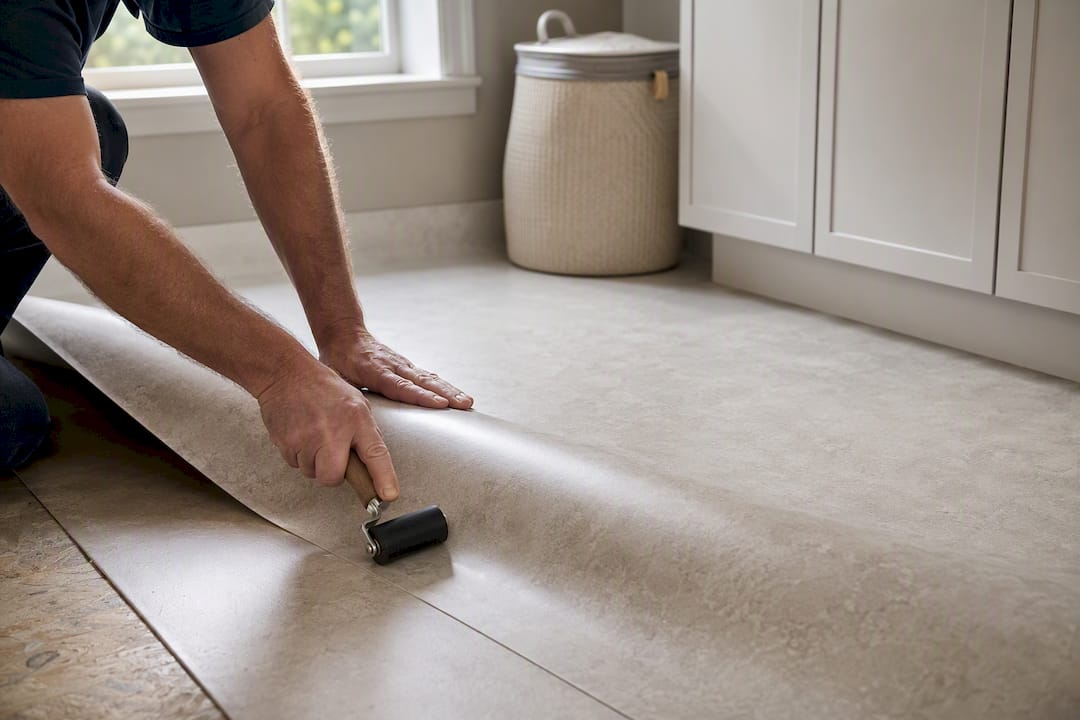
Sheet vinyl comes in wide rolls, usually 6 to 12 feet, which means a laundry room or mudroom can often be covered with zero seams at all. That seamless installation makes it one of the lowest-cost, lowest-risk options for utility spaces and rental units. It won’t win design awards, but it wins on price and reliability.
Rubber flooring earns its place in home gyms, workshops, and basements that double as workout space. It’s slip-resistant, absorbs impact, and shrugs off moisture, though the aesthetic leans industrial rather than elegant.
Sealed concrete and epoxy coatings work directly on the slab, which makes them a strong basement option when vapor drive or flood risk rules out anything with seams or joints. Both require moisture testing before application and proper surface prep, since coatings applied over a damp or uncured slab tend to peel within a year.
Mostly, no. Despite the label, most waterproof laminate is really water-resistant. Manufacturers typically rate these products for a set number of hours of spill protection, not indefinite submersion.
The treated cores and tight-fitting joints on modern laminate genuinely extend how long a spill can sit before damage occurs, but standing water over days or a slow leak behind a dishwasher can still cause the core to swell. That makes laminate a reasonable choice for living rooms, hallways, and bedrooms, but a poor one for full bathrooms.
If you want the wood look with real waterproofing, WPC vinyl plank costs a bit more but removes the guesswork entirely.
A little vetting up front saves you from a costly redo. Here’s the short checklist we walk customers through.
Red flags: vague marketing copy that says “waterproof” with no core or mil information, warranties that never mention wet areas at all, and installers who can’t explain moisture testing for a basement slab.
Pro Tip: For a flood-prone basement, skip the debate entirely and go straight to SPC plank or sealed concrete. For a busy kitchen with pets, prioritize wear layer over price. For tight budgets, sheet vinyl beats cheap laminate every time in wet-adjacent spaces.
Care routines differ by material, and getting them wrong shortens the floor’s life fast.
Vinyl plank needs only regular sweeping and occasional damp mopping; avoid steam mops, which can loosen click-lock seams over time. Tile needs grout resealed roughly every one to two years, more often in showers. Sheet vinyl and epoxy tolerate harsher cleaning but still need prompt attention to standing water at seams.
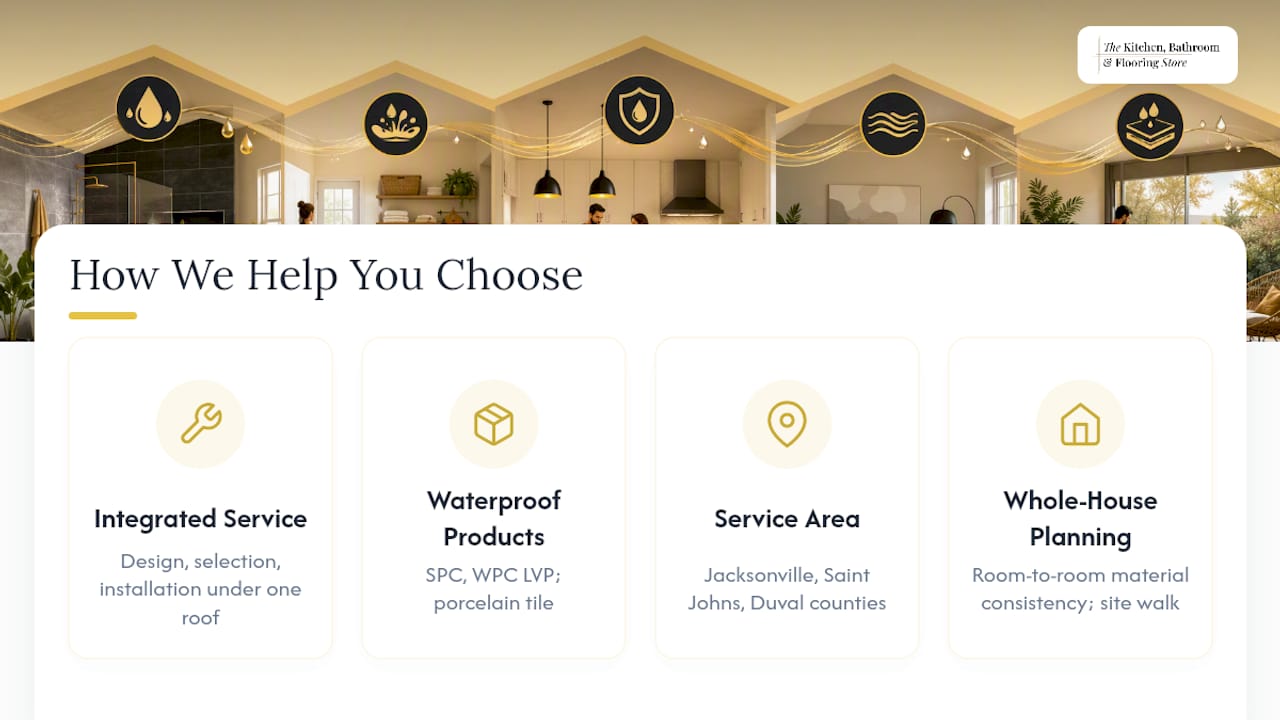
We built our showroom around a simple problem: homeowners shouldn’t need three contractors to get one waterproof floor installed correctly. Our team handles design, product selection, and installation under one roof, which removes the coordination headaches that come from managing tile setters, vinyl installers, and general contractors separately.
We stock SPC and WPC luxury vinyl plank lines alongside porcelain tile, and we’ve installed both in bathroom and kitchen remodels across Jacksonville, Saint Johns, and Duval counties, including coordinating with the luxury of glass interior doors for cohesive interior finishes. For a full bathroom rebuild or a basement that needs proper moisture mitigation before flooring goes down, our whole-house flooring planning approach keeps material choices consistent room to room. If your project is more complex than a single room, our team walks the space with you before recommending a system.
The advice you’ll find everywhere boils down to “buy waterproof flooring and you’re covered.” That’s incomplete, and it’s led plenty of homeowners to install the wrong product in the wrong room.
The trade-offs matter more than the label. SPC vinyl is genuinely waterproof at the core, but a cheap wear layer means it’ll show wear in three years under heavy foot traffic, waterproofing has nothing to do with it. Porcelain tile is close to waterproof on its own, but a shortcut on the membrane or grout sealing turns a $10,000 bathroom into a slow leak behind the walls. Even sheet vinyl, one of the most dependable low-seam waterproof options for utility spaces, gets dismissed because it’s less trendy than plank visuals.
What actually protects your investment is matching the core type to the room’s real moisture exposure, then checking wear layer and installation quality with the same scrutiny. A basement needs a fully waterproof system, not just a waterproof-sounding label. Start there, and the rest of the decision gets much easier.
— Anna
Reading about SPC cores and grout membranes only gets you so far. At some point you need someone to walk your actual bathroom or basement, test the moisture, and tell you which product fits your budget and your traffic patterns, without pushing you toward whatever’s easiest to install. That’s the gap The Kitchen, Bathroom & Flooring Store fills: one team handling design, material selection, and installation, so you’re not managing a tile setter, a vinyl installer, and a general contractor separately.
If a full bathroom remodel is on your radar, our bathroom remodeling packages bundle waterproof flooring with the rest of the renovation, cabinets, vanities, and installation, under one plan and one price. Stop by our Jacksonville showroom to see SPC and porcelain samples in person and get a straight answer on what your space actually needs.