
Cabinet doors are the most visible part of your kitchen, and two decisions shape them: the style of the door (Shaker, slab, raised panel and so on) and the fit on the cabinet (full overlay, partial overlay or inset). Shaker is the safe, versatile choice for most homes. Slab is the cleanest modern look. Raised panel suits traditional rooms. Full overlay gives the best look for the money, and inset is the premium option that costs more to build and install. Below, we walk through each so you can decide with confidence.
Most door styles fall into a few families. The difference is in the construction: is the door one flat piece, or a frame around a center panel?
| Style | What it looks like | Best for | Watch out for |
|---|---|---|---|
| Shaker | Square frame, flat recessed center panel | Almost any kitchen | Corners and inside edges can collect grime |
| Slab (flat panel) | One flat surface, no frame | Modern and minimalist kitchens | Shows fingerprints on some finishes |
| Raised panel | Frame with a center panel that rises toward the middle | Traditional and formal kitchens | More detail to dust and clean |
| Beaded or recessed panel | Small decorative bead around the panel edge | Cottage and classic looks | Fussier than flat styles |
| Mitered | Frame pieces joined at 45-degree angles | Clean transitional looks | Often a step up in price |
| Glass-front | Frame with a glass insert | Display cabinets, breaking up a wall of doors | You will see what is inside |
The specifics matter, so let’s go through the ones homeowners ask about most.
A Shaker door has five pieces: two stiles, two rails and a flat center panel recessed about 1/4 inch below the frame. That simple geometry is why it looks right in so many homes.
The numbers back this up. In the 2025 Houzz U.S. Kitchen Trends Study, Shaker was the most popular door style, chosen by 61% of homeowners in renovation projects.
Why people choose it
The honest trade-off
The square inside corners and edges can trap grime. One homeowner in a popular design forum said they love the look but would not choose the straight-edged version again for that reason. If you cook a lot, wipe the frame edges as part of your routine, or consider a flat style.
If you want painted Shaker doors, the material matters. According to a cabinetmaker’s guide, MDF does not expand and contract with humidity the way solid wood does. That helps prevent hairline cracks at the rail-and-stile joints that can appear after a few years, which people often mistake for poor workmanship. Jacksonville summers are humid, so this is worth asking about. We cover how materials behave in a real kitchen in our guide to which cabinetry materials actually hold up.
This is the choice many homeowners face, so here is a plain comparison.
| Shaker | Slab | |
|---|---|---|
| Look | Classic, transitional | Sleek, modern |
| Construction | Frame plus recessed panel | Single flat piece |
| Cleaning | Edges and corners need attention | Smooth surface wipes down quickly |
| Versatility | Fits many styles | Strongest in modern and minimalist rooms |
| Resale appeal | Broad | Narrower, but strong in modern homes |
| Hardware | Looks right with pulls or knobs | Works well with slim pulls or push-to-open |
Choose Shaker if you want a kitchen that will not feel dated and you may change colors later. Choose slab if you love a clean, uninterrupted look and want the easiest surface to clean.
Slab doors also pair well with a trend that professionals are pointing to. NKBA trend research describes a move toward integrated, seamless kitchens, with concealed elements such as panel-ready appliances and push-to-open cabinetry. A flat door with no handle is the natural fit for that approach.
A note on finish: slab doors in a high-gloss finish show fingerprints. A matte finish is more forgiving, and we explain the benefits and care in Are Matte Cabinets Worth It?
Raised panel doors have a center panel that is profiled and rises toward the middle, often with a decorative edge. They look formal and traditional. Shaker panels are flat, so the look is quieter.
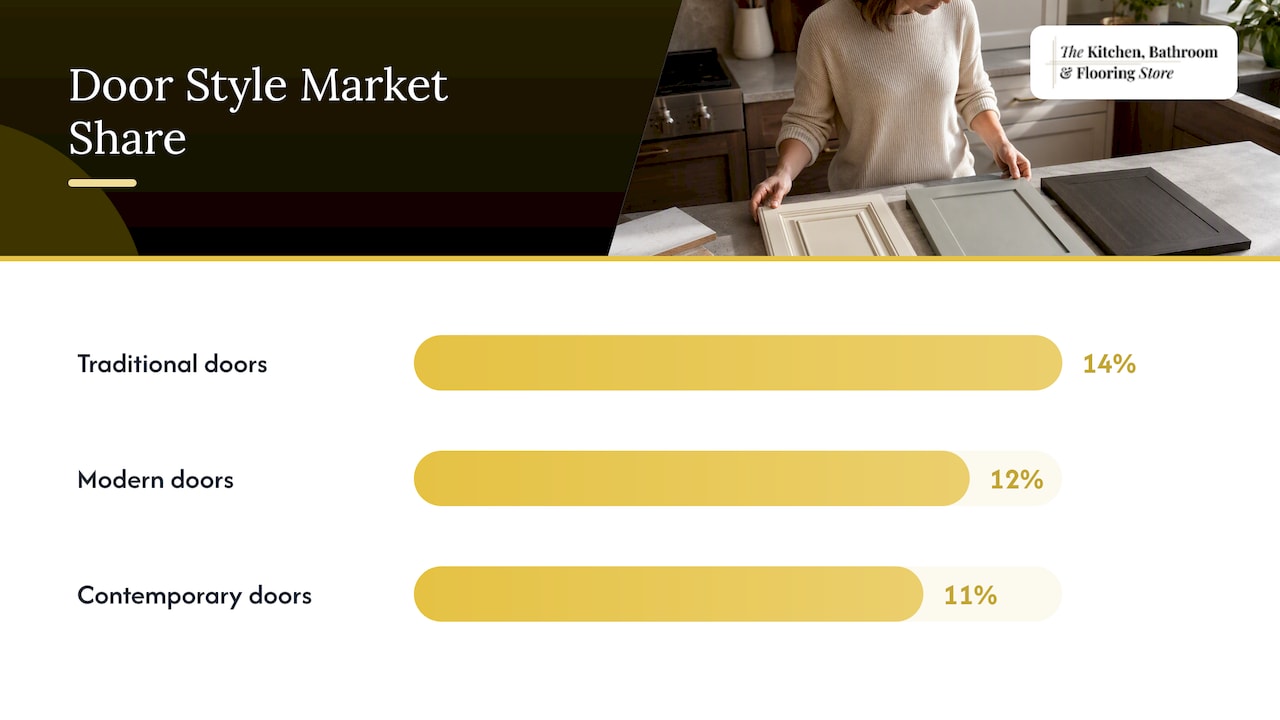
Traditional styles are having a moment. The same Houzz study found that traditional doors gained 5 percentage points to reach 14% of the market, while modern and contemporary doors stood at 12% and 11%.
Raised panel has more contours, so it takes more effort to dust and clean. That is the main practical difference for a busy household.
When homeowners ask for “modern,” they usually mean one of three things:
Color and texture are changing too. NKBA and KBIS research found that natural wood grains, especially white oak, are preferred by 59% of respondents, while white and gray kitchens are trending down. So a modern kitchen today is often warmer than the all-white box of a few years ago. If you are weighing colors, see The Role of Color in Kitchen Renovation.
So far we have talked about how a door looks. Now the fit: how the door sits against the cabinet. This choice affects both appearance and cost.
Pros
Cons
In a humid climate like Northeast Florida, that sensitivity to movement is worth discussing before you commit. A good plan is to ask about the door material, the finish and how the doors are fitted.
| Full overlay | Inset | |
|---|---|---|
| Look | Seamless, modern or transitional | Furniture-like, traditional |
| Cost | Lower | Higher, with a 20 to 30% premium as noted above |
| Fit tolerance | Moderate | Very tight |
| Best for | Most kitchens | Kitchens where the look is the priority and the budget allows |
If you are on a budget but want a high-end result, prioritize full overlay. As the Fine Woodworking guide to doors notes, it covers the frame more completely without the high labor cost of inset work.
In general, the simpler the door, the lower the cost. A flat slab door usually costs less than a door with a frame, and a framed Shaker usually costs less than a heavily profiled raised panel or a mitered door. Partial overlay is cheaper than full overlay, and full overlay is cheaper than inset. Material and finish change the numbers too, so a painted solid-wood door and a thermofoil door will not price alike.

We do not publish cabinet prices because they depend on your kitchen’s layout, size and the line you choose. For ideas on keeping costs down without losing the look, read Best Low-Cost Kitchen Cabinet Styles for Any Budget.
We work with Jacksonville homeowners who want a remodel done properly without managing a crew of separate contractors. Here is how we think about doors.
Start with how you cook and clean, not with a photo. A style that looks perfect online can be a chore if you wipe down the kitchen every night. If you have kids, pets or a busy household, favor smooth, easy-to-clean fronts and durable finishes.
Think about the whole system. Door style, overlay, hinges, drawers and hardware all work together. A door that looks great but sits on weak drawer storage will still frustrate you. Professionals tracking NKBA research point to the same priority: homeowners are putting drawers, deep storage and easy-to-clean materials ahead of purely decorative features. Our guide to the role of storage in kitchen remodels goes deeper, and the same practical thinking applies to affordable home design choices more broadly.
Spend where it shows. For most budgets we like Shaker or slab in full overlay. You get a polished look and keep money for countertops, flooring or storage that you will use every day. Choose inset when you love the furniture look and are ready for the investment.
Be careful with trends. Colors and finishes change, but a simple door can be restyled with paint and hardware. If you want help with placement, our cabinet hardware jig guide saves a lot of guesswork.
— Anna
It also helps to bring in a professional. 86% of homeowners in the Houzz study hired one for their kitchen remodel, and a designer can catch problems like clearances and ordering order before they cost you. Ordering cabinets early also matters for scheduling, as we explain in our kitchen remodel timeline.
Pictures only go so far. At our showroom you can compare door styles, finishes and hardware side by side, then plan the whole kitchen with one team: design help, product selection, installation and project management, with no need to hire separate contractors. Browse our kitchen cabinets, or see how a complete project comes together with our kitchen remodeling packages. We also offer financing options with monthly payments, so you can match the project to your budget.
Shaker. In the 2025 Houzz U.S. Kitchen Trends Study, 61% of homeowners chose it for their renovation. Traditional doors followed at 14%, modern at 12% and contemporary at 11%.
Shaker is the usual answer, because its simple frame and flat panel suit both modern and traditional homes. You can refresh the look later with new paint or hardware instead of replacing the doors.
Overlay doors sit on the front of the cabinet frame and cover some or most of it. Inset doors sit inside the frame opening, flush with the face. Inset looks more like fine furniture, but it needs a more exact fit and typically costs 20 to 30% more.
Often, yes, because a single flat piece is simpler to make than a frame with a recessed panel. The final price still depends on material, finish and the overlay you choose, so compare quotes for the same specification.
Solid-wood painted doors can show hairline cracks at the joints as the wood moves with humidity. MDF is more stable for painted doors. Ask about the material before you order, especially if you live in Northeast Florida.