
The bathroom tile trends of 2026 favor texture over shine, earthy and stone-inspired colors, large formats with fewer grout lines, and handmade-looking surfaces like zellige. Many of them are easy to love on a screen and harder to live with in a wet room. This guide covers what is popular, how each trend behaves in a real Florida bathroom, and what to check before you buy, especially for shower floors.
When the industry’s own trade show weighs in, a few themes repeat. Coverings, North America’s largest showcase of ceramic tile and natural stone, released its 2026 top 10 tile trends in February 2026. Three of them matter most for bathrooms: tactile “haptic” surfaces with ridges and embossed patterns, a cooler organic minimalism built on concrete and ivory stone looks, and tile treated as art, with bold graphics and continuous murals.
Design publications point the same way. Homes & Gardens lists artisanal tile, including zellige, among the popular bathroom choices this year. Better Homes & Gardens highlights mixing tile sizes and shapes to add rhythm, including triangles and other specialty shapes.
Here is the short version of what you will see in showrooms and on design boards:
| Trend | What it looks like | Best place to use it |
|---|---|---|
| Zellige and artisanal tile | Slightly uneven, glossy, handmade character | Shower walls, vanity backsplash, accent wall |
| Tile drenching | One tile or color on floor and walls | Small bathrooms, wet rooms |
| Textured and fluted tile | Ridges and relief that catch light | Feature wall, vanity wall |
| Stone and travertine looks | Soft, warm, mineral surfaces | Floors, full walls |
| Large-format porcelain | Big slabs, few joints | Walls, main floor |
| Patterns and checkerboard | Graphic, vintage-inspired | Floors, niches, accents |
| Mixed sizes and shapes | Rhythm from geometry | Accent areas, shower floors in mosaic form |
The rest of this guide goes through the ones homeowners ask us about most, with the practical side of each.
Handmade tile brings variation: slight waves, shifting glaze color, uneven edges. That is the point. Light plays across the surface and a plain white or green wall suddenly has depth.
What to know before you choose it:
If you love the look but want easier care, many porcelain and ceramic collections now copy the glaze variation of handmade tile with more consistent sizing.
Tile drenching means covering floors and walls, sometimes even the ceiling, in the same tile or color. Decorilla’s 2026 roundup is one of several that describe this as a defining direction, with surfaces pushed toward more expressive territory.
It works especially well in small bathrooms. With no visual break between floor and wall, the room reads as one calm volume. It also cuts down on decisions: one tile, one grout color, done.
Two cautions:
If you are working with a compact room, our guide to designing a small bathroom to feel larger shows how tile choices fit into the bigger picture.
Large-format tile creates continuous surfaces with fewer joints, and it can make a small bathroom feel more spacious, as Porcelanosa’s 2026 trend overview describes. Fewer joints also means less grout to scrub, which is the real appeal for busy households.
Practical points:
The warm, mineral look is everywhere this year. Concrete, ivory stone and travertine effects give bathrooms a quiet, spa-like feel without bright pattern. The popular palette fits: Porcelanosa lists beige, brown, terracotta, green, jade, sage, sand, off-white and greige as 2026 bathroom colors.
You can get the look two ways:
If you are building a whole palette around these tones, our guide on selecting a color scheme for your bathroom renovation walks through pairing tile with vanity, fixtures and paint. For a wider look at how these shades show up across the home, see these 2026 home decor trends.
Texture is the other big story. Fluted tile has vertical ridges that look like paneling, and it works as a feature wall behind a vanity or inside a niche. Because it catches light, it adds interest even in a single color.
Patterned tile is also back, from checkerboard floors to geometric mosaics and vintage-inspired shapes. A few rules keep it from overwhelming a room:
Shower tile is where trends meet physics. Walls can be almost anything that is rated for wet use. Floors have to handle water, slope and bare feet.
Large-format porcelain, zellige-style glazed ceramic, fluted tile and stone looks are all good wall choices. For most U.S. showers, a combination of glazed ceramic walls and a porcelain floor is a practical, low-maintenance pairing. Taking tile all the way to the ceiling is a popular drenching move, but it changes the waterproofing requirements, so read our ceiling tile guide before you commit.
Smaller tiles, commonly 2-by-2-inch mosaics, are practical on shower floors because they follow drain slopes and add grout lines for traction, as this shower tile guide explains. Hex, penny round and small square mosaics all fit the 2026 patterned look while doing their job.
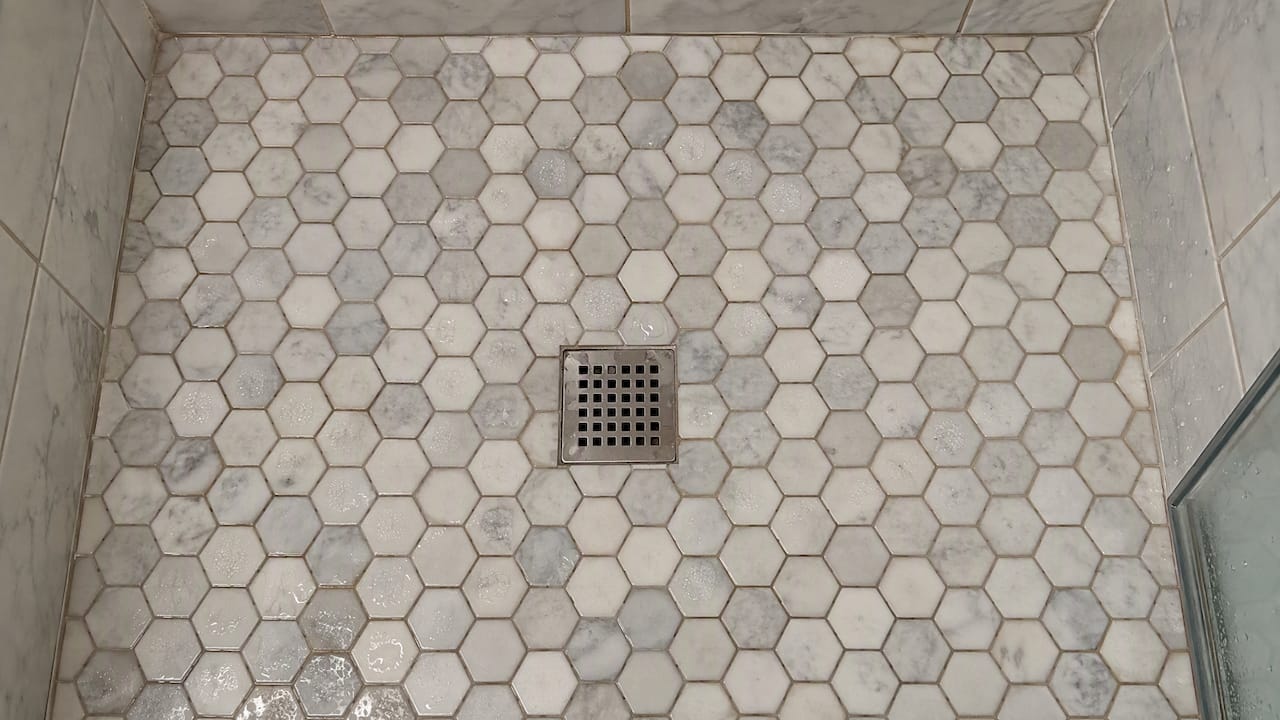
Slip resistance is measured as DCOF. The Tile Council of North America framework treats wet DCOF of 0.42 or higher as the benchmark for level interior spaces walked on when wet, and it is specific to the application, not a universal promise that a tile is safe everywhere.
That distinction matters in practice. American Olean’s Crafter Carbon Bloc Hex page lists wet DCOF of 0.42 or higher for wet level floors, but does not mark the product suitable for residential or light-commercial shower floors. A good-looking hex tile with a passing number can still be the wrong choice for a shower floor. By contrast, the Avenne Stone Terrace page lists its matte mosaics with wet DCOF of 0.42 or higher for shower-floor use.
Before you buy any tile for a shower floor:
Our article on getting a slip-resistant shower floor with 0.42 DCOF goes deeper on reading these numbers.
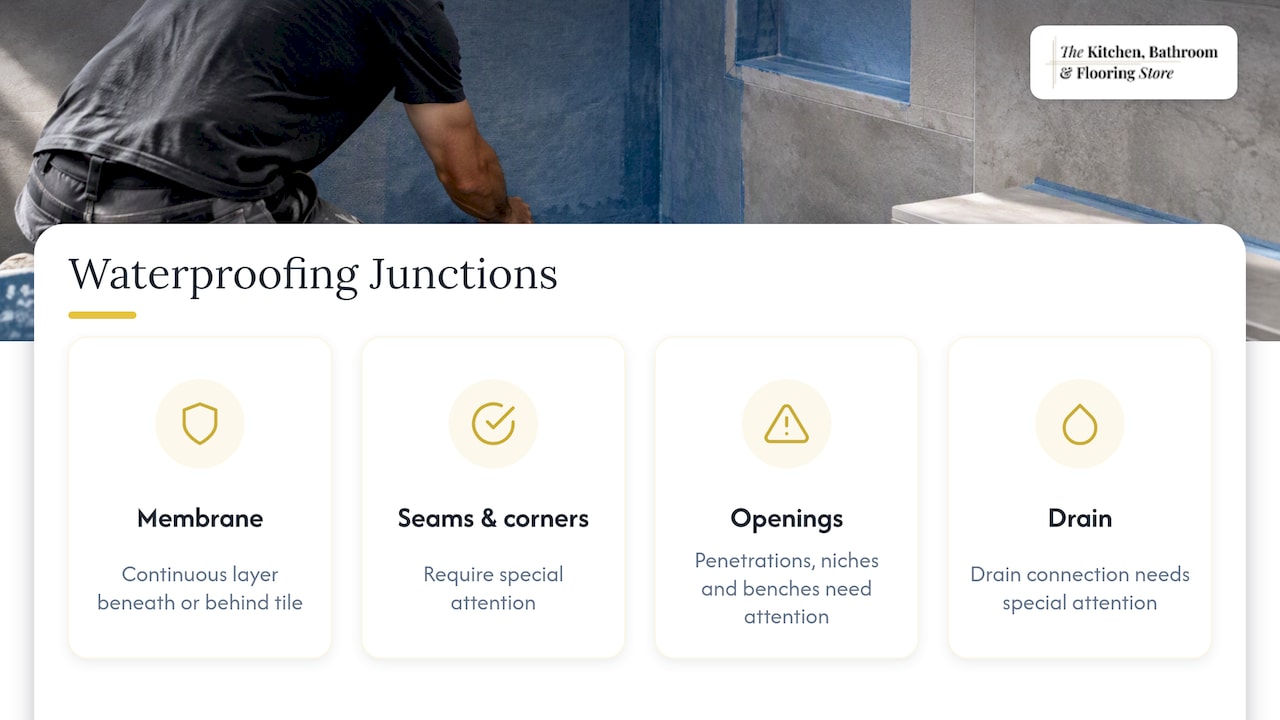
Tile is not what keeps water out of your walls. A shower needs a continuous waterproofing system beneath or behind it. e-architect notes that ANSI A118.10 covers load-bearing bonded waterproof membranes and ANSI A108.13 covers their installation, with special attention to seams, corners, penetrations, niches, benches and the drain connection. In a humid climate like Northeast Florida, this is the part you never want to cut corners on.
Trends cost money mainly through the tile itself, the layout complexity and the labor. Our overview of what drives bathroom tile costs breaks that down. Here is how to keep a 2026 look affordable:
Neutral, mineral colors have the longest shelf life: white, warm off-white, soft gray-beige and sand. They have been bathroom staples for decades and they are still in the 2026 palette. Classic white subway-style tile and simple stone looks stay readable over many design cycles.
A good approach is to keep the permanent surfaces, the large areas of tile, neutral, and bring in this year’s color through things that are easy to change: paint, towels, a vanity, a mirror, or a small accent tile. That way if sage green fades from fashion, you are not re-tiling.
We see homeowners come in with a stack of saved photos, and the same question keeps coming up: “Will I still like this in five years?”
Our honest answer is to separate what is on trend from what works. A trend such as zellige, fluted tile or a bold floor pattern is a fine choice when it is used as an accent and when the practical side is handled. The practical side is what we spend most of our time on: the right tile for a wet floor, a layout planned around the drain, waterproofing that is done correctly, and a budget that does not run out before the install.
That is why we work the way we do. Design help, product selection and installation sit under one roof, so the person who helps you pick a tile is working with the same team that will set it. You do not have to coordinate a designer, a tile supplier and a separate contractor, and nobody has to guess whether the tile you chose suits the shower you are building.
Our advice: pick one expressive element, keep the rest calm and neutral, and choose products by their specifications, not just their photos.
— Anna
If you are ready to turn a trend into a finished bathroom, our bathroom remodeling packages include tile selection, design help and professional installation, with financing options available for homeowners in Jacksonville, St. Johns County and Duval County. You can also browse vanities and showers and tubs to complete the room, and see the wider look of the room in custom bathroom design styles for 2026. For a broader view of how tile fits modern bathrooms, read our 2026 homeowner guide to tile.
The leading trends are textured and fluted tile, handmade-look styles like zellige, tile drenching, stone and travertine looks, and large-format porcelain. Earthy colors such as sand, sage, terracotta and off-white dominate the palette. Patterned and checkerboard tile is also returning as an accent.
Use large-format porcelain or glazed ceramic on the walls and small mosaics, often 2-by-2 inches, on the floor. Check that the exact floor tile has a wet DCOF of 0.42 or higher and is listed for shower floors. Waterproofing behind the tile matters as much as the tile you pick.
Yes, in most cases. Fewer grout lines make the room feel continuous and more spacious. The floor needs to be flat, and the shower floor should still use smaller tile to follow the slope to the drain.
White, warm off-white and soft sand or greige have stayed popular longest. Use them for the big surfaces and add trend colors in accents that are easy to swap.
Porcelain is the easier choice. It absorbs very little water and needs no sealing, while natural stone is porous and requires periodic resealing. Stone-look porcelain gives you the same appearance with less upkeep.