
The best beach house flooring is a material that shrugs off moisture, sand and wet feet: porcelain tile and luxury vinyl plank (LVP) lead the list, with sealed or engineered wood and low-pile, easy-clean rugs as the warm finishing touches. The right pick depends on the room, the slab or subfloor underneath, and how often the house gets used. This guide walks through each material, how to get a relaxed coastal look without giving up durability, and what to check before anything is installed.
A beach house is not a regular house with a view. Floors take four kinds of abuse that inland homes rarely see all at once.
Here in Northeast Florida we see the same pressures in homes at Jacksonville Beach, Atlantic Beach, Neptune Beach and St. Augustine Beach, and in waterfront homes along the St. Johns River and the Intracoastal. Whatever you pick has to handle all four.
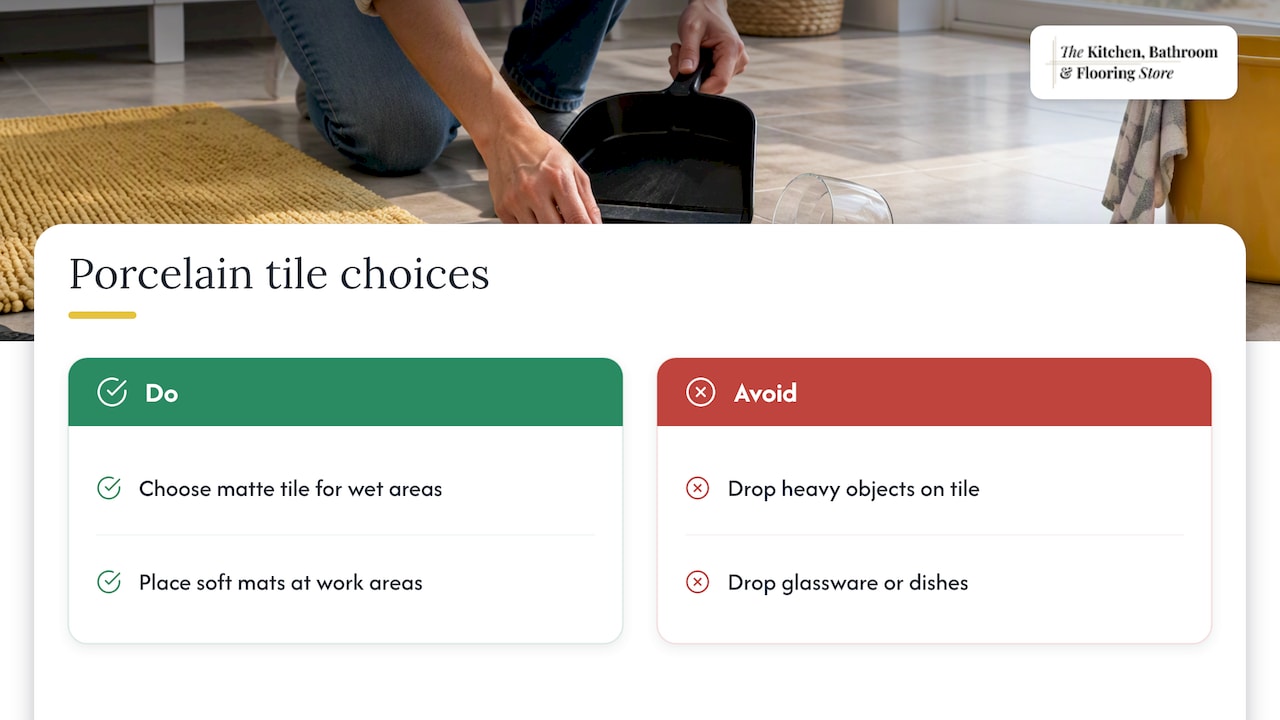
If you want one floor that can take almost anything, start here. Consumer Reports names porcelain tile as its highest-rated flooring category for high-traffic areas, noting that it resists wear, moisture, scratches and stains. The same review warns that it can crack if something heavy is dropped on it and is unforgiving to dropped glassware and dishes.
For a beach house, that means porcelain suits entryways, mudrooms, kitchens, bathrooms and covered porches very well. It stays cool in summer heat, and sand sweeps right off it. The trade-offs are simple to plan for: choose a textured or matte finish for wet areas so it is not slick underfoot, and keep soft mats where people stand to cook or wash dishes.
Looks matter too. Wood-look porcelain planks give you a weathered driftwood feel with none of the worry about water. We cover tile and stone in our tile and stone flooring selection, and our guide to tile costs in Jacksonville lays out local pricing at roughly $8 to $18 per square foot, along with a contractor checklist.
LVP is the most popular answer to “what do I put in the whole house?” for good reason. Quality planks with a waterproof core are made to handle spills and wet feet, they feel softer and warmer than tile, and they come in realistic wood and stone looks. They also go in faster, which helps if you only have a short window between rental seasons or visits.
Look at the wear layer, measured in mils. A thicker wear layer resists the scratching that sand causes. Our scratch-resistant flooring guide explains what a 20 mil layer means room by room, and you can browse options on our luxury vinyl plank page.
For the right fit in each room, our article on choosing a waterproof floor room by room walks through the decisions that can save you from an expensive redo.
Many people want the look of real wood at the beach, and it can work with care. Engineered hardwood, with its layered construction, is generally steadier than solid planks when humidity moves. Pick a durable factory finish, keep it off the wettest rooms, and accept that wood will show some patina over time. Beach-house wood looks best when it is a little weathered anyway, so a matte or lightly brushed finish forgives scratches.
If you refinish wood in place, the finish matters. A guide to water-resistant wood finish choices is a good place to compare what protects against spills and damp. Our hardwood flooring selection includes options to match different budgets and levels of exposure.
Stone gives a beach house a grounded, timeless feel, and it handles heat and moisture well. It does need sealing and a bit more upkeep than porcelain, and some stones stain from sunscreen oils or acidic spills. If you love the look, we can help you decide where stone makes sense (entry, bath, outdoor-adjacent rooms) and where a porcelain lookalike is the easier choice.
Wall-to-wall carpet is a hard sell in a damp, sandy house, because it traps both. Where you want softness, bedrooms are the usual exception, and a moisture-friendly, low-pile style with proper padding works. In living areas, washable or indoor-outdoor rugs over a hard floor give you comfort and an easy reset when sand piles up. Our carpet page covers the options for bedrooms and upper floors.
| Material | Sand and scratch | Moisture | Feel underfoot | Best rooms |
|---|---|---|---|---|
| Porcelain tile | Excellent | Excellent | Hard and cool | Entry, kitchen, bath, porch |
| Luxury vinyl plank | Very good with a thick wear layer | Very good with a waterproof core | Softer, warmer | Whole house |
| Engineered hardwood | Fair, shows patina | Moderate, avoid wet rooms | Warm | Living, bedrooms |
| Natural stone | Good | Good when sealed | Hard and cool | Entry, bath |
| Carpet (low pile) | Traps sand | Weak | Soft | Bedrooms only |
Cost depends on the material, the square footage, the condition of the subfloor and how much prep the room needs. Tile usually costs more installed than vinyl because it needs more labor and a flat, stable base. For local reference, our guide to flooring installation costs in Jacksonville shows a range of $4,151 to $12,454 and explains the moisture steps and bid details that move a project up or down in that range.
The number that surprises most owners is not the material. It is the prep: leveling, moisture barriers, removing old flooring and fixing whatever the old floor was hiding. Ask for the prep to be itemized in any bid so you can compare like with like.
The material you choose is only half the story. Sand does most of its damage by grinding. Consumer Reports advises that daily sweeping is essential in sandy areas to remove the hard particles that scratch flooring, and recommends plastic or felt protectors under furniture legs.
A few habits that make a real difference:
Lighter, mid-tone floors with a bit of texture or grain hide sand and salt far better than glossy dark floors, which show every grain and footprint.
A waterproof surface does not make a wet subfloor safe. Coastal houses face moisture from below and from humid outside air, so the floor assembly counts as much as the finished look.
The U.S. Department of Energy’s Building America report on Gulf Coast homes describes using moisture-resistant materials and a vapor-control layer in the floor assembly to manage the moisture that humid exterior air pushes inward. It also takes a systems approach: build so that if water does get in, the structure can be cleaned and dried quickly. That mindset is useful for any beach house owner picking a floor.
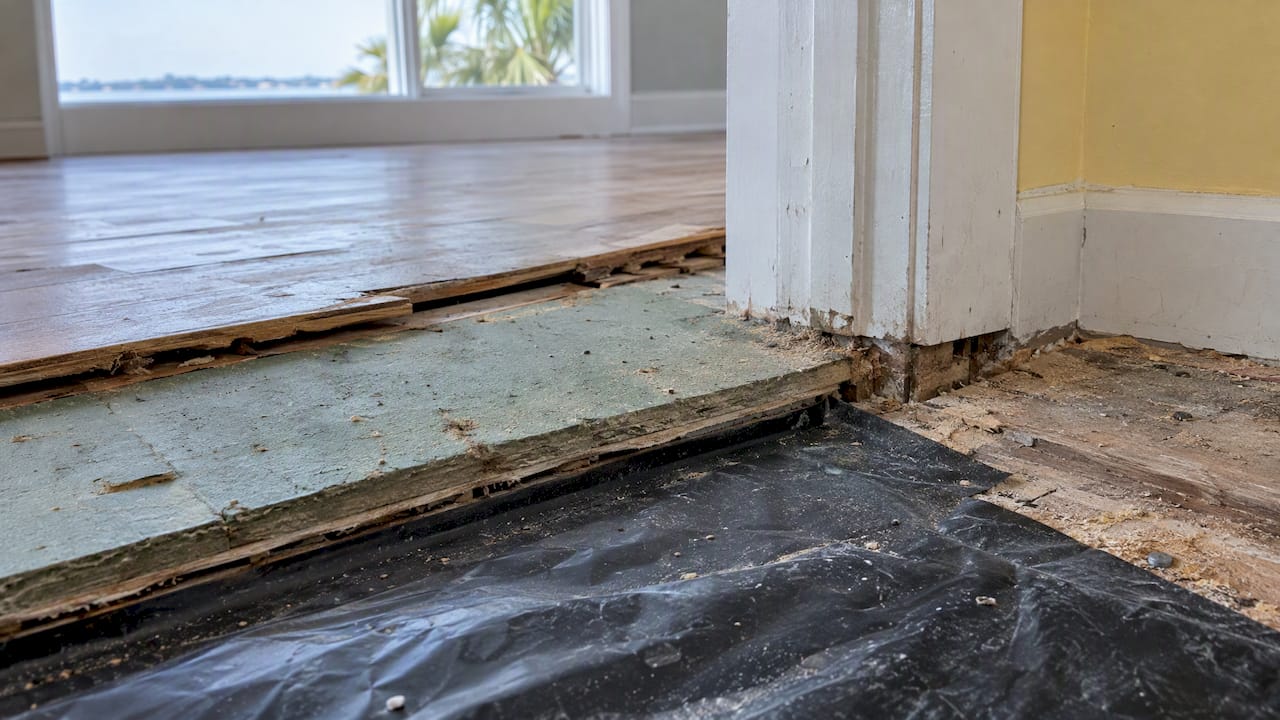
Research from the University of Florida on resilient coastal design points to sealing the foundation with a proper membrane to protect flooring from moisture damage during floods and heavy rains.
In practice, before you order anything:
If your house sits on pilings or has a crawl space, mention that to your installer early, because ventilation below the floor affects what is safe to install above it.
The wettest rooms need the most careful decisions. Kitchen floors take spills and constant foot traffic; bathrooms take standing water and wet feet. Porcelain tile or waterproof LVP are the usual answers in both.
In bathrooms and showers, slip resistance is as important as water resistance. A wet, sandy tile floor can be a fall risk. Our article on getting a slip-resistant shower floor explains how DCOF ratings work and what number to look for. Many beach bathrooms also benefit from a low-maintenance tile surround, and our bathroom remodeling packages bring tile, vanity and tub or shower selections together in one plan.
For kitchens, you can pair a durable floor with cabinetry and countertops that stand up to humidity. If you are thinking about the whole room, see our kitchen remodeling packages and our notes on coastal kitchen ideas that avoid nautical kitsch.
You do not need seashells and anchors to get a coastal feel. The look comes from light, texture and tone.
Sun matters too. Big windows and glass doors fade and warm floors over time, so our guide to sun exposure and flooring choice is worth a read if your house faces the water.
The Rule of 3 is a general design guideline: use three coordinating elements, such as three materials across a home or three tones within one material, for visual balance. It can help you plan a beach house. For example, waterproof LVP through the main living space, porcelain tile in baths and entries, and a soft rug or carpet in bedrooms. We break down how to set up a plan like that in our whole-house flooring guide. Treat it as a starting point, not a rule you have to follow.
If kids or pets use the house, our child-friendly flooring options cover comfort, safety and cleanup in more detail.
For most coastal homeowners we meet, the problem is not picking a pretty floor. It is keeping a floor, a subfloor, a shower and a kitchen all working together when three different contractors are doing the job.
That is why we built our process around one team. We help you choose the materials in our showroom, we plan the project with you, and our installers put it in. You do not have to coordinate a tile setter, a flooring crew and a remodeler who have never spoken to each other.
Our own approach for sandy, humid homes is to start with the moisture question, then pick a surface that fits how you really live in the house. That usually means porcelain tile in the wettest, most trafficked spots and a waterproof luxury vinyl plank elsewhere, with warm touches where they make sense. We design every plan around your budget, and we offer financing options with monthly payments so a full project is easier to schedule.
Our pricing is meant to be transparent and our work comes with an in-house warranty, so you know who to call when the job is done.
Anna
If you own a beach house or waterfront home in Jacksonville, St. Johns County or Duval County, we can take the project from design to installation. Visit our showroom to see porcelain, luxury vinyl, hardwood, carpet and stone samples in person, talk through your subfloor and moisture questions, and get a plan matched to your budget. See our flooring and installation services or our flooring collection to start.
We also offer kitchen and bathroom remodeling packages, so your floors, cabinets, countertops and tile can be planned together instead of piecemeal. Ask about our financing options when you visit.
For most beach houses, porcelain tile and waterproof luxury vinyl plank are the best choices. Porcelain is rated by Consumer Reports as its top flooring category for durability and resists moisture, scratches and stains. LVP adds a warmer, softer feel and goes in faster. Use tile in the wettest rooms and LVP elsewhere.
Yes, with care. Engineered hardwood with a durable finish handles humidity swings better than solid wood, and a matte or lightly brushed look hides sand scratches. Keep it out of bathrooms and laundry areas, and sweep daily to keep sand from scratching the finish.
Sweep daily, use mats inside and outside the door, and put felt or plastic protectors under furniture legs. Hard sand particles grind into the surface when walked on, so keeping them out and removing them quickly protects any floor type.
Porcelain tile with a textured or matte finish, or waterproof LVP, suits both rooms. In a bathroom or shower, check the slip-resistance rating, and in either room have the subfloor checked for moisture before installation.
Costs vary with material, room size and prep. Our local guides show Jacksonville flooring projects from $4,151 to $12,454 and tile at roughly $8 to $18 per square foot. Contact us for a quote based on your floor plan and subfloor.