
A pot filler is worth it when you regularly cook with big pots of water, your sink sits a few steps from the range, and your walls are already open for a remodel. In that case it adds comfort and a polished look for a modest share of the project. If you boil water a few times a month and are not touching the wall behind the stove, it is a nice extra, not a necessity.
Below we walk through what a pot filler does, the real advantages and drawbacks, the right height, what it costs, and how to decide before the plumbing is closed up.
A pot filler is a faucet mounted on the backsplash behind a cooktop or range. Most models have an articulated arm that swings the spout over the burners, so you can fill a pot where it sits instead of carrying it from the sink.
It is a secondary faucet with one job. It supplies cold water only, it has no drain, and it is not meant for rinsing produce or washing dishes. When you are done, the arm folds flat against the wall. Whatever water you do not use still goes back to the sink, which is worth keeping in mind when you plan where the two sit relative to each other. If you are also reconsidering the sink itself, our guide to kitchen sink styles for remodels covers the options.
A full stockpot is heavy. Designers point out that the pots people carry from sink to stove can weigh 16 to 33 pounds once filled. With a pot filler, you set the empty pot on the burner and fill it there. For anyone who finds heavy lifting hard, or who cooks with kids underfoot, that is a real gain: no hot, heavy pot crossing the kitchen and no drips on the floor between the sink and the stove.
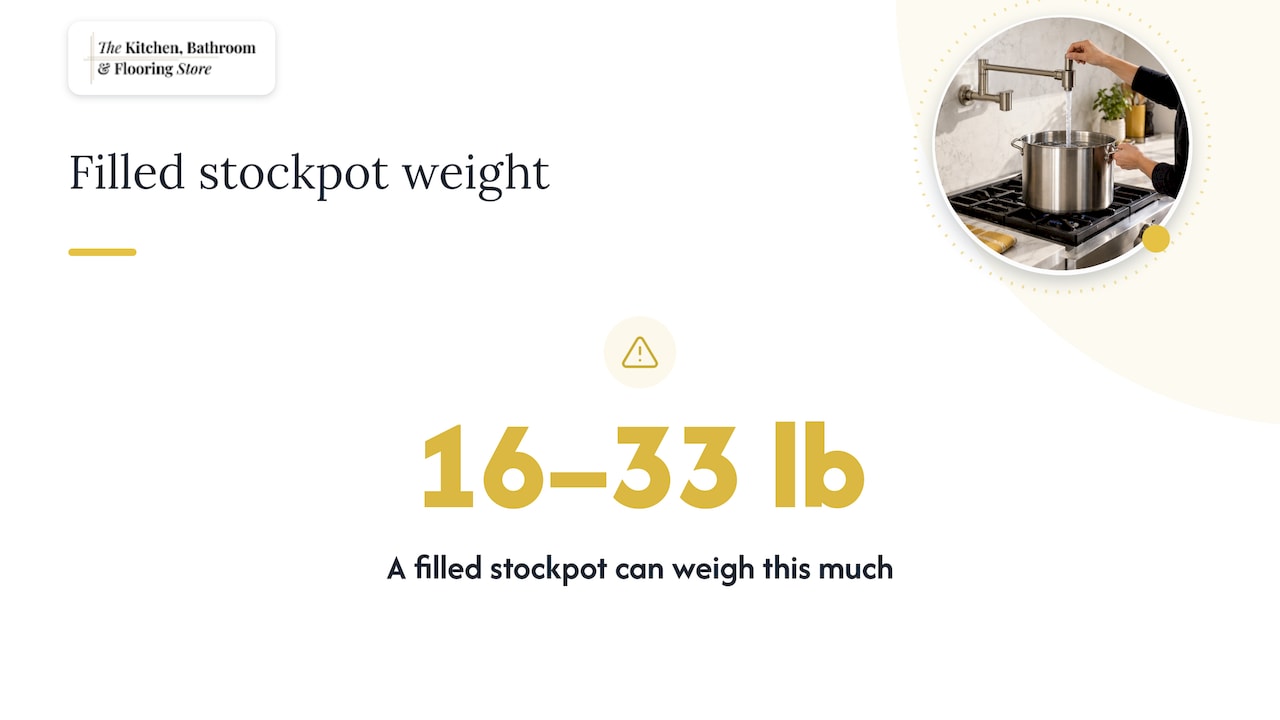
The benefit grows with the size of the pot. If you make pasta weekly, simmer large batches of soup or stock, or cook holiday meals for a crowd, you will use it constantly. It is also handy for topping up a pot that is already simmering without lifting it.
Tall stockpots often do not fit well under a standard sink faucet, especially in a shallow or crowded sink. A pot filler delivers water straight into the vessel on the stove, so cookware size matters less.
A pot filler also contributes to an overall feeling of luxury in a kitchen. A finish that matches your sink faucet and cabinet hardware, set against a clean backsplash, reads as a deliberate design choice. If you want the wall behind the range to look intentional, see our tips on a backsplash behind the range only.
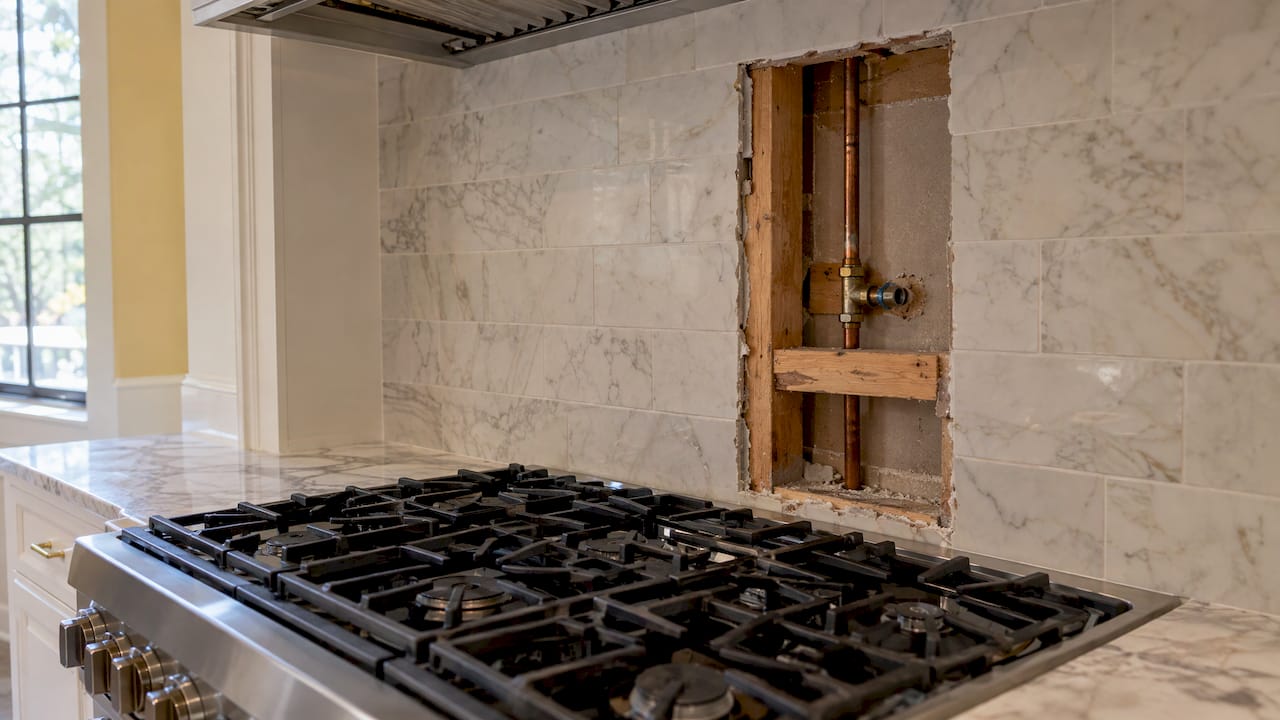
Most kitchens have no water supply behind the range. Installing a pot filler means running a new cold-water line through the wall. That is the main cost and the main reason timing matters.
The fixture is one item, but the plumbing, wall repair and finish work add up. If your sink is close to the range, the walk you are saving is short, and the money may do more for you elsewhere, such as better cabinets or countertops.
It is another fixture with joints and a valve. It sits near cooking splatter, so a quick wipe after cooking keeps the finish looking good. Plan access to the supply line behind the wall so a future repair does not mean tearing out tile.
A pot filler fills pots. It does not drain them. You still carry the pot of boiled water to the sink, so the benefit is on the fill side only.
The space between the range and the hood or upper cabinets limits where the arm can sit and how it folds. Measure before you choose a model.
This is the question most homeowners search for, and the answer is a range, not one number. Wolf’s placement guidance gives a typical height of 12 to 18 inches above the cooking surface. It also recommends placing the faucet to the right or left of the cooking surface so you do not reach over the burners, and following local building codes and the faucet maker’s placement suggestions.
A few practical points:
If you are working with a range hood or a low cabinet above the stove, bring those measurements to your design meeting so the height, arm length and hood clearance are settled together.
Cost depends mostly on the plumbing, not the faucet. According to The Spruce, installation ranges from about $280 to $3,500 or more, averaging around $1,650 where plumbing exists. It breaks the range down this way:
| Scope of work | Typical average |
|---|---|
| Minor plumbing changes | About $400 |
| Major plumbing changes | About $1,200 |
| Major plumbing plus minor structural changes | About $1,900 |
Major plumbing and structural changes can run above $3,000. These are national figures and your Jacksonville quote will depend on the wall, the distance to the nearest water line and the finish you choose.
Better Homes & Gardens adds that if plumbing is already behind the cooktop, installation costs drop significantly, but that you should expect to replace backsplash tile or other wall treatment if new water lines are needed. That is the key to the whole decision. Adding a pot filler to a finished kitchen means tearing into tile you just paid for. Adding it during a remodel means the wall is already open.
If you are building a budget, our kitchen remodel cost breakdown shows how the major line items fit together, so you can see where a pot filler belongs next to cabinets, countertops and flooring.
Designers say a pot filler is most practical when you regularly cook pasta or large-batch soups and the sink is more than two or three steps from the range. Use these questions to decide.
It is probably worth it if:
You can comfortably skip it if:
They have been a fixture of high-end kitchens for years and reflect a broader trend of bringing professional-style cooking equipment into home kitchens. Whether one is right for you comes down to how you cook, not the calendar. A well-placed pot filler with a finish that matches the rest of the room stays useful as long as you keep cooking big batches.
If you decide to go ahead, a few planning steps keep it from becoming a headache.
This is where having one team matters. A pot filler touches the plumbing, the wall, the backsplash and the range layout at once. When those are handled by separate contractors, the details tend to fall between them. Our guide for homeowners using a single contractor for kitchen and bath work explains how that coordination works.
We think of a pot filler the way we think of most kitchen upgrades: it is worth it when it matches how you actually cook, and it is cheapest when it is planned from the start.
The question we ask homeowners is simple. Where do you stand when you cook, and how far is the water? If the answer is a long walk with a heavy pot, a pot filler is a sensible addition. If the answer is two steps, we would rather see that budget go into cabinets, countertops or flooring you will enjoy every day.
What matters most is that the decision is made while the design is still on paper. Because we handle kitchen remodeling from design and product selection through installation and project management, the height, the backsplash and the range layout can all be settled in one conversation instead of passed between several contractors.
Anna
If you are remodeling a kitchen in Jacksonville, St. Johns or Duval County, we can help you decide whether a pot filler belongs in the plan. Our kitchen remodeling packages cover personalized design, cabinets, countertops, flooring and professional installation, with project management and financing options through monthly payment plans, all from our showroom. There is no need to coordinate separate contractors.
Start with our kitchen remodeling packages, then bring your range, your sink location and the pots you use most. For a faster project, see our look at fast kitchen renovation options.
A typical height is 12 to 18 inches above the cooking surface, according to Wolf’s placement guidance. Put your tallest everyday pot on the burner and measure the clearance to the hood or upper cabinet before the supply line is set. Follow local code and the manufacturer’s instructions for your model.
It depends on the plumbing. The Spruce reports an average of about $1,650 nationally, with a range from about $280 to over $3,500. Costs fall when water is already behind the cooktop and rise when new lines and wall repairs are needed, so it is far cheaper during a remodel.
No. A pot filler is a cold-water faucet, and it has no drain. You heat the water on the stove, and you still empty the pot at the sink.
Yes, but expect more work. If new water lines are needed, you should expect to replace backsplash tiles or wall treatment, which is why most designers suggest adding one while the walls are open.
Usually not, because the sink is already close to the range. If you still cook large batches, a smaller layout can benefit from one, but check the clearance first. Our small kitchen design tips can help you set priorities.