
The best low-VOC flooring options are ceramic tile, linoleum, cork, and prefinished wood or engineered wood, installed with floating methods or low-emission adhesives. Carpet, laminate and vinyl can also be low-emitting, but only when the product carries third-party emissions testing. The label matters more than the material name. Below, we walk through each option, what to ask for, and how to install it so your home’s air stays as clean as possible.
Volatile organic compounds (VOCs) are chemicals released as gases from certain solids and liquids. The EPA describes low-emission materials as those with low levels of these compounds, and notes that VOCs may have short- and long-term adverse health effects. In a floor, they can come from the surface material itself, a finish, a backing, a cushion, or the adhesive used to hold it down.
That last point surprises many homeowners. A floor made of a very clean material can still add emissions through the glue or sealant used to install it. When you shop, you are really evaluating a system: the flooring, the underlayment or cushion, and the adhesive.
We also want to be straight about wording. Searches for “zero VOC flooring” are common, but a floor is rarely judged on a single yes-or-no claim. What you want is evidence that a specific product was tested, under stated conditions, against a named standard. Anything less is a sales line.
The EPA’s Indoor AirPlus program points homeowners and builders to third-party tested and verified labels. For flooring, two are worth knowing:
The same EPA guidance cautions against broad claims like “green” or “eco safe,” because they do not tell you what was measured.
Here is a simple checklist to use at the showroom or with any supplier:
If a seller cannot answer these questions quickly, treat the claim as unproven. Our showroom team can pull product documentation with you so you are comparing like with like.
The nonprofit Building Clean, which publishes guidance for healthier building products, lists linoleum, prefinished wood, ceramic tile, cork, PVC-free resilient flooring, engineered wood, laminate, carpet and vinyl among the options to consider, and recommends mechanical or floating installation. It adds that floating systems are often cost-comparable to glued ones.
The table below summarizes how the options stack up, drawing on that guidance and on a healthier-flooring matrix from the National Center for Healthy Housing (NCHH).
| Option | Emission profile | Best rooms | What to check |
|---|---|---|---|
| Ceramic tile | Does not emit toxic fumes | Kitchens, baths, entries, laundry | Low-VOC setting materials and grout |
| Linoleum | Listed among preferred options | Living areas, kitchens | Finish, backing and adhesive |
| Cork | Renewable, low impact on air quality | Playrooms, home offices, bedrooms | Sealant and adhesive, or floating format |
| Prefinished solid wood | Finish is applied in the factory, not in your home | Living areas, bedrooms | Finish type, installation method |
| Engineered wood | Can be low-emitting when tested | Most dry rooms | Core and glue formaldehyde claims, label |
| Laminate | Can be low-emitting when tested | Most dry rooms | Label, floating install |
| Luxury vinyl | Varies by formulation | Kitchens, baths, basements (product dependent) | Phthalate-free, label, floating install |
| Carpet | Varies; system includes backing, cushion, glue | Bedrooms, family rooms | CRI Green Label Plus on carpet and cushion |
If you are remodeling a kitchen or bathroom, start here. The NCHH matrix describes ceramic tile as highly durable and fire-resistant, and as a flooring that does not emit toxic fumes, which makes it a strong fit for high-traffic or moisture-prone areas.
Tile’s emissions story is largely about what goes under and between it. Thin-set mortar, grout, sealers and any membrane products all contribute, so ask for low-VOC versions and let them cure with the windows or fans doing their job. For bathrooms, we pair tile with our bathroom remodeling packages, which keep tile, vanity, shower and installation under one project manager. You can also browse our tile and stone flooring.

Not sure which floors tolerate splashes and steam? Our guide to waterproof flooring room by room covers where each material holds up.
Wood has a good reputation for indoor air, but the finish and the glue decide whether that reputation holds.
Prefinished is the safer bet. Building Clean advises choosing pre-finished hardwood and engineered wood over unfinished, because most of the off-gassing happens at the factory instead of inside your home. Sanding and coating a floor on site, by contrast, puts fresh finish fumes into the house where your family lives.
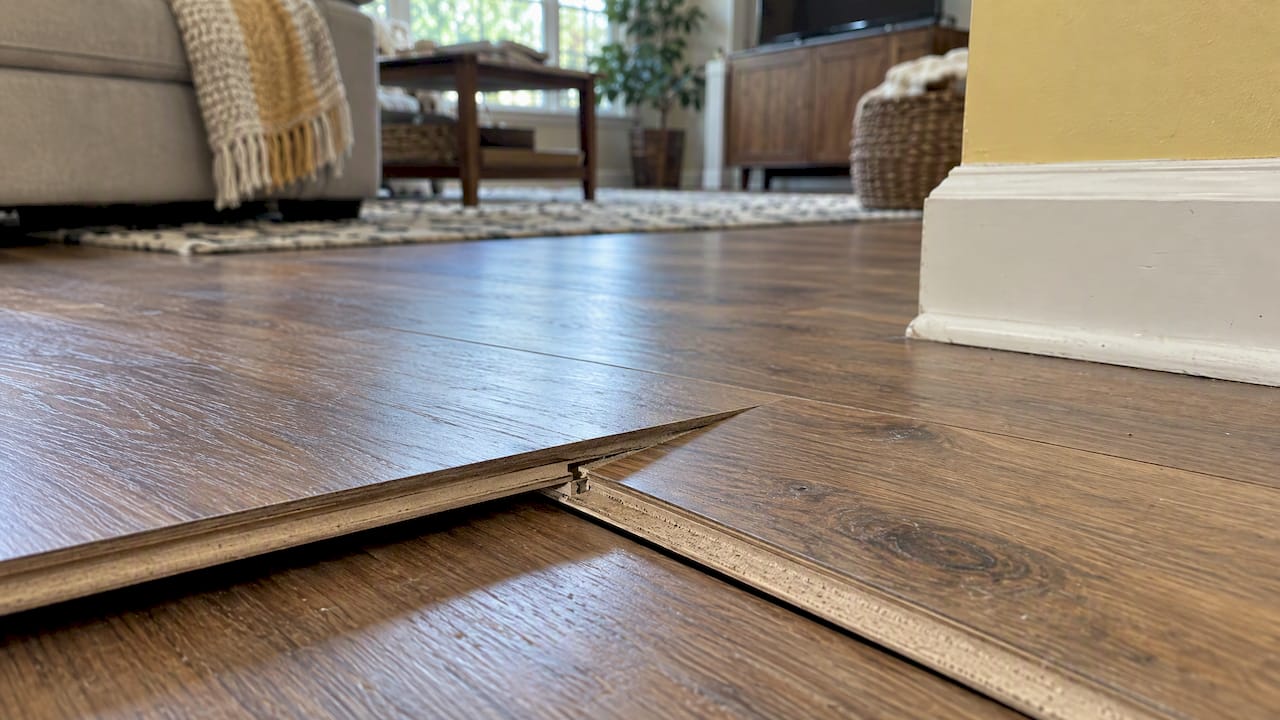
Engineered wood and laminate use layered construction and binders. They can be low-emitting, but this is exactly where a certification matters. Look for FloorScore or an equivalent test report on the specific line, and ask about formaldehyde in the core. Choose click-together floating planks when you can, which removes the adhesive from the equation.
Bamboo deserves a note. The NCHH matrix points out that bamboo may contain formaldehyde adhesives depending on the manufacturer, so it is not automatically the green choice its reputation suggests.
If you are weighing species and tones, see our light versus dark floors test. For Florida sun, our sun exposure guide helps you avoid fading.
It can. Building Clean notes that vinyl may contain phthalate plasticizers, VOCs in finishes, heavy-metal stabilizers, and contaminants in recycled content. That does not mean every vinyl plank is a problem, but it does mean you should buy with questions in hand.
Before you choose luxury vinyl:
One caution on “DEHP-free” claims. A Finnish laboratory study found that two DEHP-free PVC floorings emitted C9-alcohols at every humidity level tested. Swapping out one plasticizer does not make a floor emission-free, which is why testing documentation beats a single ingredient claim.
Luxury vinyl is still popular for good reasons, including water resistance and easy care. Our flooring collection includes luxury vinyl, and we can help you compare documented options.
Carpet is the most-searched flooring topic in this category, and it is a system, not a single material. Fiber, backing, cushion and adhesive all count. The EPA names CRI Green Label Plus as meeting its low-emissions requirements for carpet and carpet cushion, so make that label your first filter, and ask for it on the cushion too.

Fiber choice matters for a different reason: what the carpet holds. The NCHH matrix says wool is naturally stain-resistant and may help absorb indoor contaminants, while synthetic nylon, though durable, can act as a repository for allergens.
A scientific review of carpets and indoor air agrees that carpets may act as repositories for dust and allergens and advises caution with wall-to-wall carpet in children’s bedrooms. If someone in your home has allergies or asthma, consider hard surfaces with washable area rugs in those rooms.
If carpet is still the right call for comfort, we can help you pick well. Start with our guides to choosing carpet for bedrooms and berber versus plush, then see our carpet selection and installation.
Cork and linoleum often get overlooked, yet both appear on healthier-flooring lists. The NCHH matrix identifies ceramic tile and linoleum as preferred options for several areas of the home, and describes cork as renewable, naturally resistant to mold, moisture and rot, with shock and sound absorption.
That makes cork a comfortable, quiet choice for playrooms and home offices. With either material, check the finish, the backing and the adhesive, because the base material is only part of the story. Choose floating formats where the product allows it.
You can pick a good floor and still undo the benefit with the wrong installation. Three habits help.
Skip the glue when possible. Building Clean’s advice is to choose floating flooring that avoids adhesives. When adhesive is necessary, look for NAF, ULEF or NAUF-certified products, or those labeled “No VOC” or “Low VOC,” which are generally water-based.
Choose prefinished. As above, a finished plank leaves the factory fumes at the factory.
Ventilate. The EPA explains that new carpet systems, including adhesives and cushions, off-gas VOCs for a period after installation, and that proper ventilation can significantly reduce emissions in the first 72 hours, though not eliminate them. Plan for open windows, running fans and, if possible, keeping children, pets and anyone sensitive out of the freshly finished rooms for those first days. Our guide on airing out flooring for allergies lays out a room-by-room approach.
Here in Northeast Florida, moisture is part of the equation. Damp air and damp materials can lead to mold, and vents and ducts are common trouble spots. If you are renovating and want to protect the air you just worked to improve, it helps to understand mold around air vents and keep your HVAC system maintained. Controlling humidity also keeps your new floors performing the way they should.
We talk with homeowners every week who ask whether their remodel will make their house healthier or just newer. Our honest answer is that the product matters, but the plan matters more.
We start by asking who lives in the home and which rooms they use. A family with a toddler and an allergic parent needs a different answer for the bedroom than for the kitchen. In wet rooms, we usually lean toward tile, because it holds up in Florida humidity and is a straightforward choice for people who care about air quality. In living spaces, prefinished wood or a well-documented floating floor tends to give the best balance of looks, cost and low emissions.
We also push back gently on shortcuts. A floor labeled “eco” with no test paperwork is not a floor we want you to buy on trust. We would rather show you the documentation, explain the adhesive, and schedule the installation so the house can air out afterward.
Because we handle design, product selection, installation and project management ourselves, you do not need to coordinate separate contractors to get this right. The person who recommends the floor is accountable for how it goes in.
— Anna
If you are planning a kitchen, bathroom or whole-floor project and want low-emission materials, we can walk you through the options in our showroom, pull the product documentation, and handle the installation from start to finish. See what we carry on our flooring page, or talk to us about your project.
If budget is the concern, our guide to remodel financing options explains how monthly payment plans work, and our whole-house flooring plan shows how to phase a project under one manager.
Use this as a starting point, then confirm labels on the specific product.
It can. Vinyl may contain phthalate plasticizers and VOCs in finishes, and recycled-content vinyl can carry contaminants. Choose phthalate-free products with a third-party emissions label, and install them as a floating floor when possible.
There is no single answer, but ceramic tile, linoleum, cork and prefinished wood are the options most often recommended for low emissions. The healthiest choice for you depends on the room, the adhesive and who lives in the home.
“Zero VOC” is usually a marketing phrase rather than a tested standard. A more reliable approach is to ask for product-specific test documentation showing what was tested, how, and against which standard, such as FloorScore or CRI Green Label Plus.
It depends on the product. For carpet systems, the EPA notes that ventilation in the first 72 hours can significantly reduce emissions, though not eliminate them. Prefinished products tend to release less in your home because their finishing happens at the factory.
Start with carpet and cushion that carry the CRI Green Label Plus label. Then consider fiber: wool is naturally stain-resistant, while nylon is durable but can hold allergens. Skip wall-to-wall carpet in children’s bedrooms if allergies are a concern.